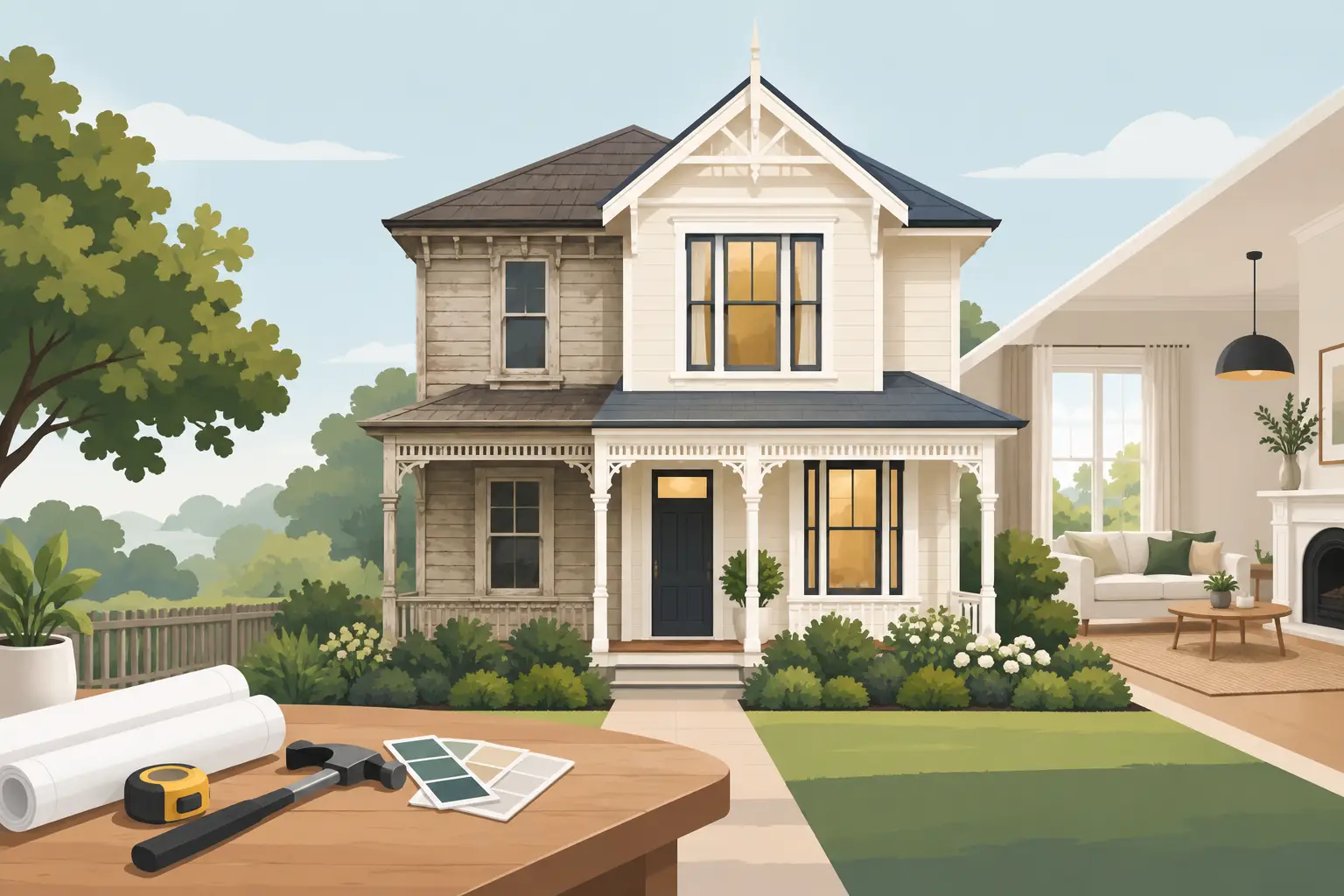
A heritage home renovation is never simply a matter of replacing what is old with what is new. It is an act of interpretation: understanding the proportions, patina and craftsmanship that give a house its authority, then shaping it for the way its owners live now. The most successful projects feel neither frozen in time nor overly polished. They retain a sense of history while offering comfort, clarity and quiet modern luxury.
Whether the property is a Georgian townhouse, a Victorian villa, an Arts and Crafts country house or a much-loved period family residence, the aim is the same: to let original character lead the design conversation rather than become a decorative afterthought.
Start a heritage home renovation with observation
Before selecting a fabric, commissioning joinery or choosing a wall colour, spend time reading the house. Natural light, ceiling height, original fireplaces, cornicing, floorboards and window proportions will reveal more about the appropriate interior direction than a moodboard alone ever can.
Period architecture often has a visual rhythm that deserves to be respected. A generous entrance hall may call for a sculptural pendant with presence, while a drawing room with elaborate plasterwork may need furniture that is confident in scale but restrained in silhouette. In a smaller bedroom, a simple upholstered headboard, an antique side table and beautifully weighted curtains can create a more convincing sense of luxury than an abundance of statement pieces.
This is also the stage to establish what is genuinely original, what has been altered over the years and what warrants restoration. Not every later addition is without merit, but decisions should be deliberate. Restoring a fireplace surround or repairing timber shutters can bring back a depth that no newly purchased object can replicate.
Preserve character without creating a museum
There is a fine line between honouring a period interior and recreating a historical set. A home should hold the life of its occupants: children, guests, weekends away, quiet mornings and long dinners. It should not ask them to live cautiously around it.
The strongest schemes balance inherited detail with contemporary comfort. Original panelling might sit alongside a deeply comfortable modern sofa. A dining room can retain its cornice and chimney breast while introducing a contemporary table in richly veined stone or darkened timber. In a formal reception room, a clean-lined floor lamp can bring useful task light without competing with an antique chandelier.
Contrast is valuable when it is controlled. It gives traditional rooms freshness and makes contemporary pieces appear more considered. The connection comes through proportion, material and tone. A sculptural bronze lamp, for example, can feel entirely at home beside aged oak if its finish has warmth and its scale is appropriate to the room.
Treat lighting as part of the architecture
Lighting is often where a heritage property either becomes atmospheric or falls flat. Relying on one central fitting can leave beautiful rooms feeling theatrical at night and impractical after dark. A considered scheme is layered, with each source serving a distinct purpose.
Start with the architectural focal point. A lantern in a hallway, a pair of wall lights beside a chimney breast or a decorative pendant over a dining table should feel properly scaled to the volume of the room. Then introduce secondary pools of light: picture lights to animate artwork, table lamps to soften seating areas and discreet joinery lighting where it supports function.
The quality of light matters as much as the fitting itself. Warm bulbs generally flatter aged timber, complex textiles and historic paint colours far better than harsh cool light. Dimmers are essential in principal rooms, allowing the atmosphere to shift from a bright family breakfast to an intimate evening gathering.
Where ceilings are ornate, take care with placement. The centre rose may be a natural location for a chandelier, but it need not dictate every choice. In some rooms, a beautiful pair of lamps or wall lights can offer a more relaxed and nuanced result.
Let materiality carry the story
Heritage interiors reward materials with depth. Linen that creases softly, wool with an irregular weave, hand-finished timber, aged brass and richly textured wallcoverings all introduce the tactile interest that makes a room feel lived in rather than merely decorated.
This does not mean every surface should be traditionally patterned or heavily embellished. A contemporary grasscloth can give a high-ceilinged sitting room warmth without obscuring its architectural detail. A plain linen or wool fabric may be the ideal counterpoint to an ornate fireplace. In rooms with less original detail, a more expressive wallcovering, passementerie or patterned textile can restore a sense of identity.
Pattern is particularly effective when it is given space to breathe. Rather than using several competing prints at equal strength, establish one defining gesture: perhaps archival-inspired curtains, a hand-blocked wallcovering or a large-scale rug. Support it with quieter textures and a considered palette. The result has richness without visual noise.
For family homes, performance should be part of the specification from the outset. Certain woven linens, treated velvets and durable wool rugs can provide the desired elegance while standing up to daily use. The answer depends on the room. A formal sitting room permits more delicacy than a kitchen banquette or busy corridor, where resilience is non-negotiable.
Update kitchens and bathrooms with restraint
Kitchens and bathrooms demand the greatest functional change in a heritage home renovation, yet they need not feel disconnected from the rest of the house. The most convincing designs borrow cues from the architecture without becoming nostalgic pastiche.
In a kitchen, painted timber cabinetry, unlacquered brass, natural stone and considered hardware can offer longevity. Contemporary appliances and intelligent storage can be concealed within a composition that feels appropriate to the building. The key is avoiding excessive faux-period detail. A room that tries too hard to look old often loses the confidence of both eras.
Bathrooms can be more expressive, particularly in compact spaces. A marble vanity, framed mirror, decorative wall light and characterful wallcovering can create a jewel-box effect. But ventilation, water resistance and maintenance must guide the specification. The right material is not always the most dramatic one in the first five minutes of viewing.
Furnish for proportion, not fashion
Period rooms can absorb generous furniture, but scale is not simply about choosing larger pieces. It is about leaving enough visual and physical space around them. A sofa should relate to the fireplace, windows and ceiling height; a dining table should allow chairs to pull back comfortably; a rug should anchor the seating arrangement rather than hover beneath a coffee table.
Mixing eras gives a home its individuality. An eighteenth-century chest can sit beautifully beneath contemporary artwork, while a tailored modern armchair may bring poise to a room with original mouldings. The common thread should be quality. Pieces with strong proportions, exceptional upholstery and honest materials will outlast fleeting trends and gain authority over time.
Decorative accessories should be edited with the same care. A heritage interior benefits from objects that appear collected: ceramic vessels, books, handblown glass, framed drawings and sculptural pieces with personal resonance. Allow shelves and mantelpieces moments of quiet. The eye needs rest as much as it needs interest.
Know when to involve specialists
Historic fabric is rarely forgiving of improvised decisions. Listed buildings and homes within conservation areas may require formal approvals, and even properties without such restrictions can benefit from specialist input. Surveyors, conservation architects, joiners, lighting designers and skilled decorators each protect a different part of the project.
A design professional brings another essential perspective: cohesion. They can see how a new lighting scheme relates to an existing staircase, how curtain fullness will alter the perceived height of a room, or why a particular rug is needed to ground a collection of furniture. This is where investment creates more than a beautiful individual room. It creates a home with continuity.
The most memorable heritage interiors do not announce every decision. They feel composed, personal and entirely at ease with their surroundings. Let the house keep its voice, then add your own with materials, light and objects chosen to become part of its story for decades to come.

10th November, 2026

8th November, 2026