

Fabric buying guide
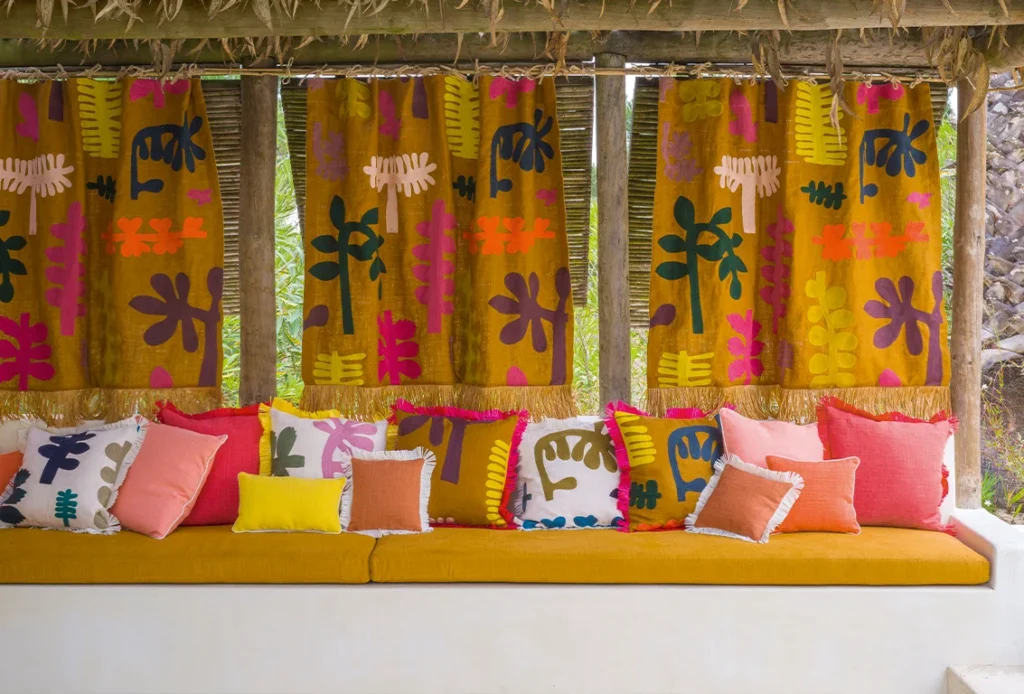
Choosing the right fabric can transform a room. Whether you’re selecting upholstery, curtains, or cushions, this guide will help you make confident decisions — from understanding fabric weights to matching colours and caring for your investment.
Choosing the Right Fabric for Different Rooms
Living Rooms & Lounges
Living rooms need fabrics that balance style with durability. Look for tightly woven fabrics with a high rub count (Martindale rating) for sofas and armchairs — ideally 25,000+ rubs for everyday use. Velvets, woven jacquards, and performance linens are excellent choices. For curtains, consider the light levels: sheer linens for bright rooms, heavier wools or interlined silks for a more dramatic, insulating effect.
Bedrooms
Bedrooms call for softer, more tactile fabrics. Natural fibres like linen, cotton, and silk create a calm, restful atmosphere. For curtains, consider blackout lining to control light. Upholstered headboards work beautifully in velvets or textured weaves — choose fabrics with a Martindale rating of 15,000+ rubs for light use.
Dining Rooms
Dining chairs take a lot of wear. Opt for fabrics with a 30,000+ rub count and consider performance or treated fabrics that resist stains. Leather and faux leather are also practical choices. Avoid delicate silks or loosely woven fabrics in high-traffic dining areas.
Home Offices & Studies
Comfort and focus are key. Mid-weight fabrics in calming tones work well for curtains and upholstery. Consider acoustic properties — heavier fabrics and curtains can help reduce echo and noise.
Children’s Rooms
Durability and ease of cleaning are paramount. Look for machine-washable fabrics or those treated with a stain-resistant finish. Avoid delicate weaves or fabrics with loose threads. Bright, pattern-rich fabrics can add playful character.
Understanding Fabric Weights & Finishes
Fabric Weight
Fabric weight is typically measured in grams per square metre (gsm) and affects how a fabric drapes, wears, and performs:
- Lightweight (under 200gsm): Sheers, voiles, and fine linens. Ideal for layering or unlined curtains in bright rooms.
- Medium weight (200–400gsm): Most upholstery and curtain fabrics fall here. Versatile and suitable for most applications.
- Heavyweight (400gsm+): Thick wools, velvets, and tapestries. Excellent for insulation, drama, and durability.
Common Finishes & Treatments
- Stain-resistant / Performance finish: A protective coating that repels liquids. Ideal for family homes and dining areas.
- Flame retardant (FR): Required for contract and commercial use; increasingly popular for residential projects.
- Preshrunk: Important for fabrics that may be washed — check the care label.
- Interlined: An additional layer sewn between the fabric and lining, adding weight, insulation, and a luxurious drape to curtains.
Weave Structures
- Plain weave: Simple, durable, and versatile (e.g. linen, cotton canvas).
- Twill weave: Diagonal pattern, soft drape, good durability (e.g. denim, herringbone).
- Jacquard: Intricate woven patterns, often reversible. Adds texture and visual interest.
- Velvet: Cut pile weave with a distinctive sheen. Luxurious but requires careful care.
- Bouclé: Looped yarn creates a textured, tactile surface. Adds warmth and character.
Colour Matching Tips
Colour is one of the most common reasons shoppers hesitate — and one of the most important decisions in any interior project. Here’s how to get it right:
Always Order a Sample First
Colours on screen can vary significantly from the physical fabric. Lighting conditions, monitor calibration, and photography all affect how a colour appears online. We strongly recommend ordering a sample before committing to a full length.
Test in Your Own Light
Natural light changes throughout the day, and artificial lighting (warm vs. cool bulbs) dramatically affects how a colour reads. Hold your sample in the room at different times of day — morning, afternoon, and evening — before making your final decision.
Consider the Undertones
Every colour has an undertone — a subtle secondary hue that influences how it sits alongside other colours. A ‘grey’ fabric might have blue, green, or purple undertones. A ‘cream’ might lean warm (yellow/pink) or cool (white/grey). Identifying undertones helps you build a cohesive palette.
Work with Your Existing Palette
Bring swatches of your existing fabrics, paint colours, and flooring when selecting new fabrics. Aim for a mix of pattern scales — a large-scale print, a medium texture, and a plain — to create depth without visual chaos.
The 60-30-10 Rule
A classic interior design principle: use your dominant colour for 60% of the room (walls, large upholstery), a secondary colour for 30% (curtains, accent chairs), and an accent colour for 10% (cushions, accessories). This creates a balanced, intentional look.
Care Instructions
Caring for your fabric correctly will extend its life and preserve its beauty. Always check the care label on your specific fabric — the guidance below is general.
General Care Principles
- Vacuum regularly: Use a soft brush attachment to remove dust and prevent fibres from matting, especially on velvets and wools.
- Rotate cushions: Turn and flip cushion pads regularly to ensure even wear.
- Avoid direct sunlight: Prolonged UV exposure can fade even the most colourfast fabrics. Use blinds or UV-protective glass where possible.
- Act quickly on spills: Blot (don’t rub) spills immediately with a clean, dry cloth. Work from the outside of the stain inward.
By Fabric Type
- Linen: Can often be hand-washed or machine-washed on a cool, gentle cycle. Iron while slightly damp. Expect some natural softening over time.
- Velvet: Dry clean only in most cases. Steam gently to lift the pile. Avoid crushing or folding for extended periods.
- Wool: Dry clean or hand-wash in cool water with a specialist wool detergent. Lay flat to dry — never tumble dry.
- Cotton: Generally machine-washable. Check for preshrinking — if not preshrunk, wash before making up.
- Silk: Dry clean only. Handle with care — silk is sensitive to water spotting and abrasion.
- Performance / Treated fabrics: Often wipeable with a damp cloth. Check manufacturer guidance for specific cleaning products.
Professional Cleaning
For upholstered furniture, we recommend professional cleaning every 1–2 years, or immediately after significant staining. Always test any cleaning product on a hidden area first.
Need Help Choosing?
Our team is here to help you find the perfect fabric for your project. Get in touch and we’ll be happy to advise — or browse our full fabric collection to explore what’s available.