







At dusk, a beautifully furnished room can either come into its own or fall unexpectedly flat. The distinction is rarely the furniture alone. Knowing how to layer luxury lighting gives a scheme warmth, hierarchy and a sense of occasion, allowing every material, artwork and architectural detail to be seen at its best.
Luxury lighting is not simply about choosing a statement chandelier or an exceptional table lamp. It is an orchestration of light sources at different heights, with different purposes and intensities. Done well, it shapes experiences: a dining room becomes more intimate, a hallway more welcoming and a bedroom more restorative.
How to layer luxury lighting with intention
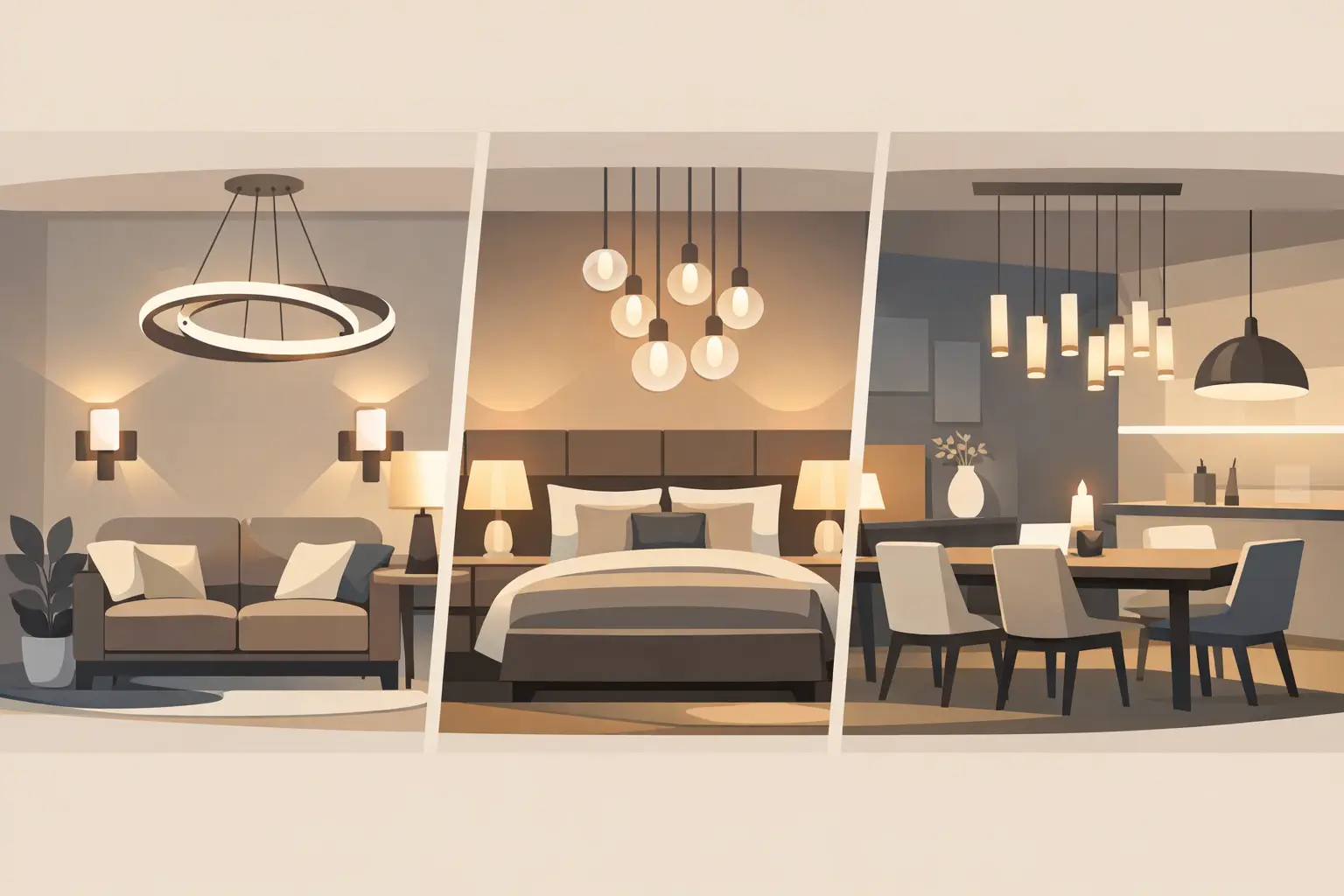
A considered scheme begins with three familiar but often misunderstood elements: ambient, task and accent lighting. Ambient lighting establishes the room’s general illumination. Task lighting supports a particular activity, whether reading, cooking, dressing or working. Accent lighting draws the eye to art, texture, joinery or an architectural feature.
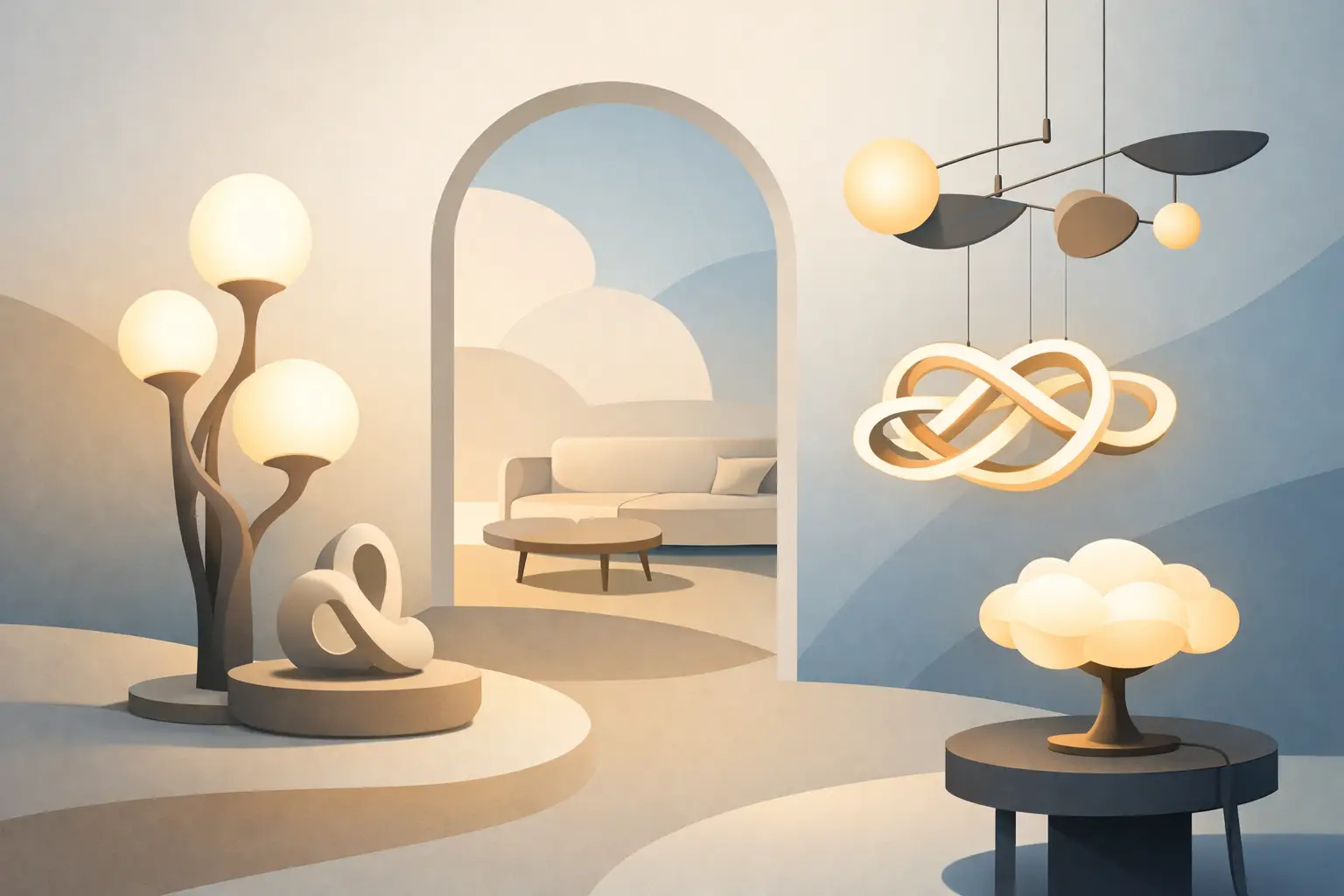
In more refined interiors, decorative lighting forms a fourth layer. A sculptural chandelier, hand-finished wall light or characterful lamp should not be treated as a mere ornament. It is an emotional focal point, often creating the first impression of a room while contributing a soft, flattering pool of light.
The aim is not to make every corner equally bright. Uniform illumination can erase atmosphere and flatten a room’s proportions. Instead, allow areas of shadow to sit alongside pools of light. This contrast gives an interior depth and makes a carefully selected fabric, plaster finish or antique surface feel all the more tactile.
Begin with the room’s mood, not the fitting
Before selecting fixtures, consider how the room should feel after dark. A formal dining room may call for a concentrated, candlelit quality of light, while a family kitchen needs clarity at the island and gentler illumination around its perimeter. A drawing room should support conversation without placing anyone in the harsh glare of a central downlight.
Also consider what the room is asked to do across the day. Many living spaces become places for reading, entertaining, working and relaxing. One dramatic pendant cannot accommodate all of those moments. Layering gives you the flexibility to shift the mood without changing the room.
This is where lighting deserves to be planned alongside furniture layouts, rather than added once decorating is complete. The position of a sofa determines where a reading lamp is useful. The size of a dining table affects the scale and drop of a pendant. A beautiful wallcovering may warrant grazing light from a wall fitting, while a textured rug can be quietly enhanced by a low table lamp nearby.
Establish a calm ambient foundation
Ambient light should make a room navigable and comfortable without announcing itself too loudly. In a contemporary property, this might be delivered through discreet recessed fittings, concealed LED channels or a carefully placed ceiling light. In a period house, it may come from pendants, lanterns or a pair of wall lights that respect the architecture.
The quality of the light matters as much as its source. For residential interiors, warm white illumination generally creates the most inviting effect. Look for a colour temperature around 2700K, or slightly warmer where a room is especially intimate. It should reveal the true richness of timber, brass, lacquer and textiles rather than lending them a cold, bluish cast.
Downlights are useful, particularly in kitchens, bathrooms and circulation spaces, but they should be used with restraint. A ceiling filled with evenly spaced spots can feel commercial and leave faces in shadow. Use fewer fittings with a deliberate layout, and supplement them with lower-level sources. In a room designed for relaxation, the most flattering light tends to arrive from the side, not directly overhead.
Dimming is essential. Even exceptional fittings cannot offer their full potential if they operate at one fixed brightness. Specify dimmable lamps, compatible drivers and controls from the outset, ideally with separate circuits for each layer. That level of control is what allows a room to move elegantly from practical daytime use to a more atmospheric evening setting.
Add task lighting where life actually happens
Task lighting is the element that makes a luxurious interior genuinely liveable. Its purpose is precise, but it need not look utilitarian. A finely proportioned floor lamp beside a reading chair, a slender picture light above a desk or a pair of lamps on bedside tables can be both highly practical and deeply decorative.
In a kitchen, pendants above an island may provide visual structure, but they rarely replace well-positioned worktop lighting. Concealed lighting beneath wall cabinets or within open shelving gives a clearer, more even light for preparation. Keep it on a separate circuit from the pendants so the island can remain a focal point when the kitchen is no longer in working mode.
For bedrooms, task lighting is often best considered from the comfort of the bed. Wall-mounted reading lights preserve bedside-table space and introduce a pleasing vertical rhythm, particularly when paired with an upholstered headboard. Table lamps offer a softer, more traditional character and can bring colour, ceramic texture or patinated metal into the composition.
In a home office, function must lead, yet the atmosphere should still feel residential. Position a desk lamp to avoid reflections on screens and shadows across paperwork. Then soften the wider room with a lamp or wall light behind the desk, preventing the stark contrast of a bright work surface against a dark background.
Use accent lighting to reveal craftsmanship
Accent lighting is where a room begins to tell a more personal story. It directs attention towards the details that deserve to be noticed: an artwork collected abroad, the grain of a bespoke cabinet, a stone fireplace or the expressive pattern of a hand-printed wallcovering.
Picture lights are a classic solution, but their scale, finish and beam spread should be selected with care. A fitting that is too small can appear apologetic; one that is too bright may cause glare and alter the appearance of the art. Adjustable spotlights can offer flexibility for a changing collection, although they work best when integrated discreetly into the architecture.
Within joinery, low-level lighting can make shelving feel purposeful rather than purely practical. A softly lit bookcase creates depth in a drawing room, while illumination within a glazed cabinet gives ceramics and glassware a gallery-like presence. Avoid over-lighting every shelf. Leave some recesses darker, so the composition retains visual rest.
In hallways and staircases, accent lighting may be the most transformative layer. Wall lights can mark a route through the house and create a more gracious arrival than a row of ceiling spots. At night, low-level joinery lighting or carefully placed wall fittings provide enough guidance without waking the entire space.
Choose decorative fittings as part of the architecture
A statement fitting earns its place through proportion, craftsmanship and visual dialogue with the room. Above a dining table, its width should feel related to the table beneath it, rather than floating timidly in the centre of the ceiling. In a generous entrance hall, a pendant can establish scale and set the tone for what follows. In smaller rooms, a pair of sophisticated wall lights may offer more impact than an oversized chandelier.
Materials have their own language. Aged brass brings warmth to oak, linen and richly coloured paint. Plaster, alabaster and hand-blown glass diffuse light beautifully, often lending a quiet luminosity to contemporary schemes. Polished nickel and crystal can be striking in a more formal setting, provided they are balanced with softer elements such as timber, velvet or antique finishes.
Do not feel obliged to match every fitting. A room becomes more collected when its pendant, floor lamp and wall lights share an underlying sensibility rather than an identical finish. Repeated forms, complementary materials or a common warmth of light can create cohesion without sacrificing character.
Plan the technical details early
The most successful lighting schemes look effortless because the technical decisions were made early. Ceiling heights, joist positions, wall construction, furniture placement and switching locations all influence what is possible. This is especially significant with heavy decorative fittings, integrated lighting and bespoke joinery.
Ask for a reflected ceiling plan before finalising a renovation or new-build project. It should show every fitting, circuit, control point and intended beam direction. Consider sightlines too: a pendant that appears perfect from the doorway may interrupt a view across the room when seated.
Smart controls can be valuable, but simplicity remains the luxury. Scenes labelled ‘arrival’, ‘dinner’ or ‘evening’ are useful only if they feel intuitive to everyone in the household. Retain accessible wall controls, and ensure a beautiful room can still be comfortably lit without reaching for a phone.
A layered scheme is ultimately less about adding more fittings than choosing each source with greater purpose. When the light is calm, adaptable and beautifully composed, the room asks nothing of its occupants except that they linger a little longer.

30th July, 2026

29th July, 2026