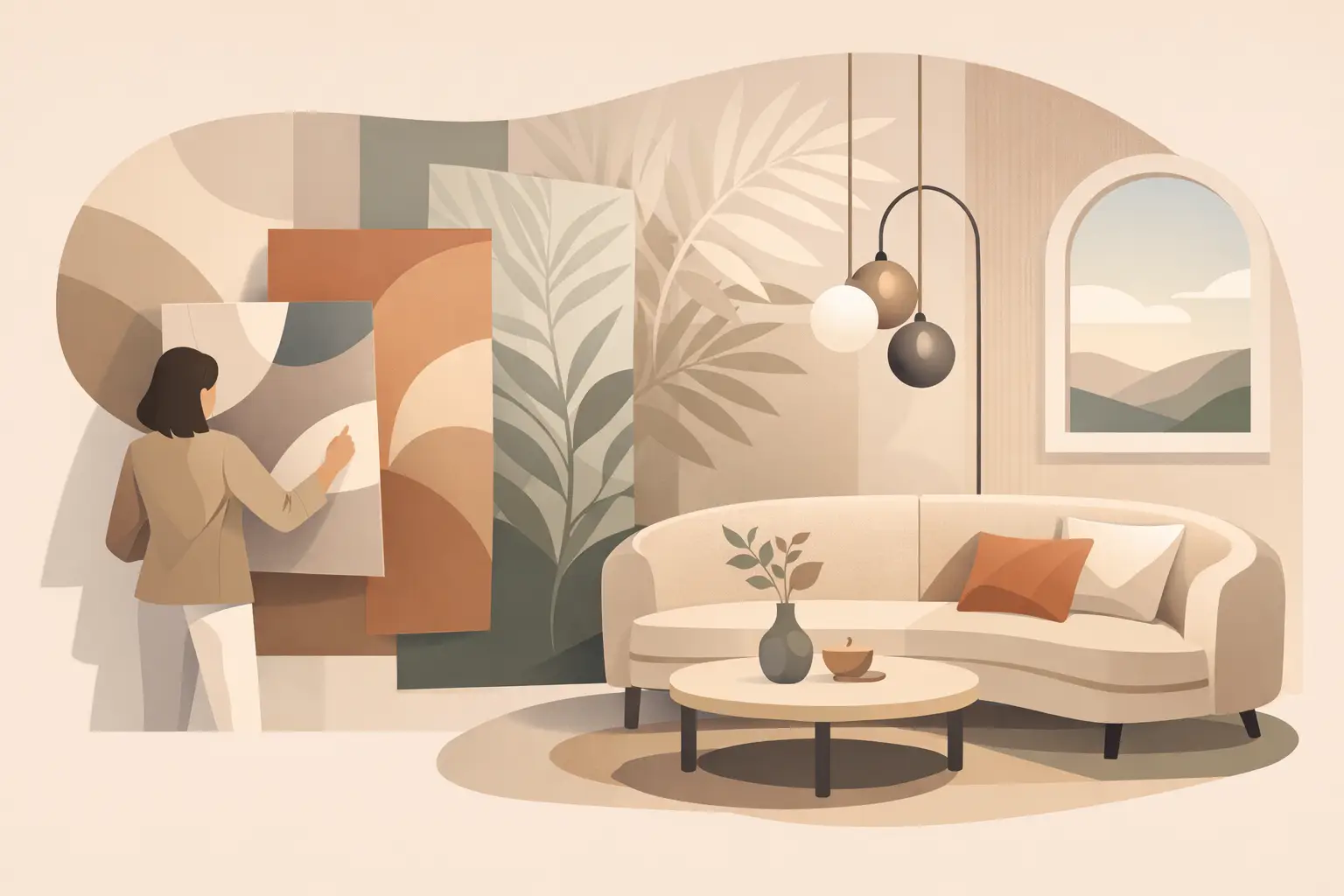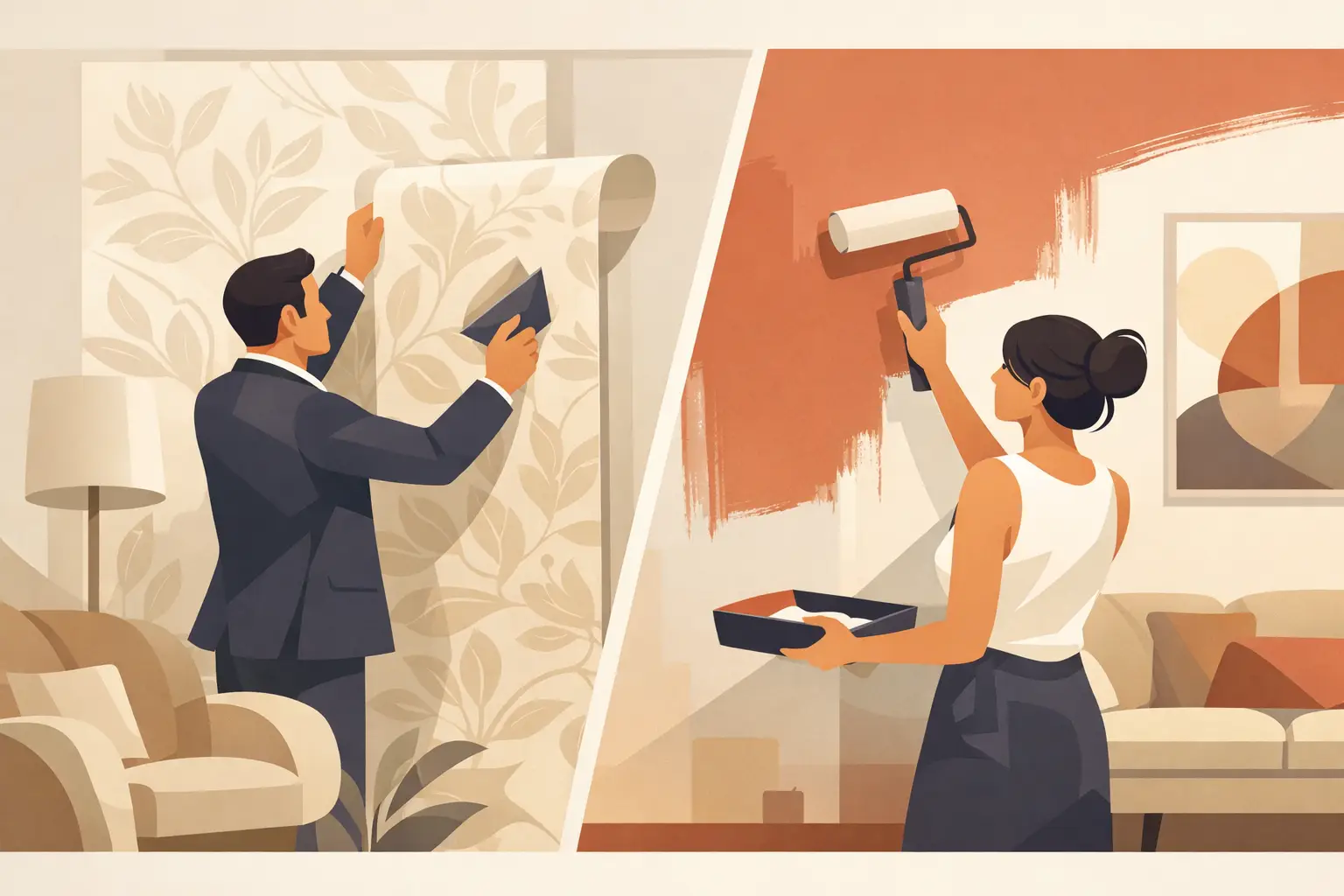
The question of wallpaper or paint for luxury interiors rarely comes down to trend. In well-considered homes, it is a decision about atmosphere, scale and permanence – about whether a room should whisper with texture, hold a gallery-like calm, or make an unmistakable statement the moment you enter.
In premium residential design, surfaces are never background. They shape how natural light moves through a space, how furnishings sit within it, and how a room feels at different times of day. The right wall finish can bring depth to a pared-back scheme or restraint to an otherwise expressive interior. The wrong one can flatten everything around it, no matter how exceptional the furniture, lighting or fabrics may be.
Wallpaper or paint for luxury interiors: what really decides it?
The most sophisticated schemes begin not with a product choice, but with the room itself. Architecture matters. Ceiling height matters. Light quality matters. So does the emotional role of the space.
A formal drawing room, for example, often benefits from a greater sense of layering. Wallcoverings can introduce softness, pattern or tactility that allows sculptural lighting, tailored upholstery and polished materials to feel more composed. In contrast, a contemporary penthouse with strong architectural lines may call for paint with a beautifully judged finish, allowing stone, timber, metal and art to lead.
This is where luxury design differs from simple decoration. The question is not which option is better in the abstract. It is which finish supports the story of the room.
When wallpaper earns its place
Wallpaper has a particular power in luxury interiors because it offers more than colour. It brings materiality. Linen grounds a room with quiet texture. Grasscloth introduces natural irregularity and warmth. Hand-printed or artisanal designs create rhythm and visual movement that paint alone cannot achieve.
In spaces that need depth, wallpaper can be transformative. A dining room becomes more intimate. A principal bedroom feels more enveloping. A hallway gains presence rather than serving merely as circulation space. For clients who want their home to feel collected rather than assembled, wallcoverings often provide that sense of richness.
There is also a craftsmanship aspect that appeals to discerning homeowners. Luxury wallcoverings are not simply decorative skins. The best examples show nuance in weave, pigment and finish. Some catch the light softly; others absorb it, creating an almost textile-like calm. In rooms furnished with refined pieces and layered fabrics, that depth feels entirely in keeping.
Yet wallpaper is not always the right answer. Strong pattern can date more quickly if chosen for novelty rather than longevity. Certain natural wallcoverings are sensitive to moisture, heavy sunlight or marking. Installation is another consideration. At a premium level, wallpaper should be hung impeccably. Seams, pattern matching and substrate preparation all matter, because flaws are immediately visible.
When paint is the more luxurious choice
Paint is often underestimated in conversations about luxury. Done well, it can feel every bit as elevated as wallcovering, and in some schemes more so.
The appeal of paint lies in its restraint. It gives a room space to breathe. It allows architectural detailing, bespoke joinery, art and collectible furniture to take precedence without visual competition. In homes where the palette is subtle and materials are doing the heavy lifting – travertine, brushed brass, smoked oak, bouclé, linen – paint can create the calm that lets those elements resonate.
Finish is crucial here. Flat matt can produce a cocooning, velvety effect, particularly in bedrooms, libraries or media rooms. Soft eggshell may suit high-traffic areas where durability matters, while specialist finishes can add a gentle luminosity without obvious shine. The paint choice itself is only part of the decision. Surface preparation, undertone and light reflection determine whether the result feels refined or ordinary.
Paint also offers flexibility. It is easier to refresh, easier to adjust as furnishings evolve, and often more forgiving in rooms where art may be rehung or layouts may shift over time. For clients building a long-term interior that can mature gracefully, that adaptability has real value.
The role of light, texture and scale
One of the most common mistakes in high-end interiors is choosing wall finishes in isolation. A wallpaper sample may look exquisite on a board, yet overwhelm a smaller room. A paint colour may appear elegant in daylight, then turn flat or cold by evening under artificial lighting.
Luxury interiors require a more holistic read. North-facing rooms often benefit from warmth and texture, where wallpaper can soften cooler natural light. South-facing spaces may allow greater subtlety, with nuanced paint tones revealing their depth beautifully throughout the day. Large rooms with minimal architectural detail sometimes need the visual modulation of a wallcovering. Smaller rooms, particularly those already rich in cabinetry, artwork or textiles, may feel more composed with paint.
Texture is equally important. If the room includes smooth stone flooring, lacquered furniture or crisp architectural glazing, wallpaper can add balance by introducing softness. If the scheme already contains heavily patterned textiles, decorative lighting and expressive furniture silhouettes, paint may provide the necessary quiet.
Scale should guide pattern choices with discipline. In luxury settings, the most successful wallcoverings rarely shout. Even bold designs need confidence and proportion. Overscaled motifs can be extraordinary in a grand entrance hall or powder room, but in many living spaces a textural or tonal wallpaper will age more elegantly than something overtly graphic.
Wallpaper or paint for luxury interiors in different rooms
Reception rooms tend to reward nuance. Paint works beautifully where the objective is architectural clarity or an art-led atmosphere. Wallpaper suits spaces that need intimacy, softness or a stronger decorative identity.
Bedrooms often benefit from tactility. Textural wallcoverings behind the bed or throughout the room can create a deeply restful envelope, especially when paired with layered fabrics and low, sculptural lighting. That said, a perfectly chosen paint colour in a matt finish can be just as luxurious if the mood is more minimal.
Dining rooms are one of the strongest arguments for wallpaper. Evening light, candlelight and decorative pendants interact beautifully with textured or subtly reflective surfaces, making the room feel more atmospheric and complete.
Bathrooms, dressing rooms and powder rooms are more dependent on material performance. Paint may be more practical in humid environments unless a wallcovering is specifically suitable. Powder rooms, however, are ideal places for bolder choices – spaces where pattern, colour and personality can be expressed with fewer compromises.
Hallways and stairwells sit somewhere in between. They can handle drama, but they also endure wear. The right decision depends on whether they are intended as transitional spaces or as part of the home’s visual theatre.
Why the best interiors often use both
For many refined homes, the most persuasive answer is not wallpaper or paint, but wallpaper and paint used with intention.
A house or flat needs variation. If every room is wallpapered, the experience can become visually relentless. If every room is painted, even the most expensive scheme can feel under-layered. Contrast brings rhythm. A serene painted living room may lead beautifully into a richly wrapped dining room. A calm painted corridor can heighten the effect of a dramatic guest cloakroom. A principal suite may combine painted cabinetry with a textured wallcovering to create balance.
This approach allows each finish to do what it does best. Paint delivers calm, continuity and flexibility. Wallpaper introduces depth, texture and distinction. Together, they create a home that feels considered rather than formulaic.
For clients seeking enduring sophistication, this is often where expert curation matters most. Luxury brands such as Dedar, Nobilis and Pierre Frey offer wallcoverings with real subtlety – pieces that work not as decoration alone, but as part of a larger material conversation with upholstery, drapery, furniture and lighting.
How to choose well and avoid expensive mistakes
The strongest decisions are made after viewing samples in situ, at scale, and in changing light. A small memo is not enough for a principal room. Wall finishes should be considered alongside flooring, joinery, fabric schemes, metal finishes and decorative lighting, not after those decisions have been fixed.
It is also worth being honest about lifestyle. Homes with children, pets or frequent entertaining may need more resilient solutions in certain areas. A formal room used occasionally can justify a more delicate wallcovering. A family kitchen-living space may benefit from paint that can be maintained more easily. Luxury is not about choosing the most elaborate option in every case. It is about choosing the most intelligent one.
There is a financial dimension as well. Wallpaper usually carries higher material and installation costs, particularly for artisanal or specialist designs. Paint can deliver tremendous elegance with a more measured investment, provided the finish and preparation are exceptional. The question is not where to spend most, but where the spend will be most visible and most meaningful.
A beautifully resolved interior rarely announces how difficult it was to get there. It simply feels right. If you are deciding between wallpaper or paint for luxury interiors, let the room lead, let the materials speak to one another, and choose the finish that gives the space its proper voice.

1st September, 2026

30th August, 2026