



A beautiful room can be undone by the wrong fabric. The curtain may fall too flat, the sofa may mark too easily, or a stunning boucle may prove entirely unsuited to a busy family sitting room. A considered Fabric Buying Guide is not simply about colour or pattern. It is about how a textile behaves in light, under touch, across seasons and over years of living.
In luxury interiors, fabric does more than dress a window or soften a chair. It shapes atmosphere. It absorbs sound, filters daylight, introduces depth and gives a space its emotional temperature. The right textile can make a penthouse feel composed rather than stark, or bring warmth and ease to a formal country house without diminishing its architecture. Buying well means looking beyond the sample hanger and understanding what will endure in the context of your home.
What to consider before you buy fabric
Firstly, check out our very comprehensive FABRIC BUYING GUIDE.
The first question is not which fabric you like most, but where it will live. Upholstery, curtains, headboards, cushions and decorative panels all ask different things of a textile. A linen that looks exquisite as a softly pooled curtain may crease too readily on a frequently used dining chair. Likewise, a dense velvet that performs beautifully on a sofa may feel too heavy at a window where movement and lightness are needed.
Usage matters just as much as placement. A formal drawing room used occasionally allows for greater delicacy than a family room where children, pets and guests circulate daily. In a principal bedroom, tactile comfort may take precedence over hardwearing performance. In a hospitality setting or second home in a sunny climate, fade resistance and maintenance often become more pressing concerns than pure softness.
This early clarity saves expensive mistakes. The most compelling schemes are rarely built around one fabric chosen in isolation. They are composed around a hierarchy of needs – durability, drape, texture, light exposure, maintenance and mood.
A Fabric Buying Guide to fibre and feel
The fibre content of a fabric often explains why it looks and performs as it does. Natural fibres are prized for their depth, tactility and graceful ageing, but they are not interchangeable.
Linen remains one of the most sophisticated choices in contemporary interiors. It has an ease that feels both cultivated and unforced, with a slightly dry hand and an organic slub that gives life to a room. For curtains, relaxed upholstery and bedrooms, it is often exceptional. Yet linen also creases, and in very high-traffic upholstery it may require a blend or a more structured weave to perform well.
Cotton is versatile and familiar, though in luxury schemes it is often appreciated less for simplicity and more for the quality of its weave, finish and handle. Wool brings warmth, resilience and natural insulating qualities, making it excellent for upholstery and quieter, more enveloping interiors. Silk delivers luminosity and refinement that few other fibres can match, but it is best reserved for lower-wear applications or formal spaces where its delicacy can be respected.
Then there are blends and performance fabrics, which deserve serious consideration rather than dismissal. Some of the most elegant contemporary textiles combine natural beauty with technical resilience. A fabric that includes viscose, for example, may offer beautiful drape and sheen. A carefully engineered performance weave can be ideal for homes where elegance and practicality must coexist without compromise.
Texture, pattern and the architecture of a room
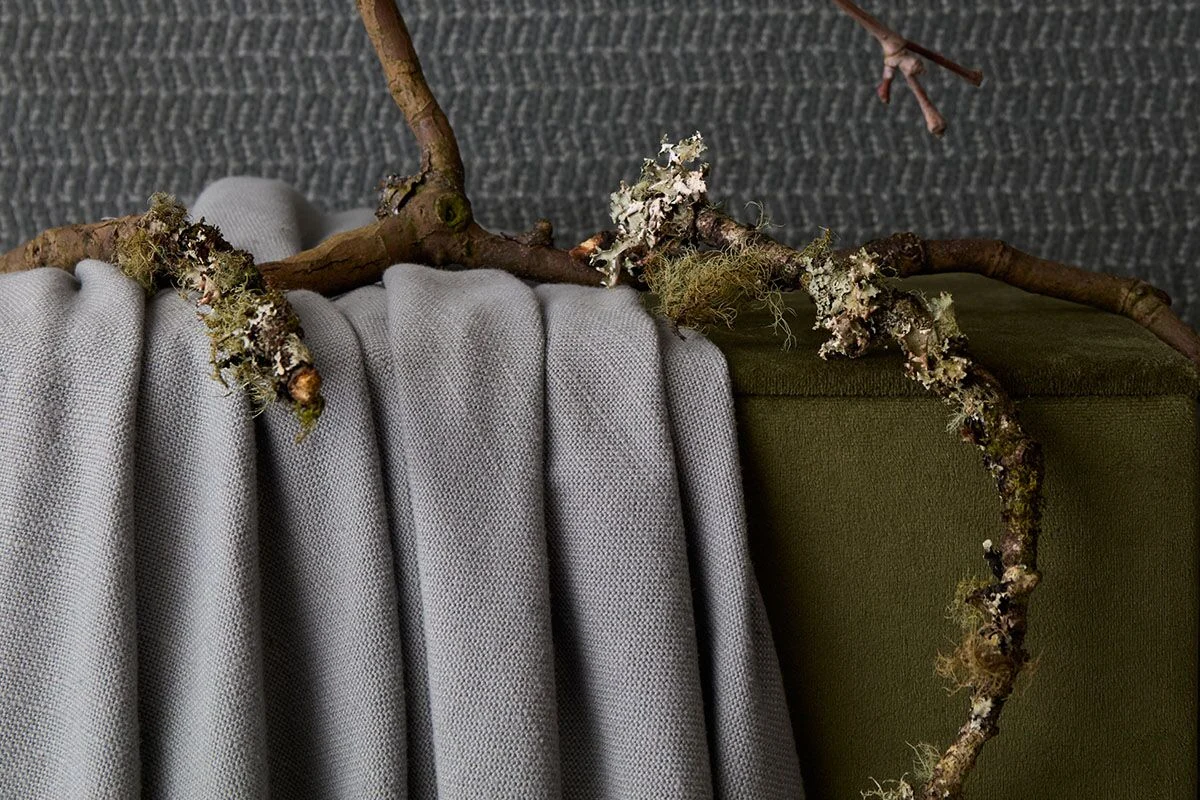
Fabric should always be read in relation to the room itself. In a space with strong architectural detailing, decorative mouldings or sculptural lighting, texture often creates more enduring interest than overt pattern. Boucles, brushed weaves, washed linens and understated velvets allow the eye to rest while adding considerable richness.
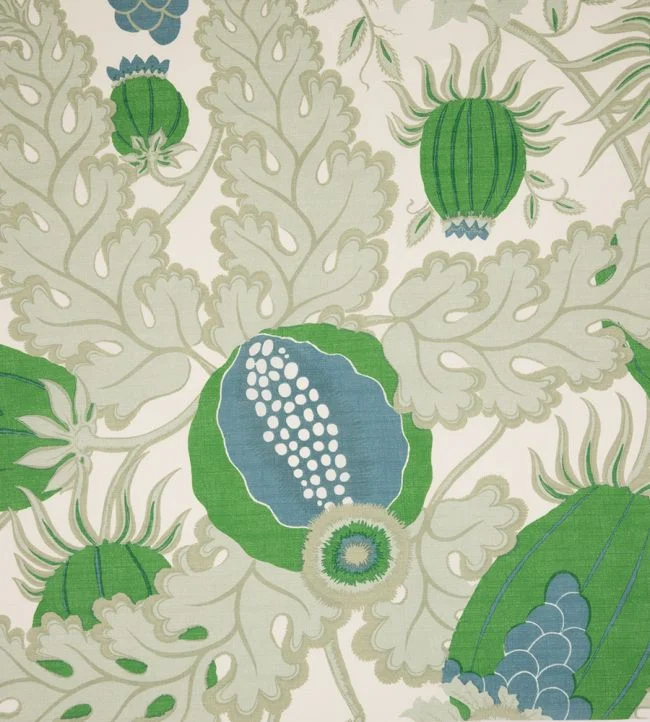
Pattern becomes especially powerful when used with intent. A bold print can animate a pared-back interior, while a small-scale weave may support more expressive artwork or furniture. The scale of the pattern matters profoundly. What feels charming on a memo can become busy across full curtains, and what appears subtle up close may disappear entirely in a double-height room.
This is where luxury fabric houses distinguish themselves. The finest collections understand restraint. They offer textiles that reveal themselves gradually through weave, finish and colour complexity, rather than relying on obvious impact alone. That quiet confidence often ages better than trends that announce themselves too loudly.
Why light changes everything
One of the most overlooked elements in any Fabric Buying Guide is light. A textile never looks exactly as it does in a showroom, and rarely as it does in a photograph. North-facing rooms can cool certain neutrals and flatten subtle undertones. Intense southern or Middle Eastern light can bleach sensitive fabrics and amplify sheen. In urban flats, reflected light from surrounding buildings may alter colour throughout the day.
This is why a fabric should always be viewed in situ if possible. Hold the sample vertically for curtain applications, lay it flat for upholstery and examine it in morning light, afternoon light and lamplight. A soft oat linen may suddenly read pink, grey or yellow depending on the environment around it.
Light also affects longevity. Silks, some linens and richly saturated natural dyes may fade with prolonged exposure. That does not mean they should be avoided, only that they should be specified wisely. Interlining, careful placement and an informed understanding of the room’s orientation all make a difference.
Upholstery fabric: beauty under pressure
For upholstery, performance is inseparable from elegance. The most beautiful armchair is disappointing if the fabric bags, pills or marks after a short period of use. Rub tests are useful, but they are not the whole story. A fabric may score highly and still not suit a loose-covered sofa or a sharply tailored occasional chair.
Pay attention to construction as much as durability ratings. Does the fabric have enough body for neat upholstery? Will the pattern need careful matching? Does the pile show pressure marks? Velvet, for instance, is luxurious and forgiving in some respects, but it will naturally shade and bruise. That is part of its character, not necessarily a flaw. Boucle offers irresistible softness and sculptural appeal, yet snagging may be a concern in homes with pets or heavy everyday wear.
A refined interior does not mean choosing precious materials everywhere. It means using the right fabric in the right place. Often, the most successful schemes balance one or two indulgent hero textiles with quieter supporting materials that work harder behind the scenes.
Curtains and blinds: drape, weight and finish
Window treatments ask for a different set of judgements. The key question here is how the fabric falls. A textile may have exquisite colour and texture, but if it lacks drape it can feel stiff and underwhelming once made up. Conversely, a fluid cloth may need interlining to achieve the desired fullness and presence.
Weight affects mood. Sheers create softness, privacy and a diffused glow that can be transformative in contemporary interiors. Heavier fabrics bring intimacy, acoustic comfort and a sense of completion, especially in bedrooms, libraries and formal reception rooms. Neither is inherently superior. What matters is the atmosphere you want the room to hold.
The finish is equally important. Trimmings, leading edges and linings should never feel like afterthoughts. They can sharpen a scheme, add a tailored note or introduce a subtle layer of craftsmanship that elevates the whole room.
Maintenance, longevity and the cost of buying well
Luxury is not extravagance without thought. It is choosing materials that continue to reward you. Maintenance should be discussed at the point of selection, not after installation. Some fabrics benefit from regular gentle vacuuming, others from specialist cleaning, and some are naturally more forgiving of daily life than they first appear.
Price alone does not determine value. A less expensive fabric that needs replacing in a few years may be poorer value than a beautifully made textile that improves with age. Equally, the most expensive option is not always the right one. In a beach house, for example, salt, sun and humidity may call for a more practical specification than a formal city residence.
This is where expert guidance proves invaluable. Curated collections from houses such as Dedar, de Le Cuona, Pierre Frey, Nobilis and Rubelli each bring distinct strengths, from artisanal texture to technical sophistication. Knowing which collection suits the room, the climate and the way you live is what turns a fabric choice into a lasting design decision.
Common mistakes even design-conscious buyers make
The most common error is choosing from a small sample alone. Scale, drape and colour shift can all mislead. Another is prioritising appearance over application, particularly with upholstery. A third is building a scheme from too many competing statements, leaving the room visually restless rather than layered.
There is also a tendency to underestimate the role of plain fabrics. In reality, the most polished interiors often rely on complex neutrals and richly textured semi-plains to create depth. These quieter textiles allow furniture, art and lighting to breathe while still making the room feel finished.
For clients seeking a truly tailored result, the answer is rarely to ask which fabric is best in general terms. The better question is which fabric is best for this room, in this light, for this life. That is where discernment begins, and where a home starts to tell a more considered story.

28th May, 2026

27th May, 2026