A beautiful table lamp earns its place long after the room has been furnished. It creates a pool of warmth beside a favourite chair, brings a console into focus after dusk, and gives a bedside table the quiet sense of ceremony that ceiling lighting alone cannot provide. The best designer table lamps do more than illuminate: they introduce sculpture, texture and atmosphere at eye level.
For considered interiors, the right choice is rarely about chasing a single statement piece. It is about selecting a lamp with the presence, proportion and finish to belong to the architecture of the room. Whether the setting is a London townhouse, a coastal retreat or a contemporary penthouse, table lighting should make the space feel more personal, more composed and more inviting.
What Makes the Best Designer Table Lamps Different?
Designer table lamps are defined by more than a recognisable name. Their value lies in the considered relationship between base, shade, hardware and light quality. A hand-finished ceramic body, a patinated metal detail or a carefully balanced natural stone base brings depth that is difficult to replicate in mass-produced lighting. These details reward closer attention, particularly in rooms designed around materiality and restraint.
The finest pieces also understand proportion. A lamp may have a substantial base yet feel graceful because its shade has been calibrated to soften its silhouette. Equally, a slender form can hold visual authority through the richness of its finish or the sculptural quality of its profile. This balance is where lighting becomes part of the decorative language rather than a functional afterthought.
Brands such as Porta Romana, AERIN, Kelly Wearstler and Visual Comfort each offer a distinct point of view. One may lend a room artisanal character through hand-applied finishes and expressive forms; another may introduce tailored glamour, architectural geometry or a refined reference to heritage design. The most successful selection is not necessarily the boldest. It is the one that feels inevitable in its setting.
Start With the Light You Want to Live With
Before considering colour or finish, decide what the lamp needs to do. A reading lamp beside an armchair requires directed, practical illumination. A pair on a console may exist primarily to create ambience and rhythm. On a bedside table, it must be beautiful when switched off, while offering comfortable light that does not feel harsh at the end of the day.
This distinction shapes every decision that follows. A deeper, more opaque shade directs light downwards and is often preferable for reading or focused task lighting. A pale linen, silk or parchment shade allows a gentler glow, making it particularly effective in sitting rooms, entrance halls and bedrooms. A translucent alabaster or glass base can add another layer of luminosity, although it may be less suitable where a strong, concentrated pool of light is required.
Dimming is worth considering from the outset. In a formal reception room, a lamp that can move from a practical early-evening setting to a low, flattering glow gives the scheme greater range. The bulb itself matters too. Choose warm white light, generally around 2700K, to preserve the richness of timber, textiles and painted finishes. Cooler light can make even an exceptionally furnished room feel less welcoming.
Scale Is the Detail That Changes Everything
A table lamp can be exquisite in isolation and still feel wrong once placed. Scale is the most common reason. A petite lamp placed on a generous console disappears, while an oversized shade can overwhelm a narrow side table or conceal an important piece of art behind it.
For a sofa-side table, the base of the shade should usually sit around eye level when seated. This prevents the exposed bulb from becoming distracting and places the light where it is most useful. On bedside tables, aim for a shade that sits comfortably above the mattress height, while allowing sufficient room around the lamp for books, a carafe or personal objects.
Width deserves equal attention. The shade should generally be narrower than the table beneath it, leaving a clear margin at either side. This is not a rigid rule, especially with sculptural bases or deliberately dramatic designs, but it is a reliable starting point. In a compact room, a taller, narrower lamp may create elegance without consuming valuable surface area. In a large drawing room, a broad ceramic, stone or metal form can anchor a more substantial arrangement.
The case for pairs
Pairs of table lamps bring order to spaces that benefit from visual symmetry. They are naturally suited to either end of a console, matching bedside tables, a mantelpiece or a long sideboard. Their appeal is not simply formal. Repeated light points guide the eye through a room and make the atmosphere feel settled after dark.
That said, matching lamps are not essential everywhere. In more layered interiors, a sculptural lamp beside a sofa can sit beautifully opposite a smaller, more traditional piece on a writing desk. The connection may be subtle: a shared antique brass finish, a similar shade fabric or a common tonal family. This approach feels collected rather than coordinated.
Choosing Materials That Give a Room Depth
The material of a table lamp should respond to the surfaces around it. A glazed ceramic base can bring softness to timber furniture and woven textiles. Marble, alabaster and travertine introduce a quiet permanence, particularly in rooms with linen upholstery, aged oak or plaster walls. Metal, whether polished nickel, antique brass, bronze or gilt, can provide precision and reflective contrast.
There is also an emotional quality to consider. A lamp in hand-painted ceramic or textured plaster feels expressive and artisanal. A sharply detailed brass lamp brings formality and polish. A rattan, leather or wrapped finish can make a room feel more relaxed, though it should be used thoughtfully in schemes where refinement, rather than informality, is the prevailing mood.
Shades deserve the same consideration as bases. Linen is enduring and versatile, filtering light with an easy softness. Silk introduces a more dressed, luminous quality, ideal for a bedroom or formal sitting room. Paper and parchment shades offer warmth and a beautiful degree of translucency, while darker shades create intimacy but reduce the amount of ambient light. Where possible, view the chosen finish in relation to curtains, wallcoverings and upholstery rather than selecting it in isolation.
Best Designer Table Lamps by Room
The sitting room
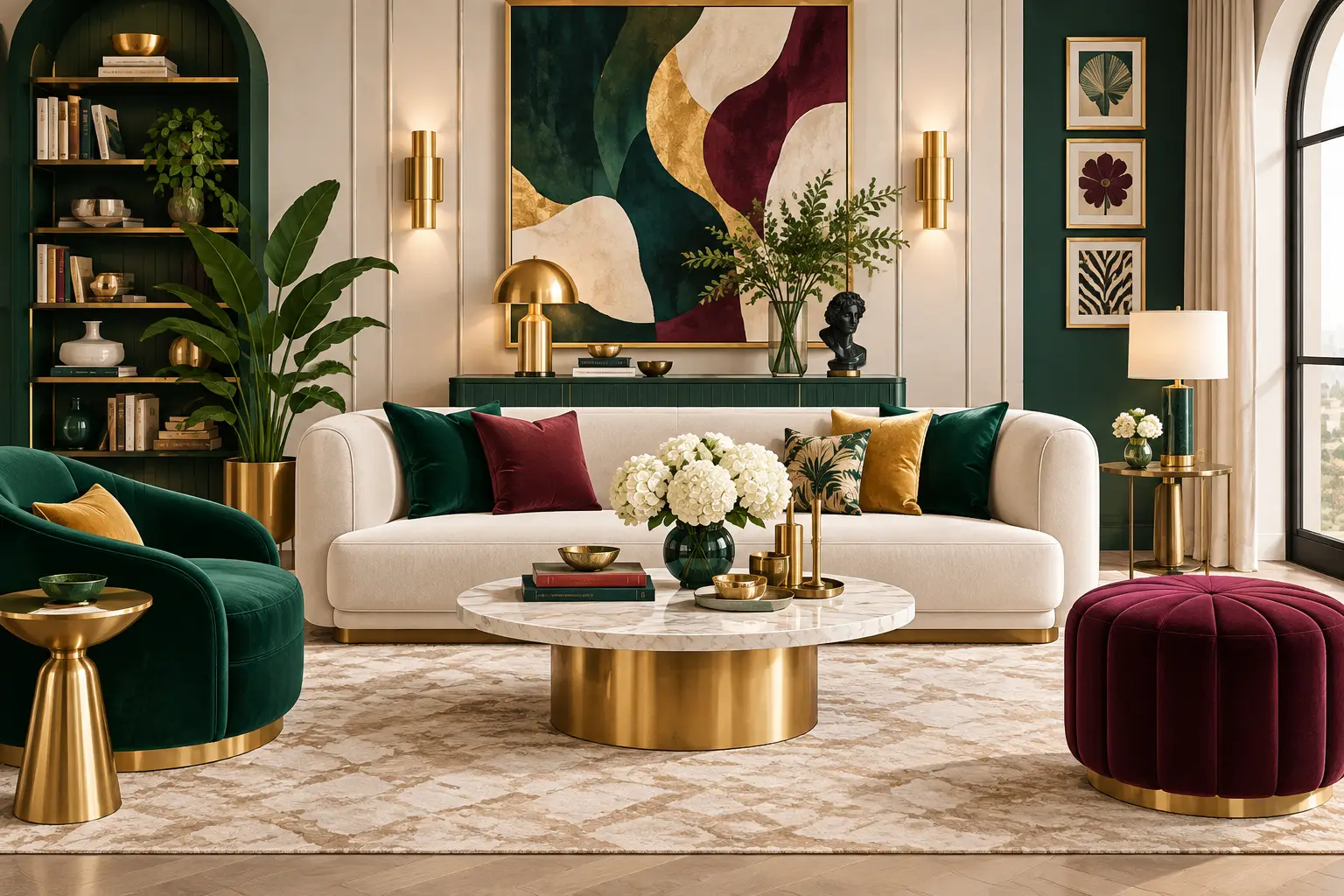
A sitting room benefits from multiple light sources at different heights. Place table lamps near seating rather than relying on one central fitting, allowing conversation areas to feel gently defined. Here, a lamp can be confident in scale: a ceramic urn form, faceted crystal, veined stone or an expressive metal silhouette can all become a focal point when balanced by quieter pieces nearby.
Avoid treating every side table identically. One lamp may be paired with a stack of art books and a small object, while another is allowed more breathing room. The aim is an arrangement with rhythm, not repetition for its own sake.
The bedroom
Bedside lamps need to reconcile beauty with routine. Consider the footprint of the table, the reach of the switch and the height of the bed. If the room has an upholstered headboard, a lamp with a crisp, sculptural outline can provide welcome contrast. In a more architectural bedroom, a soft ceramic or hand-finished plaster base introduces warmth.
A pair offers calm symmetry, but do not underestimate the effect of a beautifully proportioned single lamp on a dressing table, chest of drawers or window-side chair. This secondary light source makes the room feel complete rather than merely functional.
The entrance hall and console
The entrance hall is often the first opportunity to establish the mood of a home. A table lamp on a console creates an immediate sense of welcome, especially when the overhead lighting is kept subdued. Choose a piece with a strong silhouette that reads from a distance, then allow it to sit alongside a mirror, artwork or a restrained arrangement of branches.
In a narrow hall, select a slim base and a shade with modest depth. It is better to choose a lamp with presence through material and finish than one that interrupts circulation.
A Considered Investment, Not a Finishing Touch
Luxury table lighting is often chosen late in a project, yet it has an outsized effect on how a room is experienced. It alters the perceived depth of colour, draws attention to craftsmanship and gives evening interiors a softer, more intimate character. A well-made lamp also has the longevity to move between rooms as a home evolves.
At Tobias Oliver Interiors, the most compelling schemes often combine a few exceptional lighting pieces with quieter supporting elements. The result is not a room that feels decorated all at once, but one that reveals its character gradually – through the glow on a textured wallcovering, the shadow cast across a beautiful console, or the tactile finish of a lamp chosen with intention.
Choose the piece that brings both light and meaning to the room. When it is proportioned beautifully and made with conviction, a table lamp can become the detail guests remember long after the evening ends.

24th November, 2026

22nd November, 2026