





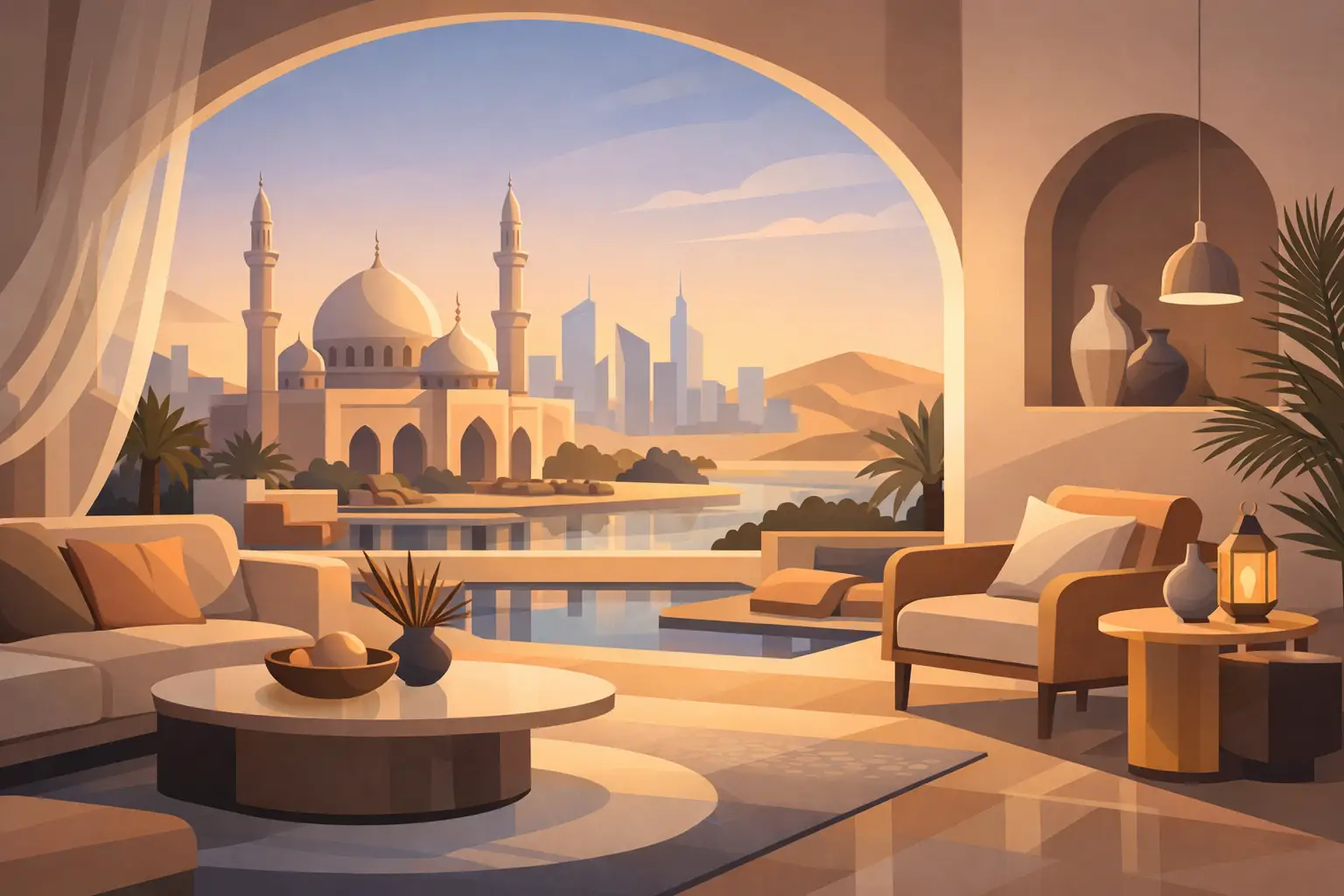
At four o’clock, when the sun begins to soften across limestone, plaster and glass, a well-considered room reveals its true character. Luxury interiors Middle East projects are often judged by spectacle, yet their real success lies in something quieter: the ability to offer shade, composure and a sense of belonging within an exacting climate.
The region’s most compelling homes do not rely on visual excess. They use scale with confidence, combine international design with a strong feeling for place, and allow exceptional materials to do the work. A residence may be richly layered, but it should still feel calm enough for daily life, family gatherings and private retreat.
What Luxury Interiors in the Middle East Ask of a Home
Designing for the Middle East involves more than selecting beautiful objects. Light is intense, architecture is often generous in proportion, and entertaining may be central to the brief. These conditions call for a considered relationship between atmosphere and performance.
Large volumes can easily feel cold when furnished too sparingly, while a scheme with too many competing finishes can become tiring beneath bright daylight. The answer is not simply to add more. It is to create rhythm through furniture groupings, layered illumination, tactile surfaces and moments of visual rest. A sculptural chandelier, for example, needs the support of a considered ceiling height, the correct pool of ambient light and a setting that lets its silhouette breathe.
There is also an increasing desire for residences that feel personal rather than imported wholesale from a hotel or showroom. Global brands bring a remarkable vocabulary of form and craftsmanship, but the most enduring schemes edit that vocabulary carefully. They reflect the owner’s art, routines, heritage and appetite for colour, rather than following a single recognisable aesthetic.
Light should be designed in layers
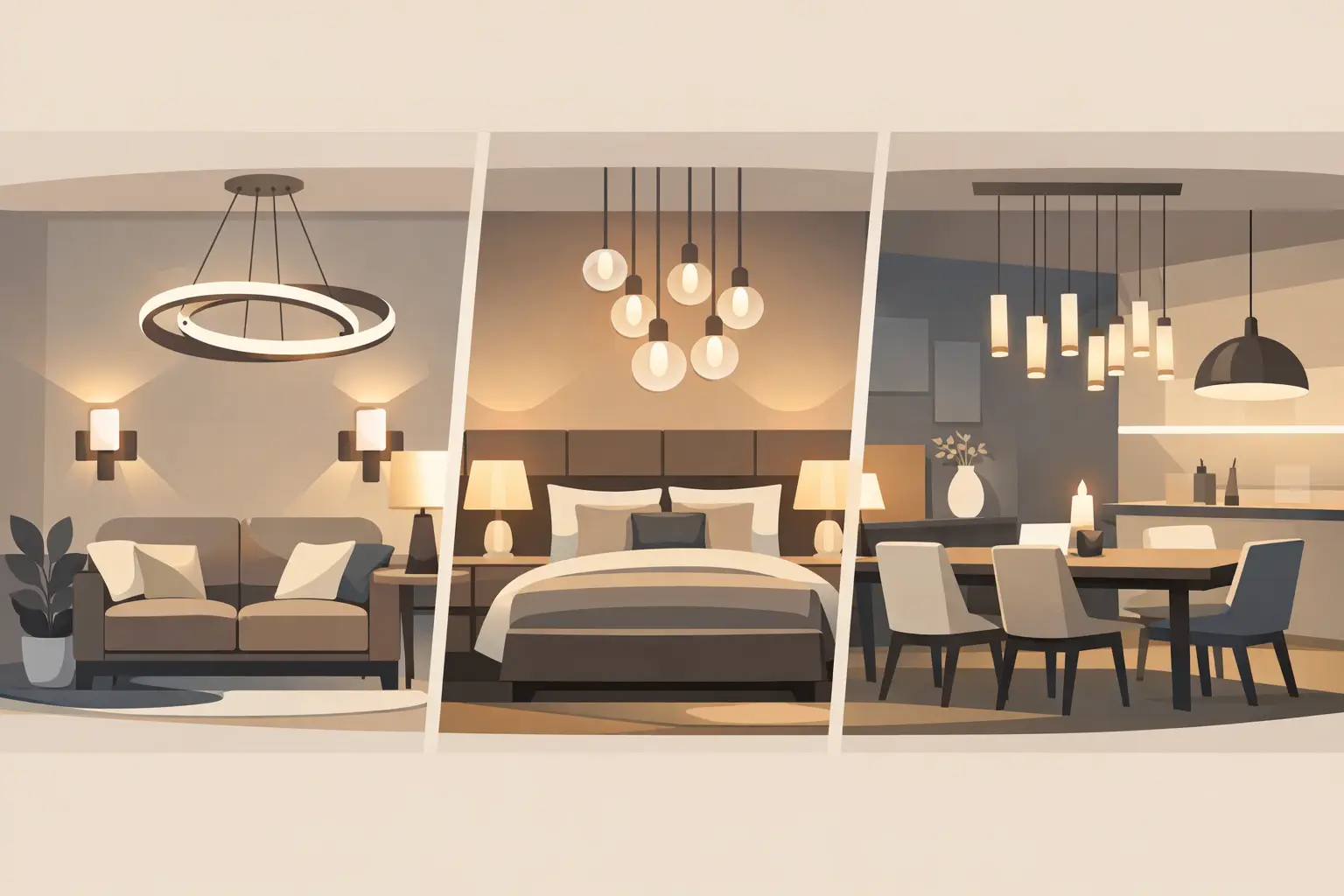
In a climate where daylight is abundant, artificial lighting has a different but no less important role. It creates intimacy after sunset, gives texture to wallcoverings and fabrics, and defines how a room is used. Decorative lighting should be selected for its presence in daylight as much as its evening glow.
A balanced scheme typically brings together architectural light, decorative pendants or lamps, and lower-level illumination for conversation areas. Table lamps in hand-finished ceramic, alabaster or coloured glass offer a gentler counterpoint to stone and metal, while wall lights can give a long corridor or formal reception room a more human scale. Dimming is indispensable, particularly where one room moves from daytime family use to evening entertaining.
The trade-off is practical. Highly sculptural fittings can demand careful coordination with ceiling details, air-conditioning grilles and sightlines. Their impact is worth protecting, but only when the technical planning begins early enough.
Materiality That Responds to Climate
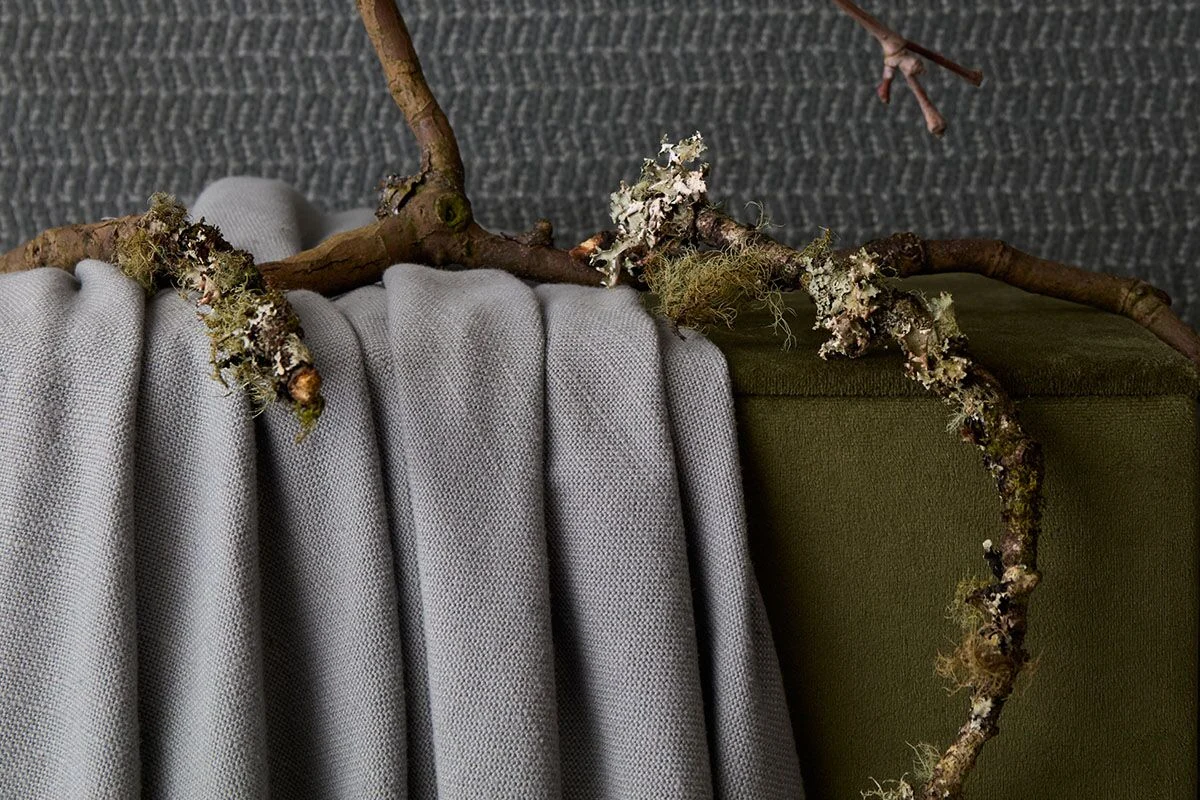
Luxury is often felt before it is seen. A finely woven linen, a velvet with depth, a softly burnished timber or a rug with a subtle hand-knotted irregularity changes the emotional temperature of a room. In Middle Eastern interiors, these sensory qualities are particularly valuable because they counterbalance the hard, reflective surfaces common to contemporary architecture.
Natural fibres remain essential, though they need to be specified intelligently. Linen can be wonderfully relaxed and luminous, but it creases and may not suit every high-contact seating area. Mohair and wool introduce richness and resilience, while performance fabrics can be the more sensible choice for a busy family room, a sun-exposed banquette or a hospitality setting. The finest result is often a mix: practical foundations, then more delicate and expressive textiles where they can be appreciated.
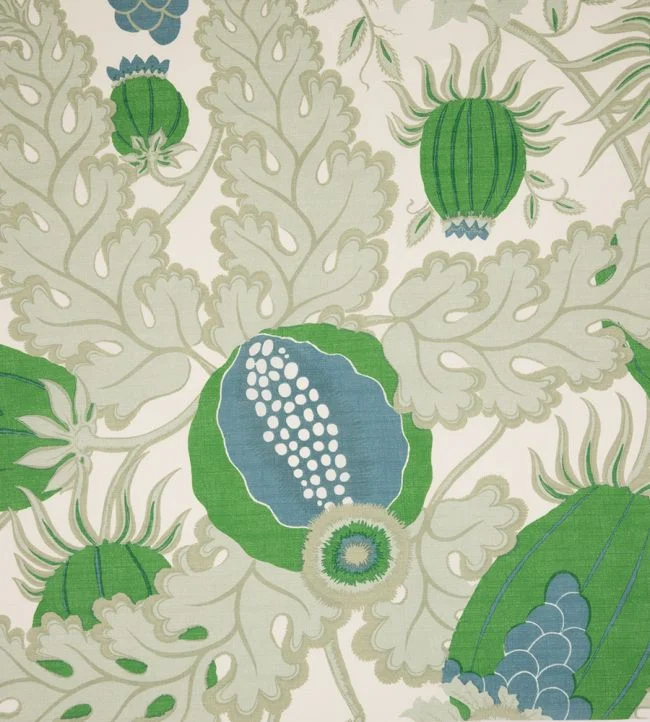
Wallcoverings offer another way to bring depth to expansive interiors. Grasscloth, hand-printed paper and textile wallcoverings lend a room a quieter form of ornament than highly polished stone alone. Their use should be purposeful. A dramatic dressing room, study or guest suite may welcome a bolder pattern, whereas a principal living space often benefits from tonal texture that remains elegant across changing light.
Rugs are equally transformative. They absorb sound in open-plan rooms, anchor furniture and introduce softness underfoot. In a large villa or penthouse, an undersized rug is one of the quickest ways to diminish a scheme. Allow enough scale for the principal furniture to sit comfortably on it, or at least for front legs to be grounded with conviction.
A Global Collection, Carefully Edited
The most sophisticated luxury interiors Middle East residences draw from a broad international design language without becoming stylistically restless. A clean-lined contemporary sofa may sit beautifully with an artisanal occasional table, an antique-inspired mirror and lighting of sculptural, almost jewellery-like quality. The connection is established through proportion, finish and colour rather than matching every piece.
This is where curation matters. Designers such as Kelly Wearstler and AERIN can bring distinct character to lighting and accessories, while the depth of textile houses including Dedar, Pierre Frey, de Le Cuona and Christopher Farr Cloth makes it possible to compose a room with far greater nuance. The point is never to assemble recognisable names for their own sake. It is to choose pieces with integrity, then create a conversation between them.
A useful starting point is to decide which element carries the room’s strongest voice. It may be an expressive wallcovering, a pair of exceptional lamps, a richly coloured rug or a custom-upholstered sofa. Everything else can then play a supporting role. This approach gives the space a focal point and avoids the familiar problem of every item asking for attention at once.
Bespoke details make scale feel intentional
Bespoke work is particularly powerful in properties with substantial rooms, unusual layouts or highly individual architectural features. A made-to-measure headboard can give a bedroom proper stature; tailored curtains can soften a dramatic elevation; decorative trimmings can transform an otherwise restrained cushion or chair into something unmistakably personal.
However, bespoke should solve a genuine design need, not become an end in itself. Custom furniture requires lead time, precise drawings and a clear understanding of how it will be used. For some spaces, a beautifully made ready-designed piece is the right answer. For others, especially where dimensions are demanding, bespoke construction is what allows comfort and visual proportion to coexist.
Rooms That Entertain Without Performing
Hospitality is often written into the architecture of Middle Eastern homes. Majlis-inspired reception spaces, formal dining rooms, terraces and generous living areas need to host people comfortably, sometimes in significant numbers. Yet a room designed solely for occasions can lose its warmth when the guests have gone.
The strongest layouts create several natural modes of use. A principal seating group encourages conversation, while smaller pairings near a window, fireplace or artwork give guests somewhere to settle. Consoles, side tables and upholstered stools are not decorative afterthoughts: they make entertaining easier and allow a room to adapt without fuss.
Decorative accessories should be selected with a collector’s eye. A pair of hand-finished candlesticks, a sculptural bowl, a framed work or a carefully placed object in lacquer, stone or glass can bring intimacy to a large space. Restraint is valuable here. Empty space is not a missed opportunity; it is part of the composition.
Designing for Endurance Rather Than a Moment
The most valuable interiors are not frozen in the year they were completed. They have enough clarity to accept a new artwork, a different cushion collection or an inherited object without losing their identity. This is why a restrained architectural base is so often a wise investment. Timeless does not mean neutral or timid. It means choosing elements with enough quality and conviction to outlast a passing trend.
For homeowners and developers alike, the practical question is where to spend. Invest first in the pieces that are touched daily or define the room at a glance: seating, lighting, window treatments, rugs and considered joinery. Accessories can evolve over time, which is part of their pleasure. A home should be allowed to gather meaning rather than arrive fully finished in a single delivery.
Begin with the way the rooms will be lived in, then let material, light and craftsmanship shape the atmosphere around that life. The most memorable spaces do not merely display luxury. They make every arrival, conversation and quiet evening feel more considered.

31st July, 2026

30th July, 2026