







The entrance hall sets the tone before a single room fully reveals itself. It is where proportion, materiality and atmosphere begin to tell the story of a home, which is why choosing the best console tables for entryways is less about filling a wall and more about shaping a first impression that feels considered, elegant and quietly assured.
A well-chosen console table has to do several things at once. It should anchor the architecture, offer a useful surface for lighting or daily essentials, and introduce a sense of character without turning the space into a corridor of clutter. In a modest townhouse hallway, that may mean a refined, narrow silhouette in oak or metal. In a grand entrance with generous ceiling height, it may call for a sculptural statement in stone, gesso or smoked glass that can hold its own beneath a dramatic mirror or chandelier.
What makes the best console tables for entryways?
The best pieces are defined by balance. They feel visually present, but not heavy. They offer function, but never at the expense of beauty. And crucially, they respect the scale of the space around them.
Depth is often the first consideration. In most entryways, a console table should allow easy circulation, particularly in homes where the hall leads directly towards a staircase, reception room or kitchen. A very deep table can make even a beautiful entrance feel compromised. Slim profiles, usually around 30 to 40 centimetres deep, tend to work best in narrower halls, while larger foyers can take a more generous proportion.
Material matters just as much as size. Natural oak and walnut bring warmth and softness, particularly in houses with traditional detailing or muted wallcoverings. Marble, travertine and limestone create a more architectural presence and suit contemporary schemes beautifully, though they can feel cool if not balanced with softer finishes. Smoked glass, bronze and patinated metal lend glamour and lightness, especially where the aim is to keep sightlines open.
Then there is the question of storage. Some entryways benefit from discreet drawers for keys, post and those daily essentials that rarely deserve display. Others are better served by a pure, open form that feels more like sculpture than storage. Neither is inherently superior. It depends on how the entrance is used and how disciplined the household is likely to be with surfaces.
Choosing a console table by interior style
In contemporary interiors, the most compelling console tables tend to have restraint. Clean lines, honed stone, darkened metal and subtle detailing allow the materials to take the lead. A travertine or marble console, for example, can introduce extraordinary quiet luxury when paired with a softly textured wallcovering and a statement lamp in ceramic or alabaster. The effect is composed rather than flashy.
For classic or transitional homes, a console with gentle curves, hand-applied finishes or fine joinery often feels more appropriate. Limed oak, lightly antiqued mirror and ebonised wood all bring depth without looking overly formal. These pieces work especially well in Georgian townhouses, country houses and period homes where the architecture already carries strong character and the furniture should complement rather than compete.
If the brief is more decorative, an entry console can become a focal point in its own right. This is where sculptural legs, gilt detailing, lacquered surfaces or unusual finishes such as vellum and shagreen come into their own. The trade-off is that highly expressive tables ask for a more edited approach around them. When the console is the statement, everything else should support it rather than vie for attention.
The best console tables for entryways with limited space
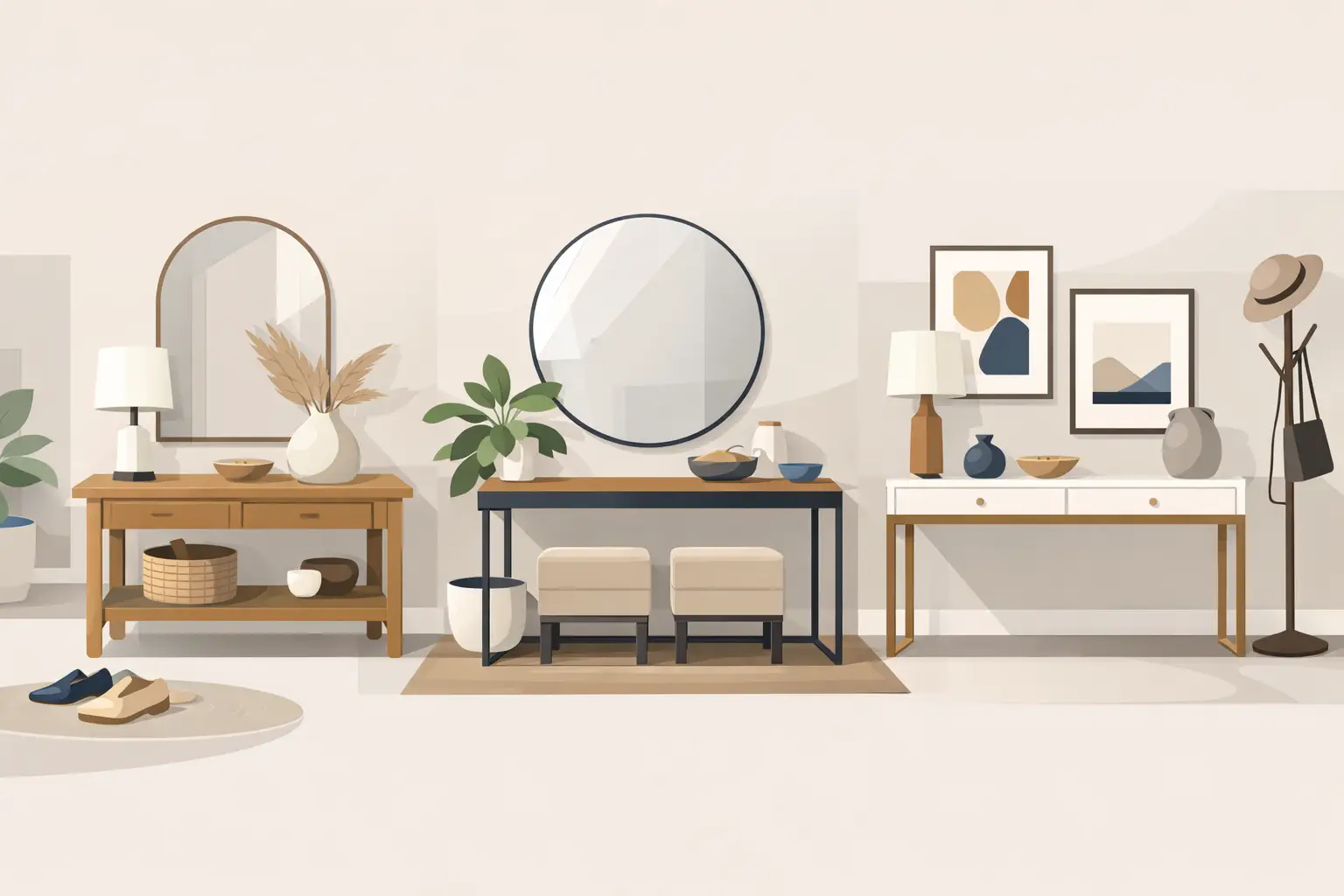
A narrow entrance does not rule out impact. In fact, smaller halls often benefit most from precision. A slender console in a pale timber or metal finish can add definition to the wall without closing the room down. Open bases are especially effective because they preserve visual airiness and allow a basket, stool or pair of decorative objects to sit beneath if needed.
Wall-mounted or demi-lune styles can also be highly successful in tighter footprints. They create the impression of furnishing the space while keeping movement easy. In flats and city homes, where every centimetre counts, this can make the difference between an entryway that feels polished and one that feels awkwardly overfilled.
Mirrors are often used above a narrow console for obvious reasons, but the pairing only works if proportion is handled carefully. A mirror that is too small looks incidental, while one that is too large can overpower the table below. The most elegant arrangements usually treat the two as a single composition rather than separate purchases.
Materials that elevate an entrance hall
Few pieces of furniture are as exposed to scrutiny as the entry console. It is encountered quickly, often in natural light, and seen at close range. Quality of finish therefore matters enormously.
Stone remains one of the most compelling choices for luxury interiors. Travertine has softness and movement, making it particularly suitable for contemporary homes that need warmth. Marble brings drama and individuality through veining, though some varieties can feel formal depending on the scheme. If choosing stone, consider not just the top but the full profile of the table. Thick, monolithic forms create gravitas, while thinner tops with metal bases feel lighter and more tailored.
Wood offers a different kind of sophistication. Cerused oak, walnut and dark-stained timbers are enduring because they age gracefully and sit comfortably across many decorative styles. A beautifully made timber console can bridge old and new with ease, particularly when joined with refined metal accents or a softly textured finish.
For a more decorative statement, parchment, shagreen, brass and hand-painted finishes bring nuance and depth. These materials are less about utility and more about atmosphere. They suit homes where the entrance hall is treated as a design moment in its own right rather than simply a pass-through space.
Styling an entry console without overworking it
The most successful console styling is intentional, not crowded. One lamp and one sculptural object may be enough. In a larger entrance, a pair of lamps can create symmetry and lend warmth in the evenings, especially when the overhead lighting is dramatic but not always necessary.
Books, trays and bowls can introduce layers, but they should earn their place. A lacquered box for keys is more elegant than a pile of loose essentials. A floral arrangement can bring softness and seasonality, though scale is everything. Tall branches may suit a double-height entrance, while a lower composition is often better in a hallway where sightlines matter.
Artwork above the console can feel more collected than a mirror, particularly in homes where the entrance does not need to work as a last-minute check before leaving. It creates a quieter, more personal mood. The choice between art and mirror is rarely just aesthetic. It depends on light, wall height and how ceremonial or relaxed the space is intended to feel.
Practical considerations before you invest
Even the most beautiful console table can disappoint if proportion and placement are not resolved beforehand. Measure the wall, but also measure the passage space in front of the table. Consider door swings, stair geometry and whether the table will be viewed straight on or at an angle from adjoining rooms.
Think too about maintenance. A polished stone top may show marks more readily in a busy family home, while delicate finishes may not suit an entrance used by children, pets or frequent guests. Luxury should still support the reality of daily life. The best choices are not only visually compelling but genuinely liveable.
It is also worth considering the wider decorative language of the home. An entry console should not feel isolated from the rooms beyond it. Repeating a finish, tone or material from nearby spaces creates continuity and gives the entire scheme a more resolved feel. This is often where a curated approach makes the difference – selecting a piece not as a standalone object, but as part of an interior narrative.
For clients seeking that balance between sculptural presence and everyday function, designer consoles from internationally respected furniture houses often offer the strongest answer. The appeal lies not simply in brand recognition, but in the quality of proportion, finish and design intelligence that distinguishes a lasting piece from a fashionable one.
An entrance hall only asks for a few elements, but each one carries weight. Choose a console table with care, and it does more than hold a lamp or a bowl for keys. It introduces the home with confidence, sets an emotional register, and makes arrival feel like an experience worth noticing.

5th July, 2026

4th July, 2026