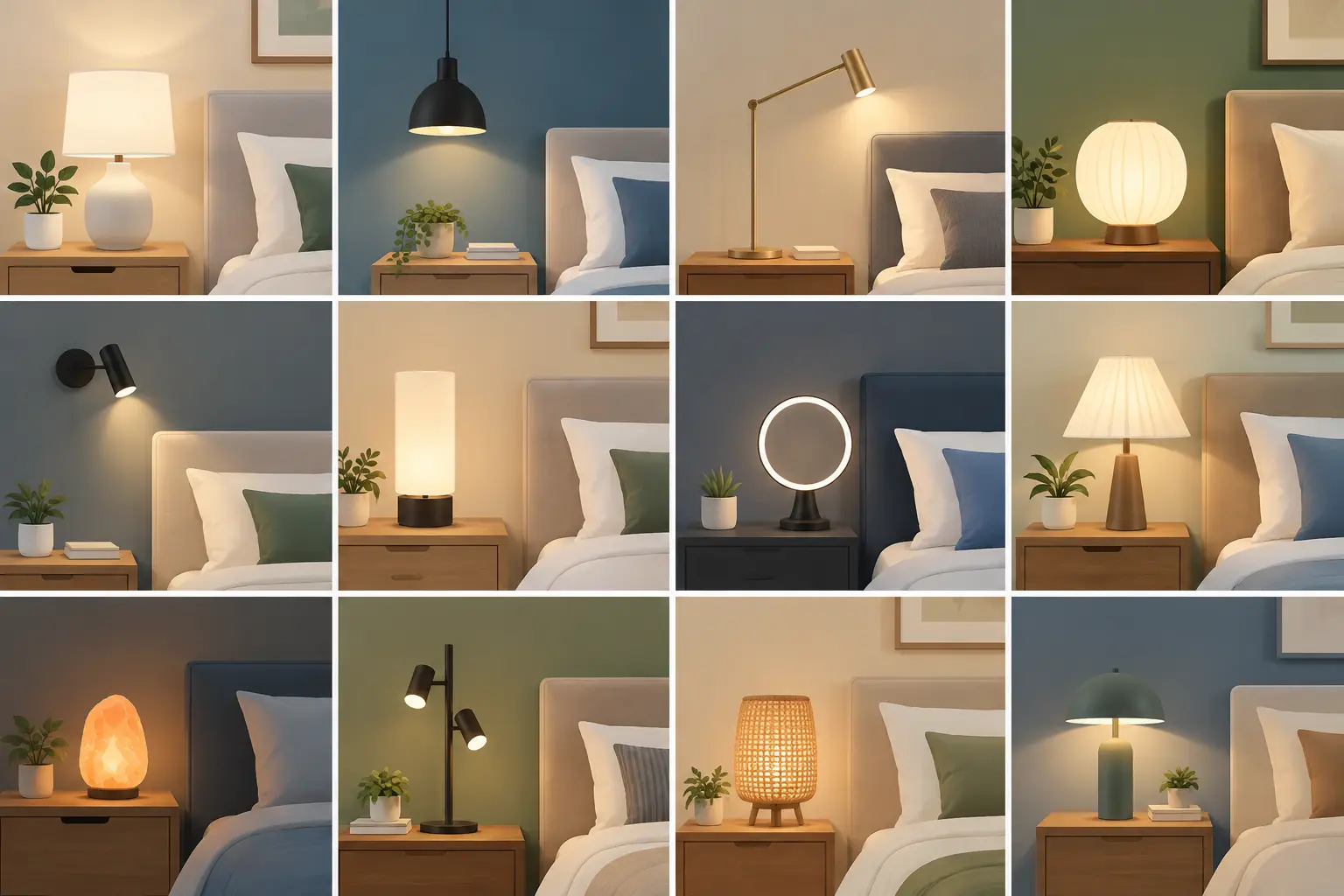
A beautifully resolved bedroom can be undone by a single poor lighting decision: a shade that throws harsh light across the pillows, a switch that requires a walk across the room, or a lamp too slight for its bedside table. The best bedside lighting ideas begin with how the room is used after dark. They should make reading effortless, soften the transition into rest, and give the bed the quiet visual importance it deserves.
Bedside lighting is not simply a pair of matching lamps. It is a small but influential architectural layer, shaping atmosphere, proportion and comfort at the most personal end of the home. The most successful schemes balance ambient glow with useful task light, while allowing material, silhouette and scale to carry the room’s wider design story.
Best bedside lighting ideas for a considered scheme
1. Start with the light, not the fitting
Before choosing a finish or form, decide what each side of the bed needs to do. A guest bedroom may require a gentle, uncomplicated pool of light. A primary bedroom often needs more: reading light, low-level illumination for late returns, and a reassuringly simple way to turn everything off without leaving the bed.
A layered approach usually feels most luxurious. Ceiling lighting establishes the room’s overall atmosphere; bedside lights provide intimacy and function; a discreet lamp on a chest or a concealed LED detail can add depth. When every source is expected to perform every task, the result is rarely flattering.
Warm light is particularly important here. Select lamps in a warm white range, ideally around 2,700K, and place all principal sources on dimmers where possible. This allows the room to move from practical morning light to a lower, more restful evening setting without changing its character.
2. Use wall lights to free the bedside table
Wall-mounted lights are among the most elegant answers in bedrooms where every centimetre matters. They keep a fine bedside table clear for a book, a carafe or a single considered object, and create a composed rhythm behind the bed. In a compact city bedroom, this can make the whole composition feel calmer and more generous.
The choice of wall light should reflect the role it will play. A sculptural sconce with an alabaster, linen or etched glass shade gives a gentle, decorative glow. An adjustable reading light, perhaps in aged brass or bronze, delivers more precise illumination. Combining the two can be particularly successful, though it requires restraint: one fitting may provide atmosphere while a more discreet directional light handles reading.
As a guide, mount the centre of a bedside wall light around 120 to 150 cm from the finished floor, adjusting for mattress height, headboard scale and the occupants’ reading position. The light should sit close enough to reach comfortably, but not so low that it shines directly into the eyes when reclining.
3. Choose table lamps with presence and proportion
A pair of table lamps remains a classic for good reason. The right lamp brings texture, colour and a sense of permanence to the bed, particularly in rooms with generous nightstands and layered textiles. Ceramic, hand-blown glass, stone, rattan, patinated metal and lacquer each change the mood of the scheme.
Scale is the detail that separates an intentional selection from an afterthought. A small lamp on a substantial bedside chest tends to disappear, while an oversized shade can obstruct sightlines across the bed. As a starting point, the base and shade should feel visually anchored to the table, and the lower edge of the shade should usually fall close to seated eye level. This helps diffuse the bulb while preserving a comfortable reading experience.
Matching lamps offer symmetry and serenity, especially when a bed is centred within the room. Yet identical is not the only route to balance. In more collected interiors, complementary lamps in related tones or materials can feel more personal, provided their visual weight is similar. A bronze lamp on one side and a dark ceramic form on the other may work beautifully when united by shade fabric, height and the surrounding palette.
4. Let the headboard become part of the lighting design
An upholstered or timber headboard offers an opportunity to integrate light with real architectural poise. Slim wall lights can be positioned just beyond its edges; small directional fittings can emerge from a custom panel; or a concealed LED line can wash softly across a textured wallcovering above. These solutions lend a hotel-like refinement without feeling impersonal.
This approach is especially compelling in bespoke joinery schemes, where bedside tables, headboard and lighting can be planned as one composition. It also removes the common problem of trying to retrofit fittings around an already oversized headboard. The trade-off is that integrated lighting needs early coordination with an electrician, joiner and, where relevant, a lighting designer. It is rarely a decision to leave until the room is almost complete.
5. Introduce pendant lights for a more architectural look
A pendant dropped on either side of the bed gives a bedroom a distinctly tailored quality. It can frame the sleeping area, bring vertical movement to a room with low furniture, and release valuable surface space. Fine chain pendants, softly veined stone forms and hand-finished metal lanterns each offer a different interpretation, from restrained contemporary to quietly decorative.
Pendant lighting is most effective where ceiling height permits it and where the bed position is unlikely to change. The base of the pendant should generally sit above the bedside table rather than intrude into the pillow zone. Consider its diameter carefully: an expansive shade may be magnificent in a large principal suite, but can feel oppressive in a smaller room.
A pendant alone may not offer enough directional light for committed readers. In that case, pair it with a small integrated reading fitting or select a pendant with a shade that directs enough light downwards. Beauty and usability should not be treated as competing priorities.
6. Build in controls that feel effortless
The most luxurious lighting scheme is one that never asks its occupants to think too hard. Bedside switching should be intuitive, reachable and clearly assigned. A two-way switch allows the room’s main light to be controlled at both the door and the bed. Separate controls for ambient, bedside and reading sources make it easy to create the appropriate mood rather than settling for one blunt level of illumination.
For renovated homes and listed properties, hardwiring may be impractical or undesirable. High-quality plug-in wall lights, rechargeable portable lamps and carefully concealed cable routes can offer a credible alternative. They do not deliver the same integrated finish as a fully planned scheme, but they can be an intelligent solution where fabric, structure or budget must be protected.
7. Use shade materials to shape the mood
The shade is not merely a finishing detail. Linen and silk diffuse light with warmth, lending softness to painted walls and upholstered headboards. Parchment-like finishes create a more tailored, amber glow. Opal glass provides a cleaner luminosity, while alabaster introduces natural variation and an exceptionally flattering depth.
Avoid exposed bulbs at eye level unless the fitting has been designed to control glare. Their sparkle can be attractive in a dressing area or contemporary guest room, but beside the bed they often feel too insistent. A bedroom should invite the eye to settle.
8. Consider asymmetry when the architecture demands it
Not every bedroom has a perfectly centred bed, identical alcoves or matching bedside tables. Forcing symmetry into an asymmetric room can make its compromises more obvious. One side may call for a wall light because of a narrow return, while the other accommodates a substantial table lamp. This can look purposeful when the fittings share a finish, shade family or visual language.
The same principle applies to differing needs. One partner may read late while the other prefers darkness. A focused adjustable reading light on one side, balanced by a lower-output decorative lamp on the other, respects how the room is actually lived in. Bespoke interiors should shape experiences, not impose a photograph-perfect arrangement at the expense of comfort.
9. Add a low-level light for night-time movement
A subtle low-level source is one of the most useful details in a bedroom, particularly in larger homes, family bedrooms or en suites accessed after dark. A concealed strip beneath a floating bedside table, a small lamp on a low setting, or joinery lighting activated by a sensor can guide movement without waking the room.
Keep this light warm and low in intensity. Its purpose is orientation, not decoration. When handled well, it gives the space an enveloping after-hours quality that feels both practical and quietly indulgent.
10. Treat bedside lighting as part of the whole room
Bedside fittings should converse with the bedroom’s other elements: the sheen of a silk wallcovering, the grain of a walnut chest, the line of a tailored bed valance or the patina of door furniture. A highly polished chrome lamp can be striking, but may jar against an otherwise softly aged palette. Equally, a deeply traditional fitting can feel misplaced in a crisp contemporary scheme unless its material offers a deliberate point of contrast.
For projects with layered materials and statement furniture, lighting is often the element that resolves the room. A thoughtfully chosen pair of lamps or sconces can echo a fabric’s metallic thread, draw attention to a beautiful headboard, and make the space feel complete rather than merely furnished.
The right bedside light does more than illuminate a page or guide a hand to a switch. It makes the final moments of the day feel considered, personal and beautifully held.

24th November, 2026

22nd November, 2026