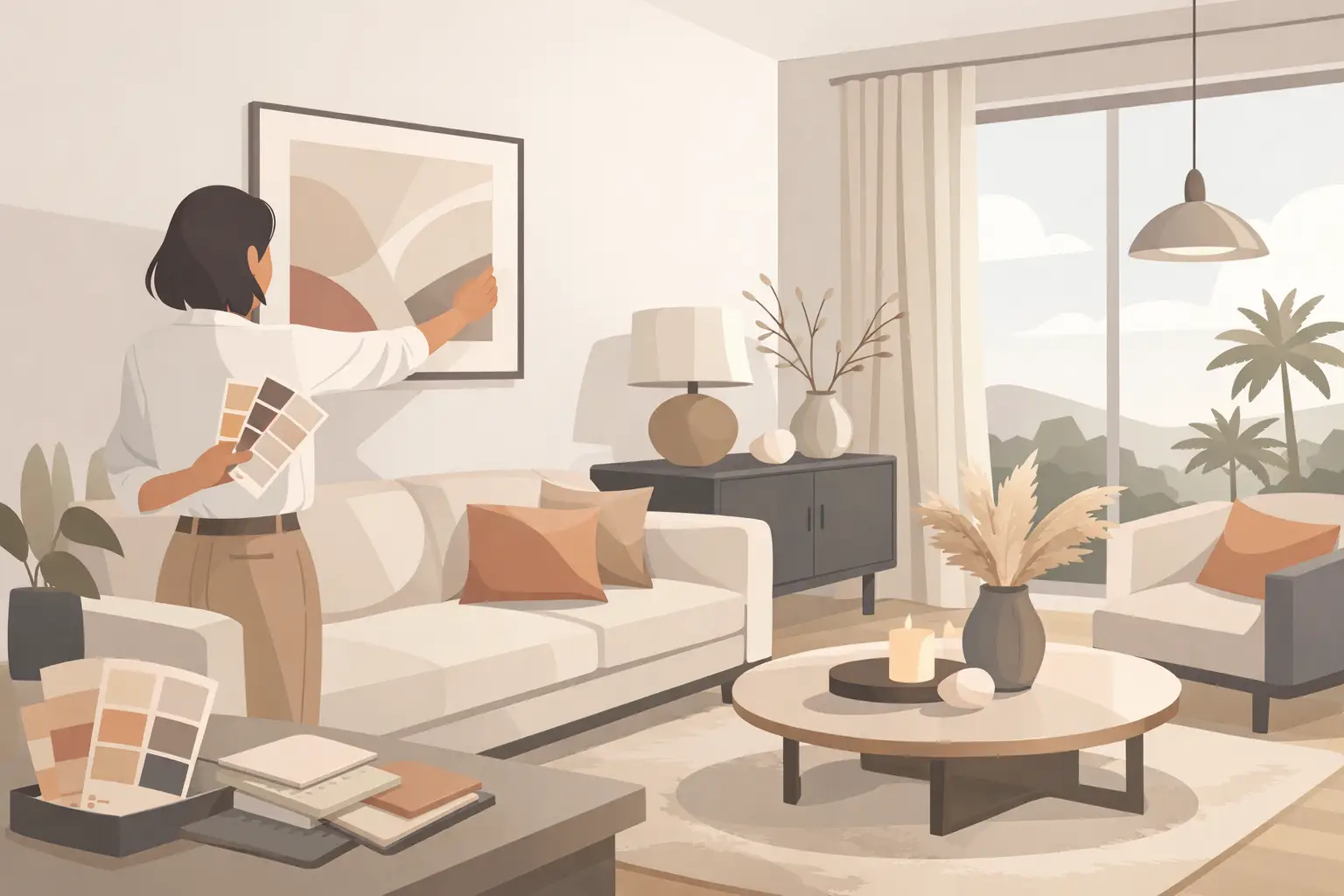
A beautifully appointed home is rarely the result of simply acquiring beautiful things. It comes from understanding how scale, light, material and personality work together over time. Luxury home styling services bring that understanding into focus, creating rooms that feel considered rather than decorated, and personal rather than prescribed.
For a penthouse overlooking a city skyline, a quietly layered country house or a much-loved family residence ready for its next chapter, styling shapes the experience of living there. The right sofa may anchor a room, but it is the dialogue between its form, the rug beneath it, the light cast in the evening and the objects collected around it that gives the space its atmosphere.
What Luxury Home Styling Services Really Involve
Luxury styling is often mistaken for a finishing service concerned only with cushions, accessories and final flourishes. These details matter, but they are only one part of the work. A considered styling service begins by reading a home: its architecture, natural light, proportions, circulation and the way its owners genuinely live.
The process then brings order to the visual and practical decisions that can otherwise become fragmented. It may involve refining furniture layouts, selecting statement lighting, balancing existing pieces with new acquisitions, specifying rugs and window treatments, or curating art, objects and soft furnishings that lend a room its distinctive cadence.
This is not about making every surface appear full. In exceptional interiors, restraint is as valuable as abundance. Negative space gives a sculptural console room to breathe. A single hand-finished lamp can lend more presence than an array of competing ornaments. The most persuasive schemes make their quality felt without needing to announce it.
Styling versus interior design
The distinction depends on the brief. Full interior design commonly addresses spatial planning, architectural interventions, joinery, kitchens, bathrooms and technical specifications. Styling can be a standalone commission for a completed property, or the final, highly personal layer of a wider design project.
For some clients, the home already has a strong architectural language but lacks warmth, coherence or individuality. For others, a renovation is complete and the challenge is furnishing it with a confidence that avoids the impersonal feel of a show home. In both cases, styling establishes the emotional register of the rooms.
Beginning With the Life You Want to Live
The strongest schemes do not start with a trend forecast or a catalogue. They start with questions. How do you entertain? Which rooms are used daily, and which are reserved for weekend gatherings? Do you want a drawing room that encourages long conversations, or a more relaxed setting for family film nights? Are there inherited pieces, works of art or travel mementoes that deserve a meaningful place?
These answers shape every recommendation. A formal dining room may call for a dramatic chandelier, tailored upholstery and the tactile depth of a richly woven wallcovering. A coastal retreat might benefit from lighter forms, hand-finished timber, linen and a softer, sun-washed palette. Both can be luxurious, but luxury should never look identical from one address to the next.
Lifestyle also determines durability. Pale silk and finely detailed trimmings are exquisite in a formal sitting room, yet may not suit a household with young children or dogs who claim the best seat. A skilful stylist does not compromise the aesthetic ambition of a room. They find the material, finish and construction that allow it to be lived in well.
The Elements That Create a Composed Interior
Light that changes the mood
Lighting is frequently the difference between a room that looks complete in daylight and one that feels compelling after dusk. Decorative lighting introduces character, but its success relies on layering. Ambient illumination establishes ease, task lighting supports reading and conversation, while accent light brings art, texture and architectural detail forward.
A sculptural table lamp from a maker such as Porta Romana or AERIN can create an intimate pool of light beside a generous sofa. A carefully chosen pendant has the power to establish a dining room’s centre of gravity. Placement, dimming and shade material all matter as much as the fitting itself.
Texture with purpose
Neutral interiors need not be flat, and richly coloured interiors need not feel heavy. The answer is texture. Bouclé, velvet, wool, lacquered wood, aged brass, hand-thrown ceramic and woven linen each catch the light differently, creating depth even within a restrained palette.
Fabrics and wallcoverings are particularly transformative because they operate at close range. A fine linen from de Le Cuona, a graphic textile by Christopher Farr Cloth or an expressive wallcovering can shift a room from merely pleasant to unmistakably memorable. The selection should respond to the room’s scale and light, rather than being chosen in isolation from a small cutting.
Proportion and visual rhythm
A beautiful piece can still be wrong for a room. An undersized rug makes a seating area appear unsettled, while an overly bulky sofa can suppress elegant architectural proportions. Styling considers the relationships between objects: the height of a side table beside an armchair, the width of a mirror above a mantel, the visual weight of a pair of lamps at either end of a console.
Rhythm is equally important. Repetition of finish, colour or curve creates continuity between rooms without making the home feel over-designed. This might be a soft note of antique brass carried from lighting into hardware, or a recurring tobacco tone that appears in leather, timber and a finely piped cushion.
How the Styling Process Should Feel
A luxury service should provide clarity, not add another layer of decision fatigue. After an initial conversation and review of the property, the stylist develops a clear direction that reflects the client’s priorities, existing pieces and investment level. Room-by-room concepts can then evolve into curated selections, layouts and a considered installation plan.
This is where access to an international portfolio becomes valuable. The right room often needs a mix of voices: contemporary furniture with a timeless silhouette, decorative lighting with sculptural presence, artisan textiles and objects that introduce patina. It is the edit, rather than the number of brands involved, that makes the scheme feel resolved.
At Tobias Oliver Interiors, this approach centres on globally sourced design and the conviction that each piece must earn its place. A well-made chair, distinctive rug or custom-trimmed cushion is not simply a purchase. It is part of the story a home tells to those who enter it.
Installation deserves the same attention as selection. Accessories should be placed in relation to sightlines and use, not scattered as a final gesture. Cushions need varying scale and tactility. Books, objects and florals should lend life without creating clutter. The room is complete when it feels natural to inhabit, not when every available surface has been filled.
When a Styling Service Adds the Most Value
Styling is particularly valuable at transition points: after completing a renovation, moving into a newly purchased property, preparing a second home for regular use or refreshing rooms that no longer reflect how you live. It can also be invaluable before professional photography, a significant gathering or a property launch, although the goal should remain lasting quality rather than a temporary visual effect.
For clients working across borders, expert coordination can prevent the common problem of individually appealing pieces arriving without a cohesive plan. Lead times, delivery access, custom sizing and installation sequencing all affect the outcome. Early decisions around hero pieces, rugs, lighting and window treatments protect both the design intent and the project timeline.
There is a financial consideration, too. Luxury styling requires discernment about where to invest. Bespoke upholstery, artisan lighting, fine rugs and exceptional fabrics generally deserve a greater share of the budget because they shape daily comfort and endure visually. Smaller accessories can be introduced gradually, allowing a home to develop with its owners rather than appearing finished overnight.
A Home With Its Own Point of View
The aim of luxury home styling is not perfection in the abstract. It is a home with a clear point of view: one that accommodates real life, evokes emotion and reveals something quietly distinctive about the people who live there.
Choose pieces with integrity, allow rooms time to settle, and make space for the objects that carry memory as well as beauty. The most enduring interiors are not simply impressive on arrival. They become more compelling each time the front door closes behind you.

6th August, 2026

5th August, 2026