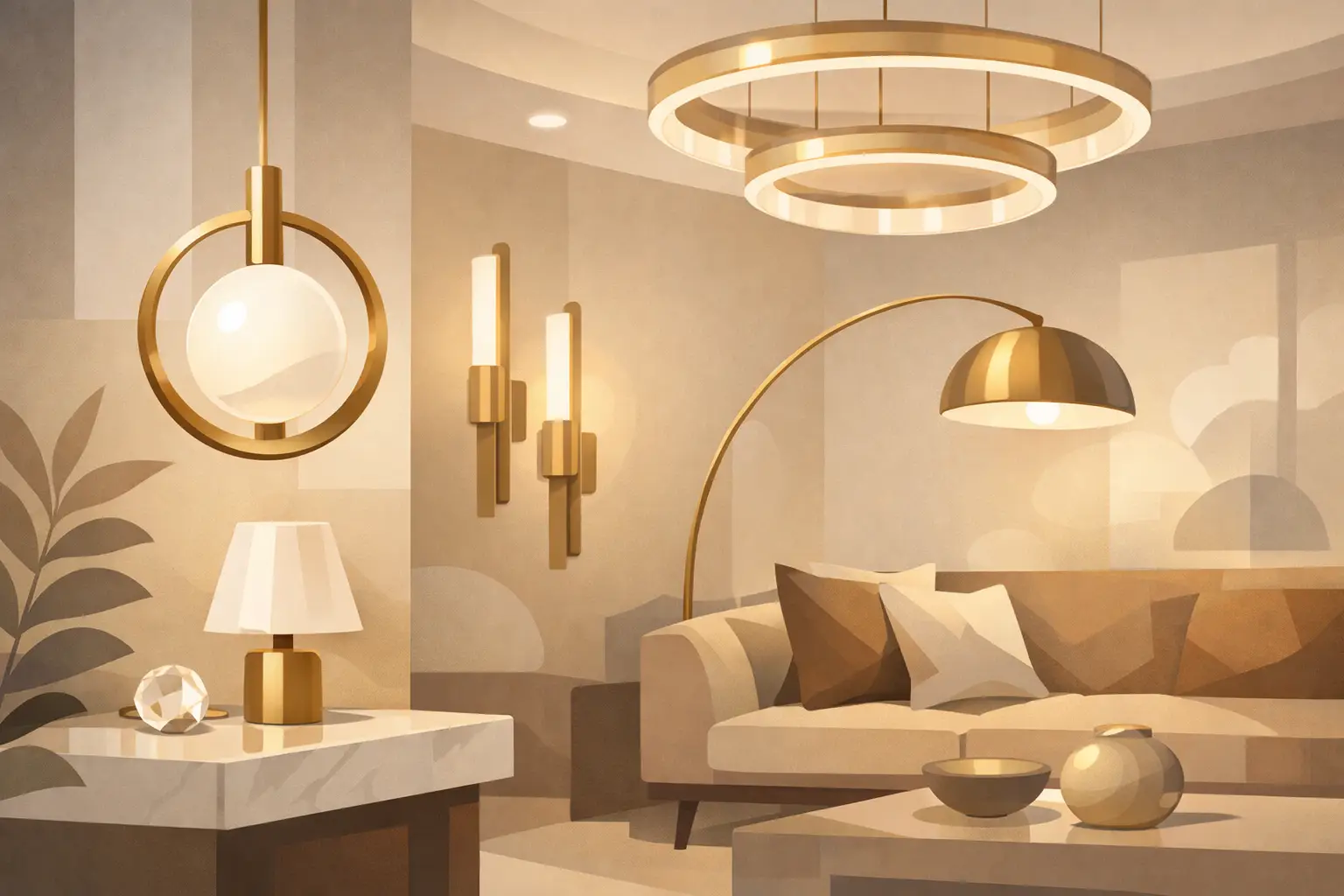
A beautifully lit room can feel quietly assured before a single surface or furnishing has been fully noticed. So, what makes lighting look expensive? Rarely a conspicuous price tag. It is the considered relationship between scale, material, light quality and placement – choices that allow a fitting to feel integral to the architecture and deeply personal to the home.
The most memorable interiors use lighting as both jewellery and atmosphere. A sculptural pendant may draw the eye in a double-height entrance, while an exquisitely shaded table lamp makes an evening sitting room feel intimate rather than merely bright. The difference lies in restraint, discernment and the willingness to light a room in layers.
What makes lighting look expensive?
Expensive-looking lighting has presence, but it does not always demand attention. It tends to possess a clear point of view: an exceptional silhouette, an intriguing finish, a hand-worked detail or a sense of proportion that feels entirely right for its setting. It is designed to be seen closely, not simply selected from a distance.
This is why a smaller lamp in hand-applied ceramic, alabaster or richly patinated metal can appear more luxurious than an oversized fitting with a generic polished finish. Materiality carries weight. Natural stone reveals veining, bronze develops depth, linen softens light, and mouth-blown glass has subtle irregularities that give it life. These details create the visual complexity associated with enduring craftsmanship.
Equally, a fine fitting has to work after dark. Decorative impact in daylight is only half the story. The warmth, direction and softness of its illumination determine whether a room feels composed, flattering and welcoming once evening arrives.
Begin with proportion, not price
Scale is one of the first signals of a well-designed interior. A pendant that is too small for a dining table can make even a beautiful room feel tentative; one that is too large can overwhelm conversation, views and furniture. The aim is not mathematical perfection, but visual balance.
Over a dining table, the fitting should hold the centre of the composition and relate confidently to the table’s length and width. In a hallway, a lantern or chandelier needs sufficient volume to register from the threshold without obstructing movement. A generous ceiling height can accommodate drama, while a lower room may benefit from a broad but shallow profile, or from shifting emphasis to wall and table lighting.
There is also the matter of drop. Pendant lights that hover too high often feel disconnected from the furniture beneath them. Hung too low, they can appear awkward and interrupt sightlines. Bespoke suspension lengths are a small but decisive luxury. They allow the piece to belong to the room rather than look as though it was simply fitted where the cable happened to end.
Choose materials with depth and integrity
Luxury lighting rewards closer inspection. It may have a softly aged brass finish rather than a uniformly shiny coating, a hand-painted surface rather than a printed pattern, or a shade lined to cast a warmer, more controlled glow. These qualities are not always loud, but they are felt.
Alabaster is especially compelling because it transforms when illuminated, revealing a gentle luminosity and natural variation that no two pieces share. Hand-blown glass brings a similar sense of individuality, whether clear, seeded, smoked or coloured. Plaster, rattan, ceramic and parchment can also feel exceptionally refined when their texture is honest and their form is disciplined.
Metal finishes deserve particular care. Polished nickel can lend crispness to a tailored contemporary scheme, while antique brass, bronze and burnished iron introduce warmth and age. The most successful choice usually relates to the room’s other details – door furniture, fireplace fittings, cabinetry handles or the frame of an occasional table – without matching each one too literally. A considered mix of metals often feels more collected and more sophisticated than a single, uniform finish.
Layer the light to shape experience
One central ceiling fitting, however magnificent, cannot make a room feel expensive on its own. It may provide a focal point, but it will seldom deliver the flexibility needed for everyday living, entertaining and quiet evenings. Layered lighting is what gives a space nuance.
Ambient light establishes the overall mood. This may come from a pendant, chandelier, discreet architectural lighting or a softly lit ceiling. Task lighting supports practical moments: reading in an armchair, preparing food, working at a desk or applying make-up at a dressing table. Accent lighting introduces depth, illuminating art, a textured wallcovering, a favourite object or the contours of joinery.
Table lamps and floor lamps are often where a scheme becomes emotionally persuasive. They bring light down to human level, creating pools of warmth that make upholstery, timber and textiles appear richer. In a sitting room, several low-level sources will generally feel more elegant than a room flooded by a single overhead light. In a bedroom, bedside lamps with properly proportioned shades offer both comfort and a distinctly finished look.
Prioritise the quality of the glow
A beautiful fitting can be undermined by an unsuitable bulb. Cool, harsh light flattens texture and can make even the most carefully furnished room feel clinical. For living spaces, a warm white colour temperature, commonly around 2700K, is usually the most flattering starting point. It brings out the richness of timber, paint, fabric and skin tones without veering into yellow.
Colour rendering matters too. A high CRI helps colours appear true and nuanced, particularly around art, textiles and decorative finishes. This is an understated technical choice with a highly visible result: the room simply looks more alive.
Dimming is equally valuable. It enables lighting to respond to the hour and occasion, from clear morning brightness to a low, candlelit evening mood. Specify dimmable fittings, compatible bulbs and suitable controls from the outset. Retrofitting may be possible, but early planning gives a cleaner and more convincing result.
Treat shades as part of the design
The shade is not an accessory added at the end. Its scale, shape, colour and lining influence both the visual character of a lamp and the nature of the light it gives. A generously proportioned linen or silk shade can make a relatively simple base feel poised and luxurious. A crisp card lining directs light more clearly, while a warm gold or bronze interior creates an enveloping glow.
Consider the silhouette as carefully as the material. Drum shades offer a clean contemporary profile; tapered shades can feel more traditional and graceful; pleated shades introduce softness and a sense of decorative craftsmanship. In a scheme with strong pattern or richly layered fabrics, an understated plain shade may provide the necessary pause. In a quieter interior, a patterned or hand-finished shade can become the room’s unexpected note of character.
Give decorative lighting room to breathe
A statement light needs a setting that acknowledges it. This does not mean surrounding it with emptiness, but allowing enough visual calm for its shape and finish to register. A sculptural chandelier above a dining table may be all the more effective against a restrained ceiling and a softly textured wallcovering. A pair of distinctive sconces can elevate a console, but only if their spacing respects the mirror, artwork or joinery between them.
Symmetry is useful, especially beside beds, mirrors and fireplaces, yet it is not a rule. A more contemporary scheme may use asymmetrical floor and table lamps to create tension and movement. What matters is intention. Lighting should appear placed for a reason: to frame a view, support an activity, balance a composition or evoke emotion.
Invest where the eye lingers
Not every fitting needs to be a showpiece. A successful scheme often reserves investment for the rooms and moments that shape first impressions: the entrance, dining space, principal sitting room and bedroom. These are places where a distinguished pendant, an artisan lamp or beautifully made wall lights can tell a story about the house and those who live within it.
More functional areas can still be handled with care through discreet architectural fittings, excellent bulbs and thoughtful control. The trade-off is not between decorative lighting and practical lighting, but between indiscriminate spending and a deliberate hierarchy of attention.
The most expensive-looking lighting is ultimately lighting that feels inevitable. Select pieces with character, give them the right scale and installation, and allow their glow to reveal the materials, art and life within the room. When every source has a purpose, the home feels not merely illuminated, but composed.

15th August, 2026

14th August, 2026