





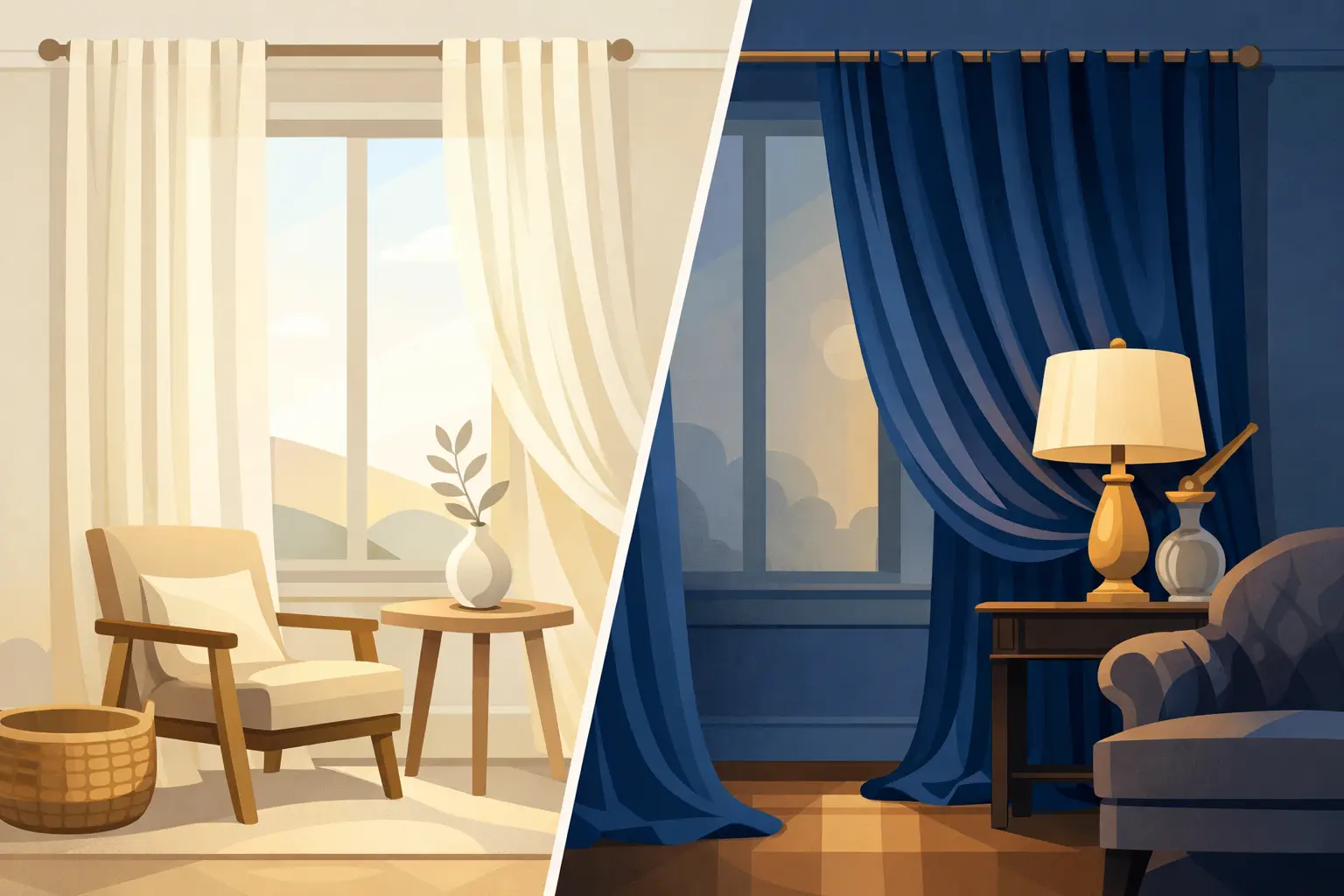
A window treatment is never merely a finishing touch. It determines how daylight enters a room, softens its acoustics and frames the view beyond. When considering linen curtains vs velvet drapes, the decision is ultimately less about following a look and more about the particular atmosphere a room should evoke: airy and quietly tactile, or enveloping and cinematic.
Both fabrics have a rightful place in a considered interior. Linen brings an honest, relaxed elegance that reveals the movement of light; velvet introduces depth, warmth and a sense of occasion. The most successful choice considers architecture, orientation, privacy, seasonality and the way a room is intended to be lived in.
Linen Curtains vs Velvet Drapes: The Essential Difference
Linen curtains are defined by their natural irregularity. The weave has life, with gentle slubs and tonal variation that prevent a scheme from feeling overly controlled. Hung generously, linen falls in soft, unforced folds and lends even the most formal architecture a degree of ease. It is especially compelling beside plaster walls, natural timber, stone flooring and furniture with a hand-finished quality.
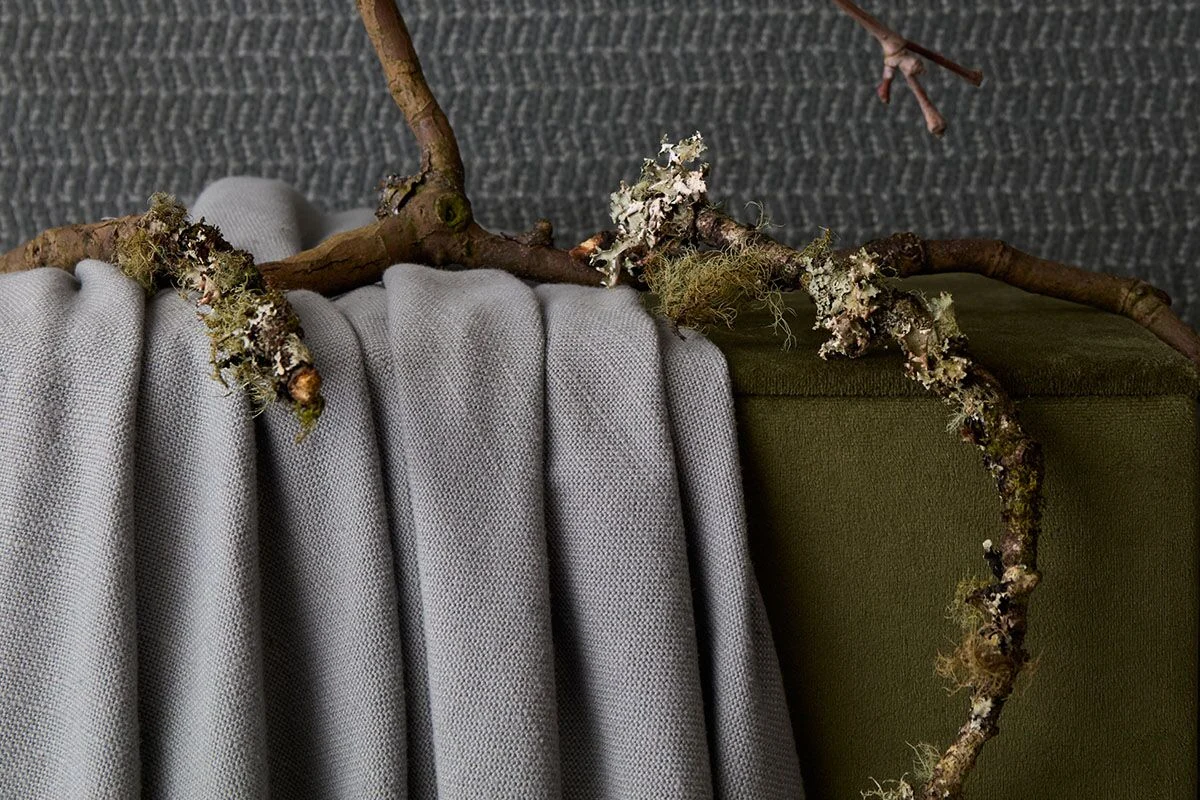
Velvet drapes behave differently. Their dense pile absorbs and reflects light in changing measures, creating colour with extraordinary visual depth. A chalky olive velvet may look almost grey-green in morning light, then become rich and shadowed by evening. This shifting quality makes velvet particularly effective in rooms designed around mood, layered lighting and evening entertaining.
Neither is inherently more luxurious. Luxury lies in fibre quality, weight, tailoring and proportion. A finely woven Belgian linen, properly lined and made with a generous fullness, can feel as considered as a silk-mohair velvet with a hand-sewn leading edge. The question is what the space needs the fabric to do.
Light, Privacy and the View
Linen has a beautiful relationship with daylight. Unlined or lightly lined linen filters the sun rather than blocking it, allowing a room to retain its connection to the garden, cityscape or coastal horizon. In a south-facing sitting room, this diffusion can make bright light feel calmer without dulling the architecture.
There is a practical qualification. Pale linen on its own provides limited privacy after dark, particularly in urban homes where interiors are visible from neighbouring buildings. A discreet cotton sateen lining improves modesty and protects the face fabric, while an interlining adds body and helps the panels hold their shape. For bedrooms or ground-floor rooms, linen curtains are often paired with a tailored blind or a separate sheer layer to give greater control throughout the day.
Velvet offers privacy almost by instinct. Its opacity is valuable in townhouses, penthouses and homes with close sightlines, and it gives a more complete sense of enclosure at night. When blackout-lined, velvet is a strong choice for bedrooms, media rooms and hospitality suites where darkness matters. It can, however, feel visually weighty in a room that already has limited natural light or low ceilings.
Where the view is the principal feature, consider how the curtains will stack back. Linen generally gathers into a slimmer, softer stack, allowing more glass to remain exposed. Velvet requires more physical space when drawn open, especially when made at the generous fullness that gives it its proper richness. A carefully specified track, extending beyond the window reveal, is essential for either material.
Warmth, Acoustics and Everyday Comfort
Drapery changes more than appearance. In period properties with single glazing or generous expanses of glass, lined curtains can materially improve the feeling of warmth around a window. Velvet is the stronger performer here. Its density, combined with an interlining, helps reduce draughts and softens the slight echo often found in high-ceilinged rooms with hard surfaces.
This is why velvet belongs so naturally in libraries, dining rooms and drawing rooms. It quietens a space while making it feel more intimate. A deep tobacco, mineral blue or aubergine can bring composure to a room after sunset, especially when set against the glow of alabaster, aged brass or sculptural ceramic lighting.
Linen is lighter in both physical and visual terms. It will not offer the same degree of thermal or acoustic buffering, but that can be precisely right for a summer house, breakfast room or informal living space. Choose a substantial linen rather than a very open weave if the room needs more presence, then add lining to achieve a refined fall without losing the fabric’s character.
Choosing by Room, Not by Trend
A formal reception room can support velvet beautifully, but formality alone should not dictate the choice. Consider the rituals of the room. If it is used for late dinners, reading and winter gatherings, velvet establishes a compelling sense of retreat. In a room used from morning onwards, where French doors open to a terrace and the aim is natural ease, linen often feels more authentic.
Bedrooms sit somewhere between the two. Linen creates a restful, softened backdrop and works particularly well in pale, tonal schemes. Yet a bedroom facing a street may need the darkness and privacy that velvet, or a linen face fabric with blackout lining, can provide. A fabric sample held against the actual window at several times of day reveals more than a showroom impression ever can.
For dining rooms, velvet does not need to be dark to be dramatic. A muted oyster, faded rose or warm putty velvet catches candlelight with subtle confidence. Linen can be equally elegant in a dining space with a more continental, relaxed character, particularly when paired with woven wallcoverings, antique timber and tactile upholstery.
In kitchens and bathrooms, practicality deserves greater weight. Full-length velvet is rarely the most suitable answer near steam, splashes or frequent food preparation. A structured linen Roman blind, perhaps with a contrast trim, offers the textile interest and tailored finish while remaining more manageable.
The Making Matters as Much as the Fabric
The difference between ordinary curtains and bespoke drapery is frequently found at the workroom table. Fullness should be calculated for the fabric and heading rather than chosen by habit. Linen generally benefits from approximately two to two-and-a-half times fullness, depending on its weight and the desired softness. Velvet often needs closer to two times fullness, as excessive bulk can make it difficult to dress and stack.
Heading style shapes the final character. A wave heading creates clean, contemporary rhythm and is especially effective for linen in modern architectural settings. Hand-formed pinch pleats bring a more tailored, traditional quality and suit velvet’s structure. Goblet pleats, decorative poles and elaborate tiebacks should be used with restraint; they can be magnificent in the right interior, but they should support the architecture rather than compete with it.
Lining is not an afterthought. It protects fabric from sunlight, adds opacity and helps panels fall with authority. Interlining is particularly valuable for linen where a more luxurious, insulated drape is desired, and for velvet where it deepens the sculptural quality of the folds. A skilled maker will also consider hem weight, return, overlap and whether the curtains should break gently on the floor or sit precisely above it.
Details can tell a quieter story of craft. A leading edge in a contrasting linen, a narrow bullion fringe, or a tonal passementerie border may give plain curtains an individual identity. Such embellishment is most effective when it repeats another material in the room, perhaps the warmth of a lacquered console, the patina of a lamp base or a note in an upholstered chair.
A Layered Approach Can Resolve the Debate
The most sophisticated schemes do not always ask one fabric to do every job. Sheer linen at the window can preserve daytime softness, while velvet drapes set on a separate track provide privacy and warmth when evening arrives. This combination brings both depth and flexibility, and is particularly persuasive in large bedrooms, principal suites and reception rooms with tall windows.
Another elegant solution is to use linen in brighter, more public daytime spaces and velvet in intimate rooms beyond them. The materials then create a progression through the home: light and openness in the entrance and living areas, followed by a more cocooning atmosphere in the study, dining room or bedroom. Colour can connect the scheme even when the texture changes.
Care should also guide the final decision. Linen will crease, soften and develop character over time. That is part of its appeal, not a flaw to correct. Velvet needs attentive handling during installation and periodic gentle brushing, particularly with cotton velvets that can show pressure marks. Both deserve professional cleaning, and both reward investment in quality cloth and considered fabrication.
Choose linen when the room calls for lightness, natural texture and a relaxed sophistication. Choose velvet when it asks for warmth, privacy and a more enveloping sense of drama. Then allow the architecture, the light and the life of the household to make the final decision. The right drapery should not simply dress a window; it should shape how the room feels at every hour.

21st July, 2026

17th July, 2026