







A beautifully resolved interior can lose its authority after dark. The marble may still catch the eye and the joinery may be impeccably detailed, yet without considered illumination, a room feels flat rather than composed. This luxury lighting buying guide considers light as part of the architecture: a material that reveals texture, shapes experience and gives every room its intended emotional register.
The most successful schemes are rarely built around a single spectacular fitting. They balance decorative presence with quiet technical performance, allowing art, furniture, fabric and the people within the room to look their best. That balance is where lasting luxury lies.
Start with the room’s purpose and architecture
Before selecting a chandelier, pendant or table lamp, consider what the room needs to do at different times of day. A dining room may host an intimate weekday supper, then become a setting for a long, candlelit celebration. A sitting room must accommodate reading, conversation and quiet evenings, while an entrance hall should offer a memorable first impression without becoming overly theatrical.
Architecture sets the boundaries. Ceiling height, sightlines, natural light, joinery, stone finishes and the scale of the furniture all influence the right choice. A generous stair hall can carry the vertical drama of a sculptural chandelier, while a lower-ceilinged drawing room may benefit more from a refined flush mount, wall lights and a carefully judged collection of lamps.
A fitting should feel intentional from every approach. Consider not only how it appears beneath it, but how it reads from an adjoining room, through a doorway or reflected in a mirror. This is particularly relevant in open-plan homes, where lighting becomes a visual thread connecting several zones.
Build the scheme in layers
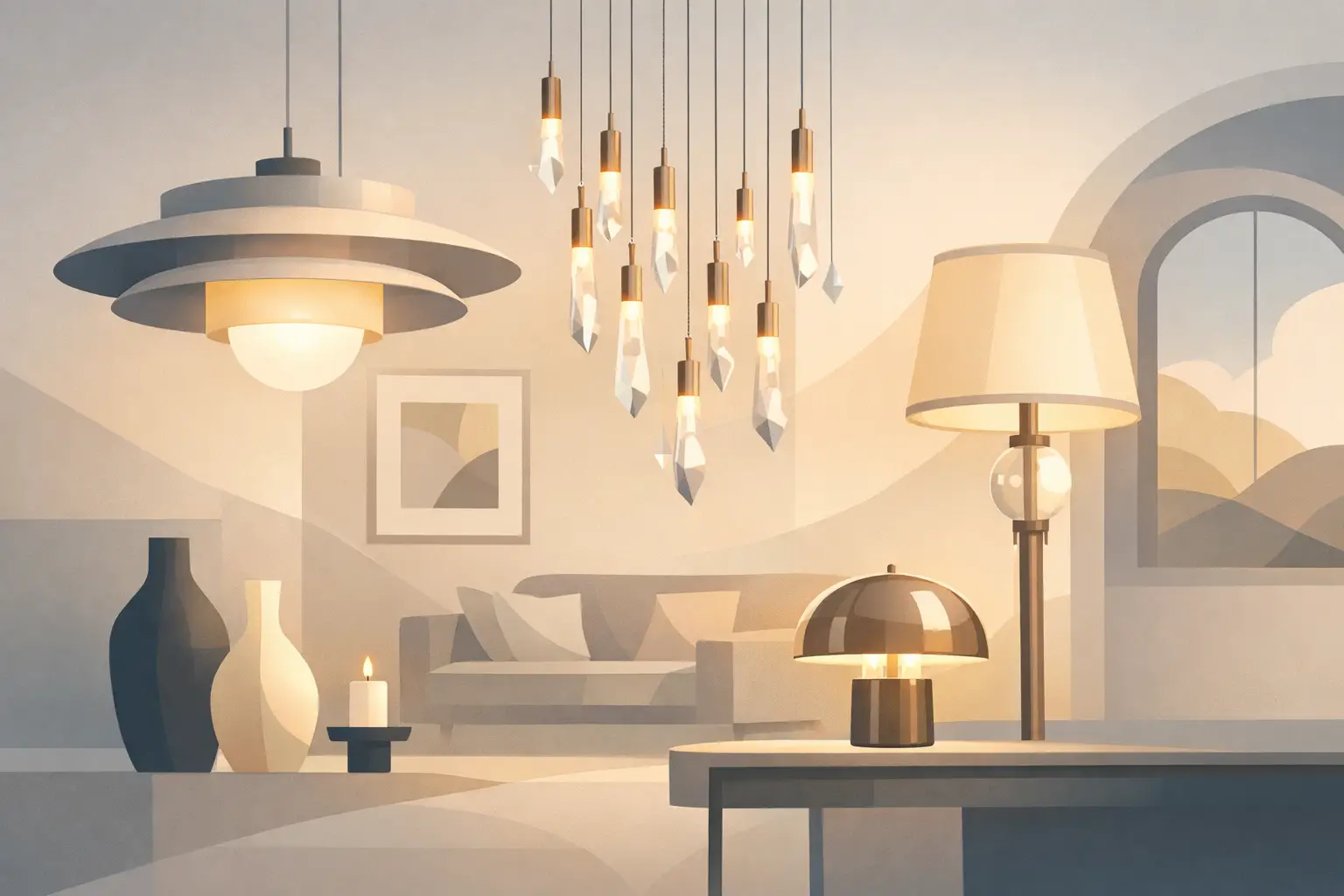
Luxury lighting is most persuasive when it is layered. Decorative light gives a room its signature, ambient light establishes a flattering overall glow, task light supports practical moments, and accent light draws attention to art, architectural details or a beautifully textured wallcovering. Each layer has a different role, but they should share the same atmosphere.
A sitting room, for example, might pair an expressive ceiling light with wall sconces, a reading lamp beside a tailored armchair and low table lamps placed to create pools of warmth. This approach avoids the common mistake of relying on overhead light alone, which can feel severe and expose shadows rather than soften them.
Dimmers are fundamental rather than optional. They allow the same room to move from daylight hours to entertaining with ease, and make even a restrained scheme feel considered. Specify compatible dimming early, particularly with decorative fittings, integrated LEDs and lighting control systems. Retrofitting the wrong components later can compromise performance and the quality of light.
Choose scale with confidence, not excess
Statement lighting requires conviction, but scale is more nuanced than choosing the largest fitting the ceiling will accommodate. A chandelier over a dining table should relate to the table’s length and width, leaving visual breathing room at either end. Above all, it should sit low enough to define the setting, yet high enough to preserve clear conversation across the table.
In a hall or stairwell, volume matters as much as width. A tall, narrow lantern may elegantly follow a double-height void, whereas a broad, low form can make the same space feel compressed. Grouped pendants can be compelling over an island or staircase, though they demand disciplined spacing and a clear relationship with the architecture.
There is also a difference between scale and visual weight. Alabaster, linen, plaster, hand-blown glass and open metalwork each occupy a room differently. An airy brass framework may be physically large but visually light; a compact alabaster lantern can feel substantial because of its material density and luminous presence. Samples, drawings and accurate dimensions are invaluable before committing.
Let materials shape the mood
The material of a fitting is not simply a decorative decision. It determines how light is diffused, reflected and remembered. Alabaster brings a gentle, clouded radiance that suits refined bedrooms, hallways and intimate dining spaces. Hand-finished plaster introduces tactility and quiet sculptural interest. Aged brass and bronze gather character over time, complementing timber, antique mirrors and richly woven textiles.
Glass offers a different language. Clear glass can feel crisp and architectural, while smoked, seeded or frosted glass introduces softness and depth. In a contemporary penthouse, a polished metal and glass pendant may sharpen the room’s profile. In a country house, a ceramic or linen-shaded lamp can temper stone, oak and traditional detailing without becoming rustic.
This is where craftsmanship deserves close attention. Hand-applied finishes, natural veining in alabaster and subtle variations in glass are evidence of material honesty, not imperfections to eliminate. Internationally respected makers such as Porta Romana, AERIN, Kelly Wearstler and Visual Comfort offer distinct design vocabularies, from expressive sculptural forms to quietly tailored classics. The right choice depends on the story of the interior, not the prominence of the name alone.
A luxury lighting buying guide to colour temperature
The most exquisite fitting can disappoint if its lamps produce a cold or inconsistent light. For most residential interiors, a warm white temperature around 2700K creates a welcoming, flattering atmosphere. It enriches timber, makes brass feel warmer and allows cream, stone and layered neutrals to retain their depth after sunset.
Some spaces benefit from a slightly different approach. A highly functional dressing area, utility room or contemporary kitchen may require brighter task lighting, provided it is balanced by warmer decorative lighting nearby. The aim is not uniformity across the house, but coherence. Rooms should transition naturally, rather than feeling as though they belong to separate properties.
Colour rendering is equally significant. A high colour rendering index helps artwork, fabrics, skin tones and painted finishes appear true to life. This matters especially where a room contains nuanced wallcoverings, rich velvet, hand-painted finishes or a considered art collection. Ask for the technical specification rather than assuming that all LED sources will deliver the same quality.
Plan lighting before finishes are fixed
The most expensive lighting mistake is often made before a fitting is even ordered. If ceiling points, wall junction boxes and switching are decided too late, the result may be a compromised location or visible cabling that interrupts a clean interior. Bring lighting into the conversation while layouts, ceilings and joinery are still being developed.
Coordinate pendants with dining tables and islands, rather than centring them automatically within the room. Align wall lights with mirrors, artwork, bedside tables and architectural axes. Where bespoke joinery is planned, consider integrated lighting that gives shelving depth without competing with the decorative scheme.
For renovation projects and new builds, ask the electrician to confirm weight loading, fixing requirements, driver locations and access for future maintenance. A substantial chandelier, particularly one in stone, metal or layered glass, may need dedicated support. These practical details are rarely glamorous, but they protect both the installation and the investment.
Spend where the eye lingers
A luxury scheme does not require every light fitting to compete for attention. Concentrate investment in the rooms and viewpoints that shape daily life: the entrance, dining room, principal sitting room, stairwell and main bedroom. In secondary spaces, well-proportioned wall lights, discreet ceiling fittings or a single elegant lamp may be sufficient.
This measured approach creates rhythm. A dramatic dining chandelier becomes more powerful when the adjacent corridor is softly lit and restrained. Similarly, a distinctive bedside lamp feels more special when it is accompanied by architectural reading lights that do their work quietly.
Consider longevity, too. A lighting piece with enduring proportions, fine materials and repairable components will outlast fast-moving trends. It can also move with you, be rewired when necessary and continue to gather meaning within a home. That is a more sophisticated definition of value than novelty.
The final choice should do more than fill a ceiling point or illuminate a corner. It should make the room feel more like itself: composed at noon, inviting at dusk and memorable long after the evening has ended.

19th July, 2026

17th July, 2026