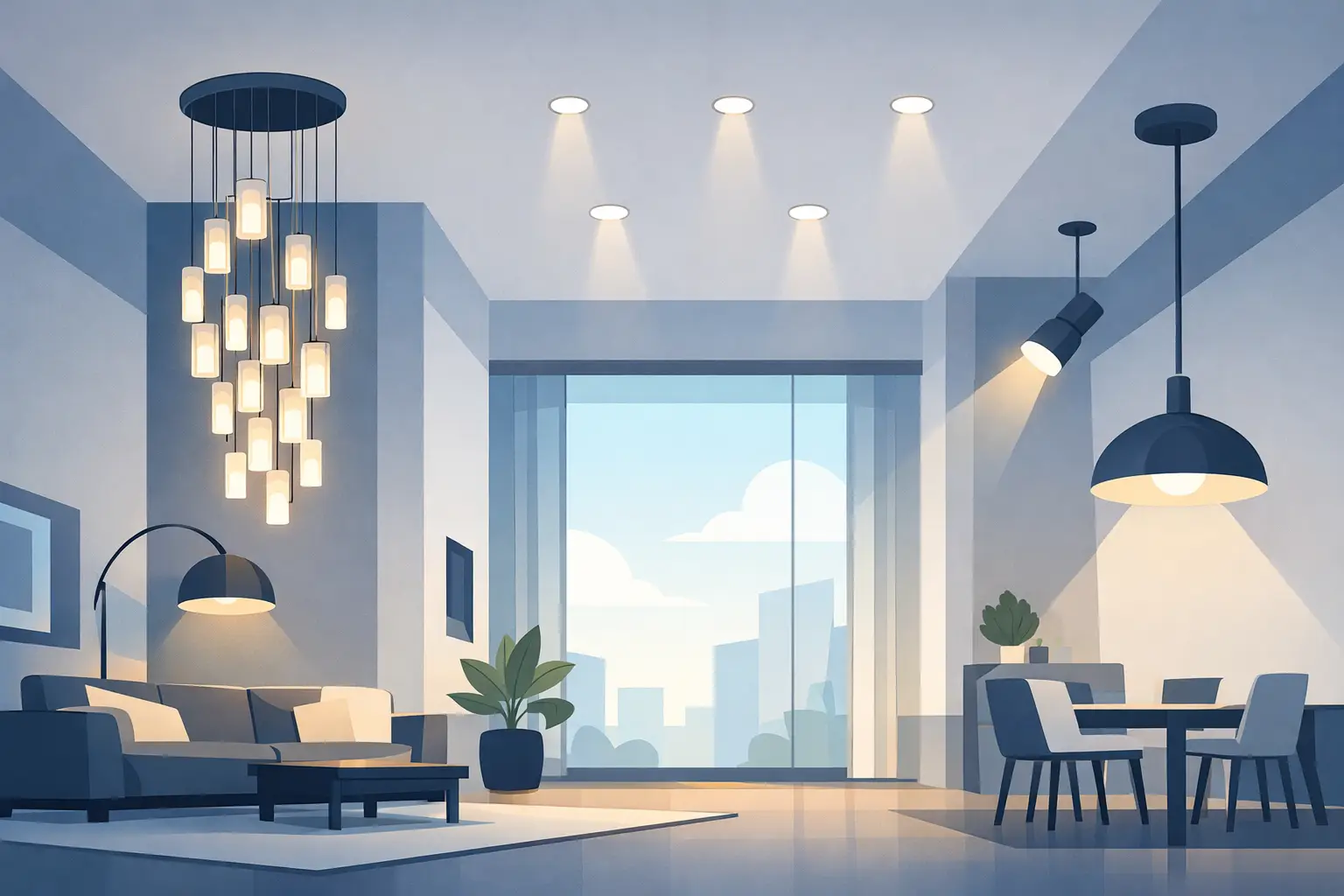
A room with soaring height can be breathtaking and oddly difficult at the same time. High ceilings create drama, volume and a sense of architectural generosity, but without the right scheme they can also feel cold, dim or visually disconnected. Choosing the best lighting for high ceilings is less about finding one impressive fixture and more about shaping atmosphere across the full vertical space.
In luxury interiors, lighting should do more than illuminate. It should soften scale, draw the eye with intention, and give a tall room the same sense of intimacy and finish as a lower, more contained space. That usually means thinking in layers, considering proportion carefully, and selecting pieces with enough presence to hold their own within the architecture.
What the best lighting for high ceilings actually needs to do
The first challenge is scale. A fitting that would feel substantial in a standard reception room can appear undersized beneath a double-height void or vaulted ceiling. The second is light distribution. If all the illumination sits at the top of the room, the lower half can remain shadowy, making the space feel less welcoming than it looks. The third is mood. Tall rooms often amplify hardness, especially where there are stone floors, glass expanses or minimal detailing.
The best lighting for high ceilings therefore has to solve several problems at once. It needs to acknowledge the height, bring visual weight into the room, and create warmth at eye level. In many cases, the answer is not a single hero piece, however beautiful, but a composed arrangement of decorative, architectural and ambient light.
Start with a statement piece, but choose proportion with discipline
In a room with generous height, a chandelier or large-scale pendant often provides the natural starting point. This is where luxury lighting comes into its own. Sculptural forms in alabaster, hand-blown glass, bronze or plaster have the ability to anchor a space while adding texture and artistry. They also help the ceiling feel purposeful rather than simply tall.
That said, bigger is not always better. A fitting should relate not only to ceiling height, but also to the room’s width, furnishings and sightlines. In a grand entrance hall, a dramatic cascading chandelier may be exactly right because it occupies the vertical drop elegantly. In a lofty sitting room, a broad horizontal pendant might work better, particularly if the seating arrangement is expansive and low.
Suspension height matters just as much as scale. One of the most common mistakes in tall spaces is hanging the main fitting too high, leaving it to float near the ceiling where it becomes decorative background rather than part of the room. Bringing a pendant or chandelier lower can make the architecture feel more human and connected, provided circulation and views remain clear.
Why layered light matters more in tall rooms
A single central fitting rarely does enough in a high-ceilinged interior. However exquisite it may be, it cannot carry the entire room. Layered lighting is what turns height into atmosphere rather than emptiness.
Wall lights are often the most underrated tool in these spaces. They introduce illumination at a more intimate level, breaking up long wall planes and softening vertical scale. In period properties, they can highlight mouldings, fireplaces and art. In contemporary homes, they add rhythm and refinement without cluttering the architecture.
Table lamps and floor lamps are equally important because they pull the light down into the living zone. This is essential in drawing rooms, bedrooms and library spaces where comfort matters as much as visual impact. Pools of warm light around seating, side tables and consoles make a tall room feel inhabited and calm.
Discreet architectural lighting also plays a role. Recessed downlights, when used sparingly and positioned well, can provide practical illumination without competing with decorative fittings. Uplighting can be especially effective in rooms with beams, coffering, textured plaster or impressive ceiling details, as it celebrates the architecture instead of ignoring it.
The best lighting choices by room type
Not every high ceiling asks for the same solution. The architecture and function of the room should always guide the scheme.
Entrance halls and stairwells
These are often the most obvious places for statement lighting. A tall stairwell or double-height hall benefits from a chandelier with a strong silhouette or a multi-drop installation that emphasises the volume. The key is to ensure the fitting looks compelling from every angle, including from upper landings and approaching sightlines.
Here, drama is welcome, but so is softness. Pairing the central piece with wall lights or concealed lighting prevents the space from feeling overly formal or cavernous after dark.
Sitting rooms and reception spaces
In living areas, the goal is usually balance rather than spectacle alone. A sculptural pendant can establish the room’s identity, but softer secondary lighting is what makes the space usable in the evening. Floor lamps beside generous seating, table lamps on consoles, and carefully placed wall lights create a more nuanced atmosphere than ceiling light alone ever can.
If the room has exposed beams or a vaulted form, lighting should work with those lines rather than fight them. Sometimes a series of pendants or a combination of pendant and accent lighting feels more considered than one oversized chandelier.
Kitchens and dining areas
High-ceilinged kitchens need practical light without losing elegance. Over an island, linear pendants or a pair of substantial fixtures can create enough presence to balance the room’s scale. In dining spaces, a chandelier hung relatively low over the table can visually ground the setting, even if the ceiling rises far above it.
This is one of the clearest examples of where the fitting should relate to the furniture rather than the ceiling alone. The table becomes the anchor, and the light defines that zone beautifully.
Bedrooms with vaulted or tall ceilings
Bedrooms should feel enveloping, not echoing. In these rooms, softer materials and warmer light temperatures are especially important. A decorative pendant can add romance and architecture, but bedside lamps, low-level lighting and gentle wall lights are what create restfulness.
If the ceiling is very high, avoid relying on one overhead source. Otherwise, the room may feel impressive by day yet strangely exposed at night.
Material, finish and light quality matter as much as form
In elevated interiors, the finish of a light fitting changes the character of the room even before the lamp is switched on. Alabaster diffuses light with exceptional softness, making it well suited to grand spaces that need warmth. Hand-finished plaster and ceramic can introduce a quiet, tactile sophistication. Bronze, antique brass and patinated metals tend to sit more elegantly in timeless schemes than anything overly glossy or stark.
Glass requires more nuance. Clear glass can be beautiful in large volumes because it keeps the scheme feeling light, but it can also read cold if not balanced with warmer finishes elsewhere. Smoked, frosted or textured glass often feels more atmospheric, particularly in residential settings.
Light temperature is another detail that should never be left to chance. High ceilings can make cool light feel harsher and more remote. In most luxury homes, warmer light creates the depth and comfort people instinctively want in the evening. Dimmer control is equally essential. It allows a large space to shift from bright and practical to intimate and composed.
Common mistakes in high-ceiling lighting schemes
The most frequent error is treating a tall room as though it simply needs more wattage. Brightness is not the same as atmosphere. Flooding a double-height space with uniform light often strips it of character.
Another mistake is ignoring the middle and lower levels of the room. When all the emphasis is on the ceiling plane, the space can feel unfinished where people actually live, dine or gather. Good lighting should lead the eye from top to bottom with ease.
There is also a tendency to choose fittings based on height alone, without enough regard for style, materiality or architecture. A grand chandelier in the wrong design language can feel disconnected, however expensive it is. The best schemes always feel as though the lighting belongs to the building and the furnishings within it.
A design-led approach creates the most lasting result
The most successful high-ceiling lighting schemes feel effortless, but they are rarely accidental. They are considered in section as well as plan, with each layer contributing to how the room is experienced from different positions and at different times of day.
For discerning homeowners and design professionals, this is where curated collections make a real difference. A sculptural statement piece from a house such as Porta Romana or Kelly Wearstler can establish identity, while refined architectural and decorative layers complete the experience with subtle authority. The point is not excess. It is composition.
When selecting the best lighting for high ceilings, think beyond filling the void. Think about proportion, intimacy, materiality and the emotional temperature of the room. Height is a gift in interior architecture – but it only becomes truly beautiful when the lighting gives it a sense of belonging.

15th September, 2026

13th September, 2026