






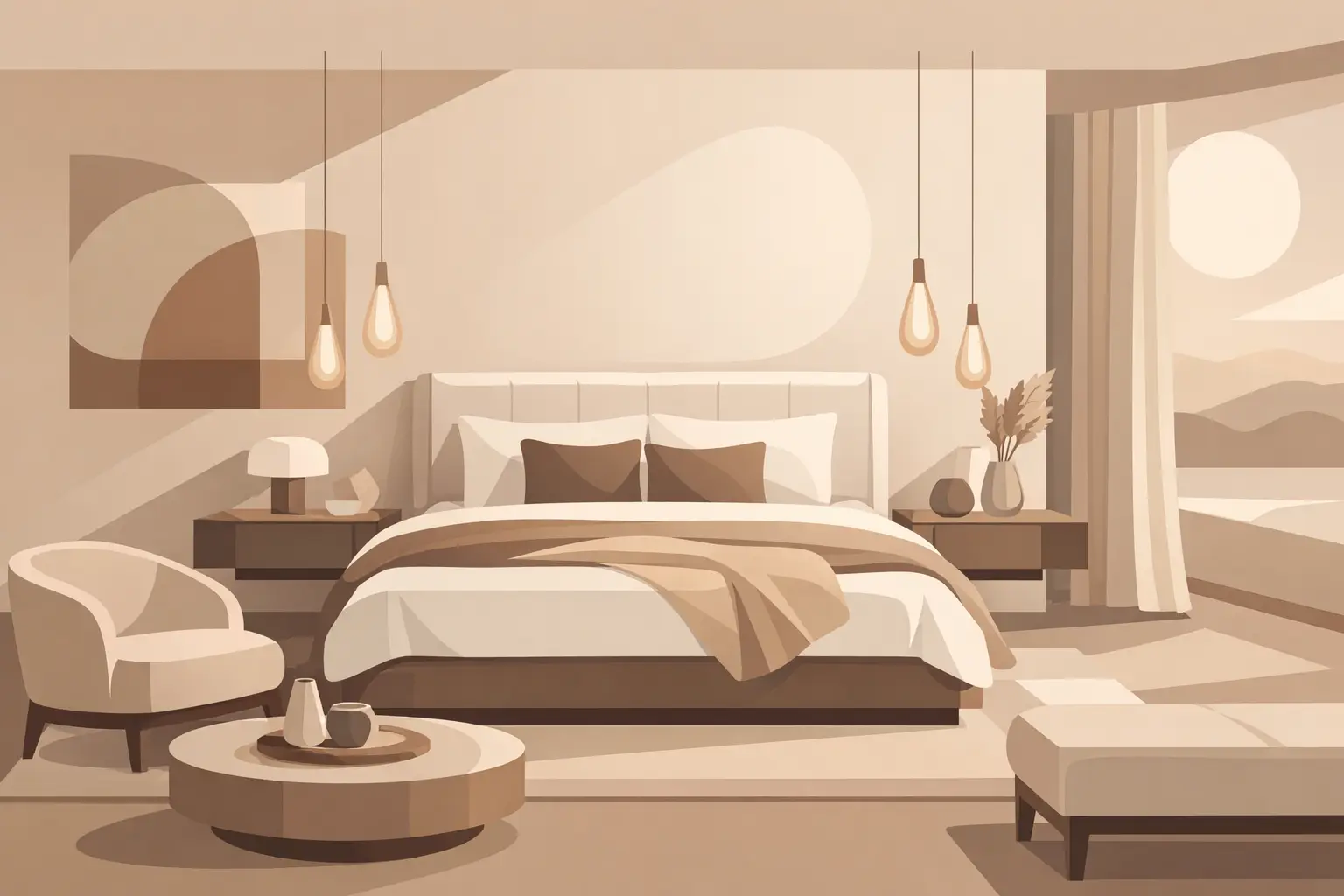
A truly luxurious bedroom is rarely the result of expensive pieces alone. The rooms that feel quietly exceptional are the ones with restraint, depth and a clear point of view. This guide to luxury bedroom design is about creating that atmosphere – a room that restores, flatters, and feels deeply personal rather than simply decorated.
Luxury in a bedroom should first be felt, then seen. The scale of the bed, the softness of the light, the way fabric falls, the touch of timber or stone at the bedside – each element shapes the emotional register of the room. When these decisions are made in isolation, even beautiful products can compete. When they are composed with care, the space reads as calm, confident and complete.
What defines a luxury bedroom design?
The most successful luxury bedroom design schemes balance visual elegance with physical comfort. They are generous without feeling crowded, layered without appearing busy, and polished without becoming cold. That balance matters because a bedroom is more intimate than a drawing room or dining space. It must perform beautifully at night, in early morning light, and on slower afternoons when the room becomes a private retreat.
Material quality is one defining factor, but so is proportion. A tall upholstered headboard can bring gravitas to a room with lofty ceilings, while lower, more architectural furniture may better suit a contemporary penthouse. The same applies to finish. High gloss lacquers, polished metals and mirrored surfaces can feel glamorous, but they need warmth around them – perhaps in the form of brushed oak, boucle, linen or hand-finished plaster – to avoid a hotel-like impersonality.
That is often the trade-off in luxury interiors. Too much softness and the room loses definition. Too much statement and it loses serenity. The strongest schemes hold both.
Start with the architecture, not the accessories
Before choosing bedside lamps or a fabric palette, look carefully at the room itself. Ceiling height, window placement, natural light, cornicing, alcoves and sightlines should all guide the design direction. A heritage property may call for a more nuanced dialogue between old and new, while a newly built home often benefits from added texture and architectural layering to create character.
In larger bedrooms, zoning becomes especially important. A room may need space not just for sleeping, but for reading, dressing or simply pausing. This does not mean filling every corner. Often, the most luxurious gesture is allowing furniture to breathe. A sculptural armchair by a window, a bench at the foot of the bed, or a finely detailed console can articulate the room without overworking it.
A practical guide to luxury bedroom design should always begin here, because no amount of styling can correct a layout that feels awkward. If circulation around the bed is too tight, if bedside tables are underscaled, or if storage dominates the room, the sense of ease disappears.
The bed should anchor the room
The bed is naturally the focal point, but in luxury schemes it should do more than command attention. It should establish the room’s character. Upholstered headboards remain a favourite because they bring softness, height and acoustic comfort, yet the detailing makes all the difference. Deep channel tufting can feel more dramatic, while a clean tailored profile in textured linen or velvet creates a quieter form of luxury.
Scale is critical. In a principal bedroom, an undersized bed will make the room feel unresolved. Equally, an overblown frame in a modest space can look oppressive. The relationship between bed, rug, bedside tables and lighting should feel deliberate, as though each element belongs to the same visual conversation.
Bedding deserves the same discipline. Crisp white bed linen has enduring appeal, but it is not the only route to refinement. Soft mineral tones, warm neutrals, tobacco, olive, clay and muted plum can all add sophistication when layered thoughtfully. The aim is not excessive dressing. It is richness through texture – washed linen against silk-edged cushions, a cashmere throw over a quilted coverlet, perhaps a contrast welt or bespoke trimming that introduces a subtle note of distinction.
Lighting creates the mood
If there is one element that separates a competent bedroom from a memorable one, it is lighting. Bedrooms need layered illumination, not a single decorative gesture. Ambient light sets the mood, task lighting supports reading and dressing, and accent lighting gives depth to joinery, artwork and architectural details.
A central pendant or chandelier can bring sculpture and presence, especially above the bed or in the middle of the room, but it should not be relied upon as the room’s only source of light. Bedside lamps create intimacy, wall lights save surface space and can frame the headboard beautifully, while discreet ceiling or joinery lighting helps the room transition from day to evening with ease.
The finish and materiality of lighting matter as much as the light itself. Alabaster, bronze, hand-blown glass, ceramic and patinated metal all contribute to atmosphere. In bedrooms, warm colour temperature is essential. Anything too cool or bright will flatten the room and undermine the sense of retreat.
It is also worth considering control. Dimmable circuits, separately switched bedside lighting and well-planned reading lights are not merely technical details. They are part of what makes a room feel considered.
Fabrics are where luxury becomes tangible
A beautifully designed bedroom is experienced through touch as much as sight. Curtains, wallcoverings, upholstery and rugs carry much of the room’s emotional weight, which is why fabric selection deserves serious attention. Fine materials do not need to be loud to be effective. A boucle with a dry hand, a brushed wool, an elegant velvet or a sheer linen with beautiful drape can transform the atmosphere of a room almost quietly.
Curtains should be full, well-lined and properly proportioned to the architecture. They frame the windows, soften acoustics and affect how the room feels in both daylight and lamplight. In some schemes, a double treatment of sheer and interlined drapery offers the most versatile result, especially where privacy, light control and softness all matter.
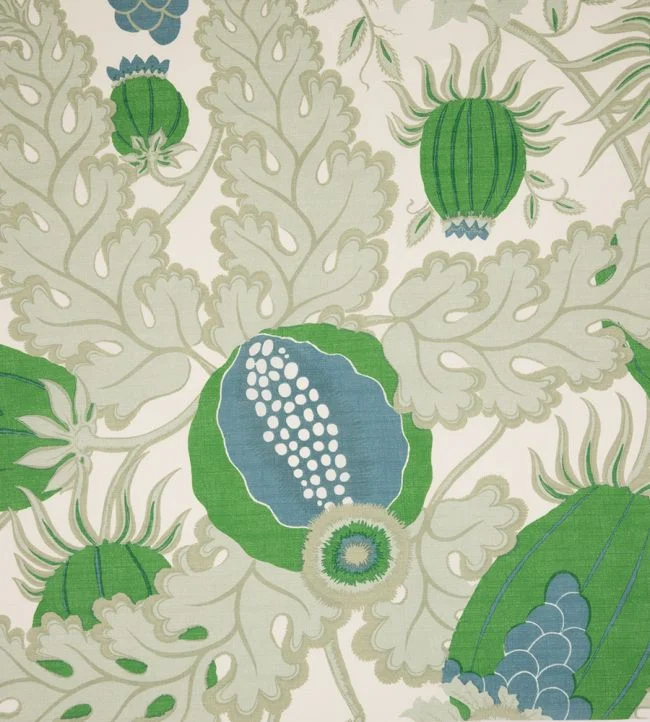
Wallcoverings add another layer of depth. In more restrained bedrooms, a textured paper or woven wallcovering can create richness without relying on overt pattern. In bolder schemes, a mural, panelled textile wall or subtle metallic finish can make the room feel entirely bespoke. The key is to think in terms of atmosphere rather than feature walls.
Furniture should feel curated, not collected
Luxury bedrooms benefit from furniture with presence, but every piece should earn its place. Bedside tables, chests, dressing tables, benches and occasional seating need to support the room functionally while contributing to its identity. This is where craftsmanship speaks loudly. The edge detail of a cabinet, the grain of natural oak, the veining of stone, the softness of a leather top, the shadow line beneath a piece of joinery – these details are often what give a room longevity.
Mixing materials tends to create a more sophisticated result than matching sets. A smoked oak bedside table beside an upholstered bed may feel more resolved than buying everything from one collection. Likewise, a sculptural mirror, a parchment-fronted chest or a bronze-framed bench can add character that feels assembled over time.
Bespoke elements are often worthwhile in a bedroom because storage needs are so personal. Integrated wardrobes, concealed dressing areas or custom nightstands can solve practical requirements without visual compromise. For many clients, that is where true luxury lies – not in abundance, but in precision.
Finishing details are never incidental
The final layer of a luxury bedroom is what prevents it from feeling generic. Passementerie, contrast piping, tailored cushions, antique brass hardware, hand-finished trims and carefully selected accessories introduce individuality and refinement. These elements should not read as decoration for its own sake. They should reinforce the story the room is already telling.
Art also matters. In a bedroom, it should support calm rather than compete with it. Pieces with texture, tonal subtlety or personal resonance tend to work best. The same applies to decorative objects. A few well-chosen pieces on a bedside table or console will feel more luxurious than excessive styling.
Scent, sound and tactility should not be overlooked either. Bedrooms are sensory spaces. Upholstered walls can soften acoustics, rugs underfoot change how the room is experienced, and even the weight of a door handle contributes to the subconscious perception of quality.
Why the best luxury bedrooms feel personal
The finest bedrooms are not designed to follow a trend cycle. They reflect the habits, tastes and rhythms of the people who use them. One client may want a softly layered sanctuary with linen, limewashed walls and pale timber. Another may prefer a more tailored, metropolitan mood with dark joinery, sculptural lighting and richly figured stone. Both can be luxurious. What matters is coherence.
That is why curation is more valuable than formula. At Tobias Oliver Interiors, the most compelling schemes are shaped through a dialogue between architecture, craftsmanship and the client’s own way of living. Luxury is not simply a look. It is a level of attention.
If you are shaping your own bedroom, begin with what you want the room to make you feel. Calm, cocooned, quietly glamorous, architecturally sharp – that emotional brief will lead you towards better choices than any trend report ever could.

25th June, 2026

24th June, 2026