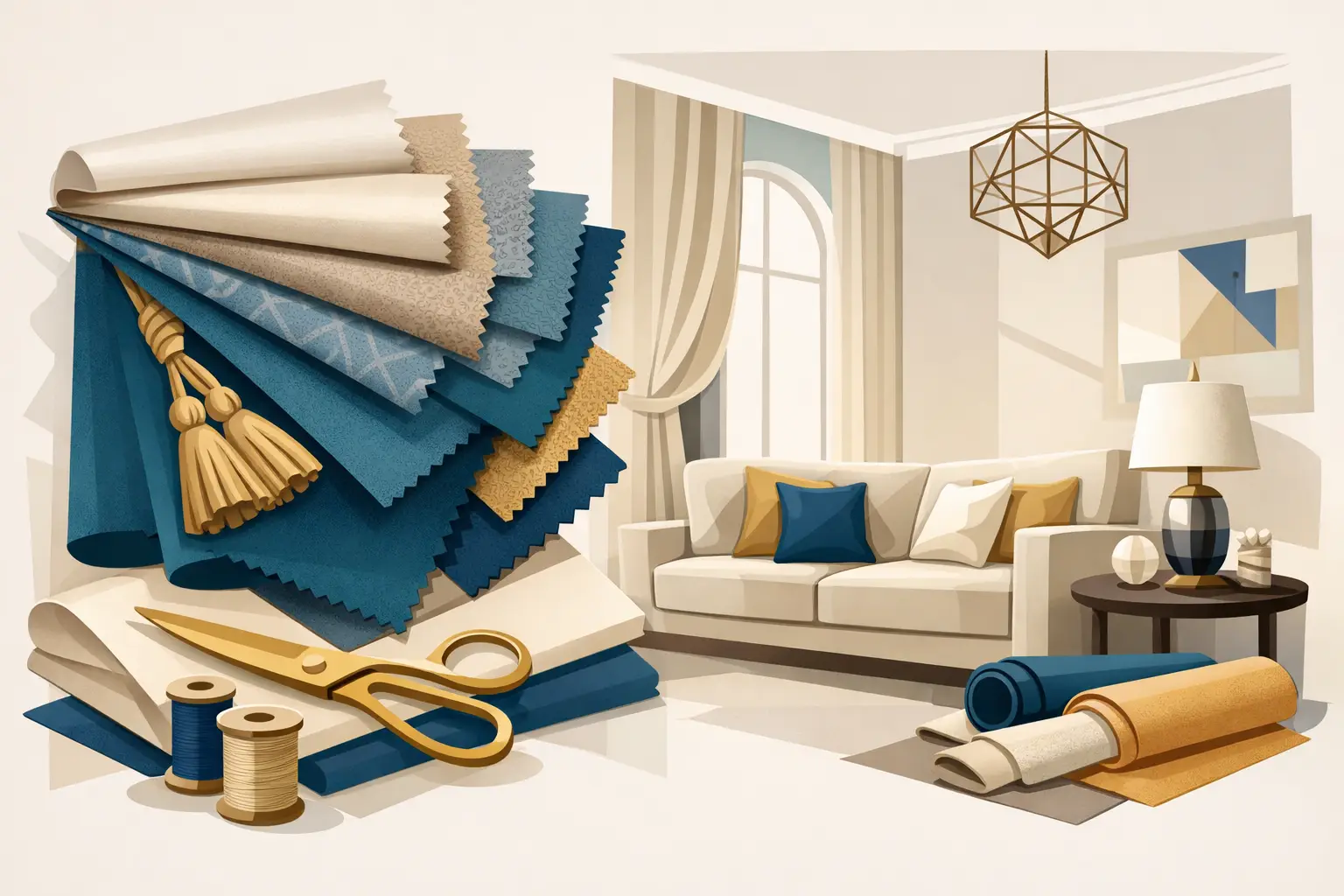
A room is often judged first by its silhouette, but it is remembered for how it feels. The hand of a velvet on an armchair, the quiet movement of linen at a window, the richness of a woven silk cushion: these details give an interior its emotional register. The best luxury fabric houses understand that cloth is not merely a finish. It is a material language, capable of bringing warmth, rhythm, heritage and individuality to a scheme.
For a considered home, selecting fabric is less about finding a pleasing pattern and more about establishing a point of view. A textile may soften a rigorous architectural space, give a contemporary room a sense of history, or bring visual repose to a home filled with art and objects. The right house depends on the desired atmosphere, the practical demands of the setting and the level of originality required.
What Sets the Best Luxury Fabric Houses Apart
The distinction begins with depth. Exceptional fabric houses develop collections with a recognisable design vocabulary, but they also offer enough variation in scale, colour, construction and performance to support a complete interior. Their textiles are designed to converse with one another: a graphic print can sit beside a textural plain, a decorative braid can sharpen the edge of an upholstered piece, and a sheer can temper the daylight without becoming visually absent.
Craftsmanship is equally central. The finest makers work with considered fibres, from crisp Belgian linen and finely spun wool to tactile bouclé, cotton velvet and silk blends with a nuanced lustre. Their quality is felt in the drape, the density of the weave and the way colour holds across the surface. These are fabrics that reward proximity.
Yet luxury should not be confused with fragility. A magnificent hand-embroidered linen may be ideal for a formal bedroom or a pair of occasional chairs, while a family sitting room needs a more forgiving construction. Leading houses increasingly offer elevated performance fabrics that resist wear and staining while retaining a sophisticated handle. The most successful schemes use both intelligently rather than asking one textile to solve every problem.
Heritage, Character and Decorative Authority
For interiors that draw on classical architecture, English country-house sensibility or a collected European look, heritage fabric houses remain invaluable. GP & J Baker, Colefax and Fowler, Osborne & Little and Baker Lifestyle each bring a particular understanding of decorative tradition, whether through archival florals, formal damasks, painterly botanicals or elegant small-scale prints.
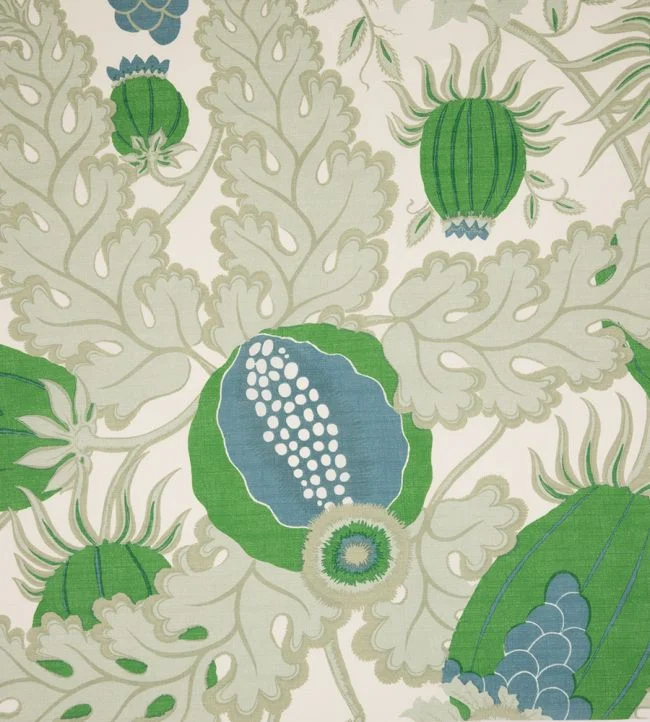
These collections are especially compelling when a home needs pattern with permanence. A traditional print can be made distinctly current when it is used selectively: on a headboard, in a library, lining a cabinet or framing windows in a room with cleaner-lined furniture. The result should feel edited rather than thematic. Pairing a storied floral with a dry linen, dark timber and sculptural lighting prevents the scheme becoming overly literal.
Pierre Frey and Lelièvre offer another form of decorative confidence. Their collections often carry a spirited, worldly sensibility, combining historical references with vivid colour, unexpected geometry and artisanal detail. They are particularly effective in spaces where personality is welcome: a guest bedroom, dressing room, entrance hall or a city flat that needs a stronger narrative.
Heritage is not simply about looking backwards. It can supply the contrast that makes a contemporary interior feel more settled and more human. The key is proportion. A large-scale archival motif requires space to breathe; a compact print can bring intimacy to smaller rooms and secondary furnishings.
Contemporary Makers for Quietly Distinctive Rooms
For a more architectural expression of luxury, contemporary fabric houses offer texture, restraint and sophisticated colour with exceptional assurance. Dedar is celebrated for textiles that can feel both modern and enduring, from airy linens to richly dimensional velvets and distinctive jacquards. Its materials suit interiors where form, tactility and atmosphere carry more weight than overt pattern.
De Le Cuona has a similarly powerful affinity with natural fibres. Its linens, wools and tactile constructions bring depth without unnecessary decoration, making them a natural choice for relaxed yet refined country houses, coastal residences and calm urban bedrooms. A beautiful neutral is never simply beige when the weave, irregularity and finish have been properly considered.
Zimmer + Rohde and Nobilis also offer a broad, international perspective, with collections that move easily between tailored contemporary upholstery, decorative sheers and expressive wall-to-wall drapery. Their range can be particularly useful when a project demands cohesion across several rooms, balancing calm foundations with moments of drama.
For an interior that values artful modernity, Christopher Farr Cloth brings painterly prints and graphic motifs with a cultivated, individual quality. These fabrics can introduce a sense of creative tension into otherwise restrained rooms. Used on a single chair, a screen, cushions or Roman blinds, they become a focal point without overwhelming the architecture.
Choosing a Luxury Fabric House by Application
The most effective starting point is not the brand name but the role the fabric must perform. Upholstery carries the closest physical relationship to the home. It should be judged for abrasion resistance, fibre content, texture and how it will age in daily use. A sofa in a sunlit family room has very different needs from a chaise in a private dressing room.
Curtains demand attention to drape and scale. Linen and wool can create a softly architectural fall, while silk and satin offer greater formality and light play. In a tall room, generous fullness and a well-chosen heading can make even a quiet plain feel deeply luxurious. In a compact space, a sheer or fine linen may preserve daylight while still adding softness and privacy.
For cushions, lampshades and decorative panels, the conversation can become more expressive. A small quantity of an intricate embroidery, a lacquered-looking velvet or a hand-blocked print can bring an otherwise composed scheme into focus. Here, fabrics from makers such as Rubelli, Casamance, Black Edition and Romo can provide colour, pattern and texture with a highly finished feel.
It is also worth considering trimmings from the outset rather than as a final embellishment. A contrast welt, bullion fringe or tailored tape can alter the character of a piece completely. Samuel & Sons, for example, demonstrates how a precise detail can bring a bespoke quality to upholstery and window treatments. In the right context, trimming is not ornament for ornament’s sake; it is the line that makes the composition feel resolved.
Colour Is More Than a Shade Card
The most luxurious interiors tend to build colour through material rather than relying on a single flat tone. A scheme of stone, tobacco or mineral blue gains richness when those hues appear in linen, wool, velvet and timber, each responding differently to light. This is where working within a fabric house’s collection can be helpful: the colour stories are often developed to create harmony across varied constructions.
That said, a perfectly matched room can feel overly controlled. Introduce tonal shifts and occasional contrast. A chalky wallcovering beside a warmer ivory curtain, or deep olive velvet against an aged brass lamp, creates the subtle friction that gives a room life. The best fabric selections evolve through the day and continue to reveal their character over time.
Requesting a cutting rather than relying on a screen image is essential. View it against surrounding finishes, in both daylight and artificial light, and at the scale at which it will be used. A dramatic pattern that delights on a sample may need to be reconsidered once repeated across six metres of curtain fabric.
A Curated Approach Creates Better Interiors
An exceptional fabric house offers possibility; curation is what turns possibility into a coherent home. Start with one material that expresses the feeling you want to evoke – perhaps an earthy linen, a deep mohair velvet or a lyrical botanical print. Let it establish the emotional direction, then layer complementary textiles with restraint.
At Tobias Oliver Interiors, this approach means looking beyond individual swatches towards the entire composition: furniture proportion, lighting, wall finishes, rugs and the way a room will actually be lived in. The aim is not to fill a space with recognisable names, but to select pieces that tell a story with assurance.
The best luxury fabric houses give interiors their texture of permanence. Choose the ones whose materials feel right in the hand, truthful to the architecture and generous enough to become part of the memories made in the room.

22nd August, 2026

20th August, 2026