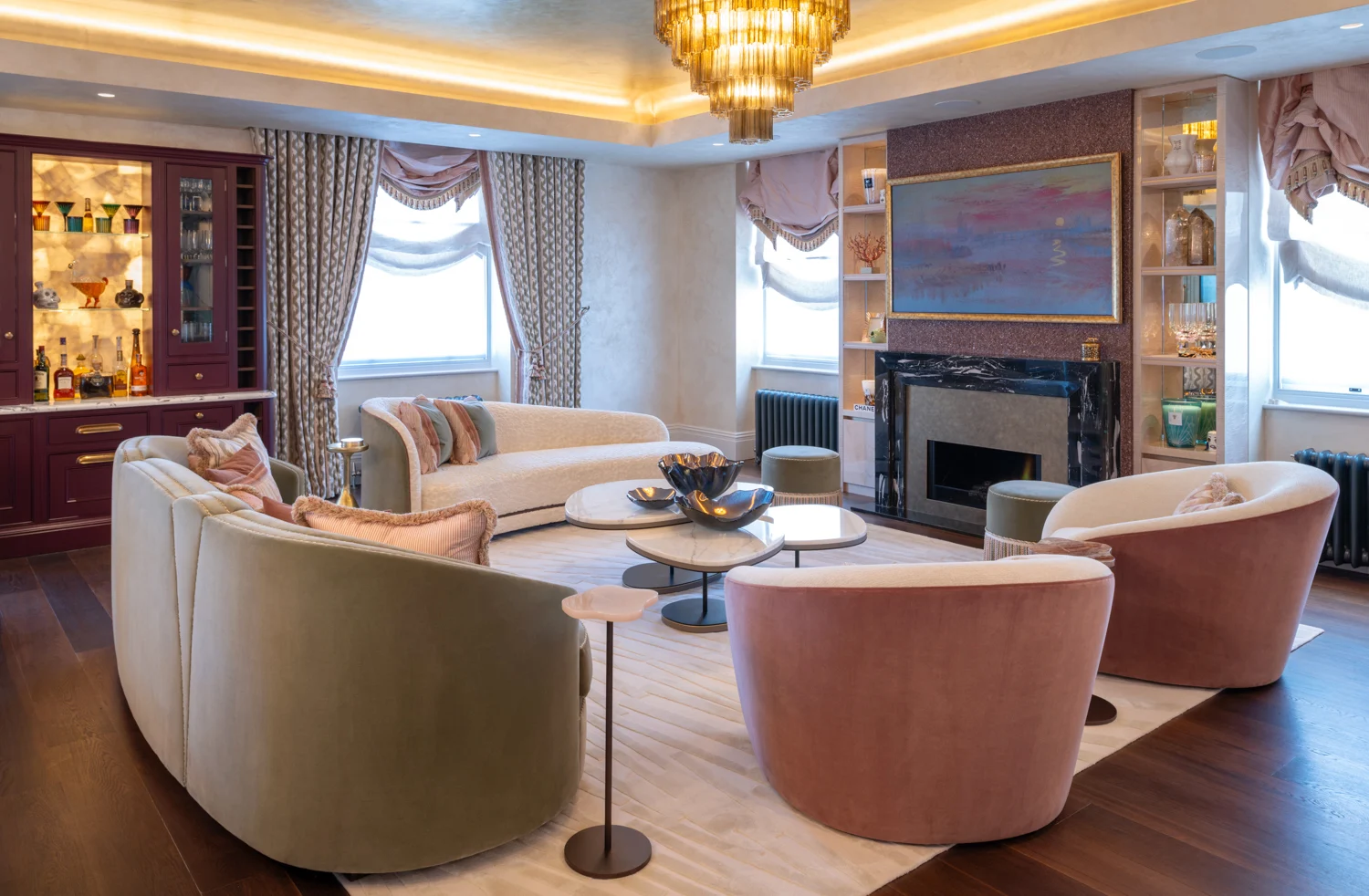
A sculptural pendant above a dining table can make a room feel instantly composed. Yet, if the table is left in shadow at either end, or faces are poorly lit at supper, its visual drama soon feels secondary. This is the essential distinction in designer lighting vs architectural lighting: one often brings character, artistry and a focal point; the other shapes how a space works, feels and moves from morning to night.
For a considered interior, this should never be an either-or decision. The most compelling homes use both disciplines with intent, allowing light to reveal material, create atmosphere and support daily life without announcing the technical effort behind it.
What designer lighting brings to a room
Designer lighting is the visible, expressive layer. It includes the pendant suspended in a double-height entrance hall, the hand-finished wall light beside a bed, the alabaster table lamp on a console, or the floor lamp that gives a reading corner its quiet sense of occasion. These pieces have a physical presence even before they are switched on.
At its best, designer lighting behaves much like furniture or art. Its scale, finish and silhouette contribute to the room’s visual language. A fluted ceramic lamp might soften a tailored library; a bronze chandelier can lend depth to a contemporary dining room; a finely proportioned glass wall light brings delicacy to a panelled corridor. Brands with a strong decorative heritage understand that small details – a hand-applied finish, a subtly irregular surface, the warmth of aged metal – carry real emotional weight.
This is why a decorative fitting should not be treated as a final accessory. It can establish the narrative of a room from the outset. In a restrained interior, one exceptional pendant may provide the necessary tension. In a more layered scheme, a family of lamps and wall lights can echo the colours, tactility and craftsmanship found in upholstery, wallcoverings and joinery.
Designer lighting does, however, have practical limits. A beautiful pendant is not automatically adequate task lighting, and a pair of wall lights may flatter a bedroom without lighting a wardrobe or dressing area effectively. Selecting a piece for its appearance alone can result in pools of light, unwanted glare or a room that looks impressive in photographs but is less comfortable to inhabit.
The discipline behind architectural lighting
Architectural lighting is integrated into the building and its surfaces. It commonly includes recessed downlights, trimless fittings, concealed linear LEDs, cove lighting, uplights, joinery illumination and carefully positioned task lights. Its purpose is to give form, function and hierarchy to a space while remaining largely invisible.
Rather than asking, ‘What fitting do we want here?’, architectural lighting begins with more fundamental questions. Where will people pause, work, cook, read and gather? Which textures deserve to be revealed? How does daylight enter the room, and where does it fall away after sunset? The answers inform the lighting plan before ceilings are closed, joinery is built or furniture is placed.
A well-resolved scheme might wash a textured plaster wall with gentle light, set discreet downlights away from the edge of cabinetry to avoid harsh shadows, and use concealed illumination to make a bespoke bar or bookcase appear to float. It may also use low-level lighting to guide movement through a hallway at night, preserving a sense of calm without flooding the home with brightness.
The quality of light matters as much as its quantity. Colour temperature, beam angle, colour rendering and dimming compatibility affect how skin, timber, stone, textiles and art are perceived. In a residential setting, warmer light is often preferable for living spaces, particularly in the evening. But warmth should not mean dullness. High colour rendering helps paint, fabrics and natural materials retain their intended nuance.
Architectural lighting requires early coordination between interior designer, architect, electrician and lighting specialist. Retrofitting is possible, but it often asks for compromise: surface-mounted alternatives, additional joinery work or fewer control options. For new builds and major renovations, planning this layer early is one of the most valuable investments in the finished interior.
Designer lighting vs architectural lighting: the real choice
The distinction is useful, but the finest schemes dissolve it. Architectural lighting creates the conditions for a room to function beautifully; designer lighting gives the room a recognisable point of view. One establishes the canvas, while the other adds gesture, rhythm and personality.
Consider a kitchen-dining space. Recessed or concealed lighting can illuminate worktops evenly, make open shelving useful and prevent the far corners of the room from disappearing after dark. Above the dining table, a statement pendant introduces intimacy and visual focus. Dimming both layers independently allows the room to shift from a bright breakfast setting to an atmospheric dinner setting without changing a single piece of furniture.
In a sitting room, the hierarchy may reverse. Decorative table lamps and floor lamps create the gentlest, most flattering ambience, particularly when positioned at varied heights. Architectural lighting can then be used sparingly: perhaps to illuminate artwork, define bookcases or bring subtle depth to an otherwise dark wall. Too many ceiling downlights can flatten the room and make it feel more like a circulation space than a place for lingering.
Bedrooms benefit from a similarly layered approach. Bedside wall lights or pendants free up space on side tables and make an elegant compositional statement. Concealed wardrobe lighting and well-placed ceiling illumination support dressing and practical routines. The crucial detail is control: each layer should be capable of operating independently, so the room can be lit for reading, dressing or rest.
Where schemes most often fall short
The common mistake is uniformity. A ceiling filled with evenly spaced downlights may appear orderly on plan, but it rarely produces an inviting result. Light needs contrast. It should draw attention to the places that matter while allowing other areas to recede.
Scale is another frequent issue. A pendant that is too small above a large table loses presence, while an oversized fitting can obstruct sightlines and dominate the room. The solution is not simply to follow a formula. Ceiling height, furniture proportions, the openness of the plan and the visual weight of the fitting all matter. In a grander space, several smaller pendants can sometimes create more rhythm than one monumental centrepiece.
Glare deserves equal attention. Exposed bulbs, poorly shielded downlights and glossy surfaces can create discomfort, particularly in rooms designed for relaxation. It is worth assessing fittings both seated and standing, and at the times of day when they will be used most. A luxurious interior should feel considered from every viewpoint, not only when first entered.
Finally, controls are often overlooked. Dimming is not an optional flourish in a layered scheme; it is what makes the layers useful. Discreet scenes for entertaining, evening relaxation, cleaning and night-time circulation give a home flexibility without complicating its operation.
A more considered way to specify light
Begin with the experience you want each room to evoke, then work backwards to the technical requirements. A formal dining room may call for a dramatic decorative centrepiece, but it also needs enough gentle illumination for conversation, food and the details of the table. A marble bathroom may need clear task light at the mirror, balanced with softer ambient light that respects the material’s luminosity.
Select designer pieces early enough that their dimensions, drop lengths and electrical requirements can inform the wider plan. Equally, do not allow decorative fittings to be chosen in isolation from their light source. The right bulb, shade, diffuser and dimming system can transform the effect of a piece, preserving its beauty while ensuring it performs as intended.
A curated lighting scheme is not about filling a home with visible fittings or concealing every source of illumination. It is about knowing when each approach earns its place. When architecture supplies the quiet structure and decorative lighting introduces warmth, craftsmanship and a distinct point of view, rooms become more than beautifully furnished. They shape experiences, evoke emotion and continue to reveal themselves long after the first impression.

16th August, 2026

15th August, 2026