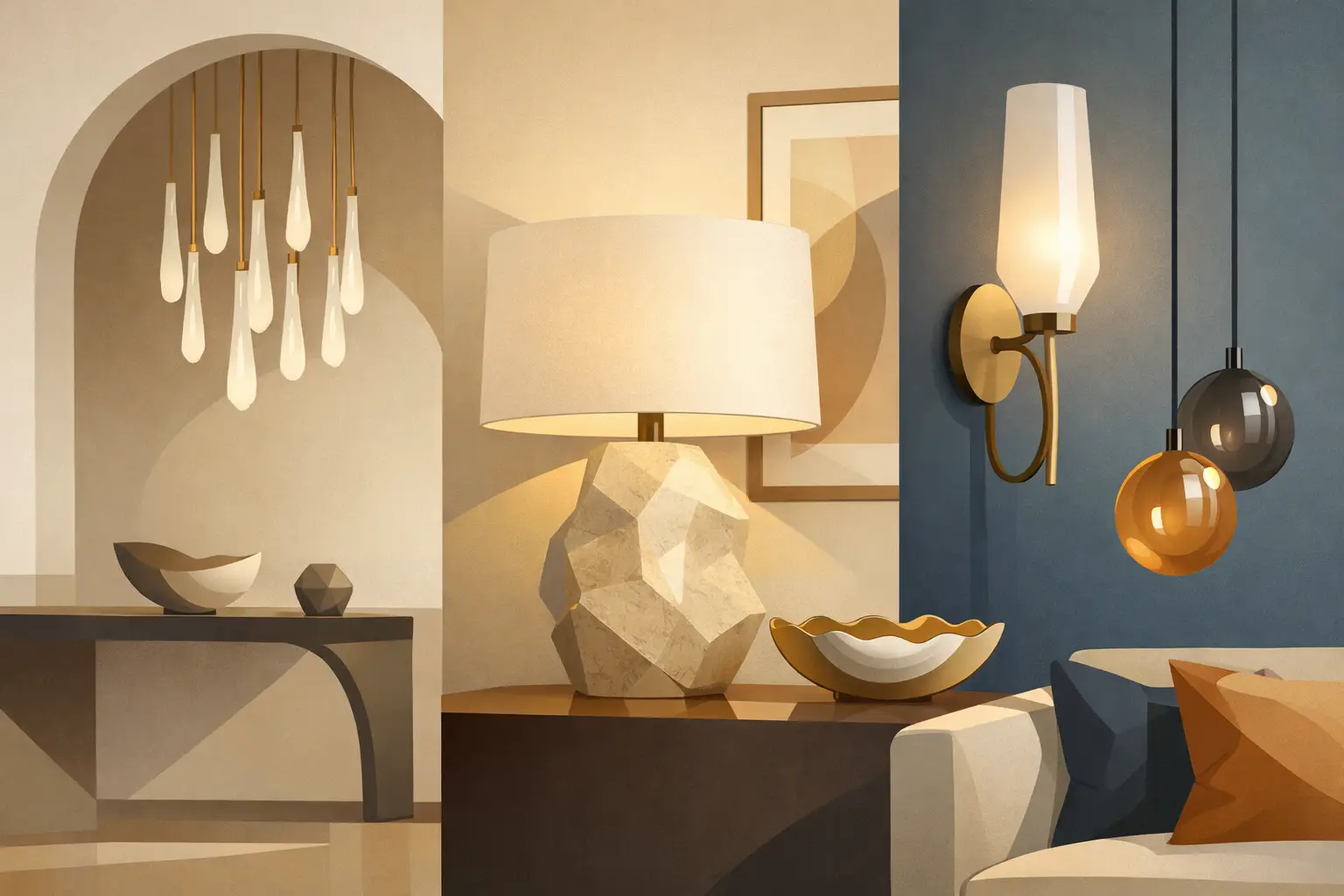
A table lamp can quietly determine whether a room feels merely furnished or genuinely composed. It is this expressive, atmosphere-shaping quality that defines our Porta Romana lighting review. These are not pieces designed to disappear into a scheme. They bring sculptural presence, nuanced texture and a sense of hand-finished individuality to the places where a home is most lived in.
For clients building layered, enduring interiors, Porta Romana occupies a distinctive position. Its lighting balances a recognisable artistic hand with enough material sensitivity to sit comfortably beside antiques, contemporary furniture, collected art and exceptional textiles. The result is decorative lighting with real emotional weight.
What distinguishes Porta Romana lighting?
Porta Romana is celebrated for lighting that feels considered rather than formulaic. A lamp base may take its character from softly irregular ceramic, gently hammered metal, cast forms, organic silhouettes or richly worked finishes. Even when the overall profile is classically restrained, there is usually a tactile detail that prevents it from feeling generic.
That distinction matters in high-specification interiors. Large rooms with carefully chosen furniture and architectural detailing need more than functional illumination. They need pieces that hold their own in daylight, then create warmth and visual rhythm after dark. Porta Romana lamps and wall lights perform both roles with unusual assurance.
The collection is especially compelling for those who prefer design with personality over perfect uniformity. Its forms often have a hand-made, almost collected quality: a welcome counterpoint to the hard lines and repeated finishes found in many contemporary properties. In a London townhouse, a Mediterranean retreat or a quietly modern country house, this sense of material life can make an interior feel more personal.
Porta Romana lighting review: craftsmanship and finish
The appeal begins with finish. Porta Romana has long understood that luxury is often registered through the eye before it is consciously identified. A softly mottled glaze, a patinated metal surface or a subtly textured plaster-like base changes with the daylight and responds beautifully to the glow of a shade. These are small shifts, but they give a room depth.
The hand-finished nature of many designs is also part of their value. Slight variation should not be mistaken for inconsistency. In the right context, it is precisely what gives a pair of lamps presence and makes a scheme feel less showroom-perfect. For clients seeking a home with character, that individuality is a considerable advantage.
This approach does call for thoughtful selection. Finish samples, where available, and an understanding of the surrounding materials are valuable, particularly when a lamp is being placed beside highly specific joinery, stone or wallcovering. A warm metallic finish can read entirely differently against chalky paint than it does beside walnut or dark lacquer.
The shades deserve equal attention. Their proportions, lining and fabric affect not only the look of the fitting but also the quality of light it casts. A generously scaled linen shade can soften a formal drawing room; a more tailored silhouette may sharpen the composition of a study or entrance hall. The lamp and shade should be specified as one visual gesture, rather than treating the shade as an afterthought.
Scale is where the investment pays off
Porta Romana lighting is often at its best when given enough space. Its table lamps are not minor accessories. On a substantial console, a wide bedside table, a library desk or either end of a long sideboard, they create an anchoring effect that smaller, more anonymous lamps cannot achieve.
This does not mean every room requires the largest piece available. In fact, scale must be judged in relation to the furniture, ceiling height and sightlines. A tall lamp on a delicate occasional table can feel top-heavy, while an undersized pair on an expansive console can make an otherwise sophisticated room appear unfinished. The most successful specifications consider the total height of base and shade, the width of the furniture beneath it, and the visual volume of objects nearby.
For bedside lighting, there is a practical balance to preserve. The base should have sufficient presence to frame the bed, but the shade must not dominate the headboard or obstruct a view across the room. In a principal suite, a well-proportioned pair of Porta Romana lamps can provide a softer, more residential alternative to integrated wall lights, particularly where flexibility and decorative warmth are priorities.
Wall lights offer a similarly useful opportunity. They can bring texture to a corridor, define a fireplace wall or introduce a gentle evening glow in a dining room without relying on a single central pendant. Their decorative form means they remain part of the composition even when unlit.
Where it works particularly well
These pieces suit interiors that favour contrast and layering. A sculptural ceramic lamp can relieve the formality of panelled walls and tailored upholstery. A patinated metal design can introduce depth into a pale, tonal scheme. In more contemporary spaces, the collection can soften architectural minimalism without compromising its clarity.
Porta Romana is especially persuasive in rooms that need a focal point at eye level. Think entrance halls where a console requires more than flowers, sitting rooms arranged for conversation, or bedrooms where the lighting needs to feel intimate rather than purely technical. The brand’s designs also photograph exceptionally well, but their greater strength is experiential: they create pools of light that make materials, art and faces appear more inviting.
That said, a highly ornate or very distinctive base should not be used simply because the room needs decoration. If a space already contains elaborate joinery, strongly patterned fabric and prominent art, a quieter lamp may provide better balance. Luxury is not the accumulation of statement pieces. It is the confidence to know where one expressive object will have the greatest effect.
The considerations before specifying
The principal trade-off is investment. Porta Romana lighting is positioned as decorative, hand-finished luxury, not as a commodity purchase. Its price reflects design authorship, material character and the level of finish, so it is best approached as a long-term furnishing decision. In a carefully designed home, a pair of exceptional lamps can outlast several cycles of repainting, reupholstery and rearrangement.
Lead times may also require early planning, especially for projects with an immovable installation date. This is common with design-led lighting and should be built into the procurement schedule rather than treated as an inconvenience late in the scheme. It is worth confirming dimensions, finish, shade configuration and electrical requirements before an order is placed.
Practical maintenance is straightforward but should be treated with care. Textured, painted and patinated surfaces benefit from gentle dusting rather than abrasive cleaning products. Shades should be protected from strong direct sunlight where possible, particularly in rooms with expansive glazing. These are not difficult demands, but they are appropriate to objects made to be appreciated over many years.
It is also sensible to consider how the lamps will be controlled. A beautifully composed room loses some of its atmosphere if its table lighting is awkward to operate. Planning socket locations, switched circuits and dimming at the outset allows the decorative lighting to work as intended, especially in larger rooms where several light sources should be layered.
Is Porta Romana lighting worth it?
For clients seeking lighting with sculptural presence, nuanced finishes and lasting decorative relevance, the answer is generally yes. Porta Romana excels when the brief calls for a room that feels curated rather than installed. It brings an artisan-led quality that can make new architecture feel more settled, while giving traditional interiors a fresher, more contemporary pulse.
It may not be the right choice for every application. A purely task-led utility space, an ultra-minimal setting with no appetite for texture, or a project requiring immediate off-the-shelf delivery may call for a different solution. Yet where a lamp is expected to tell a story, shape the mood and become part of the furniture landscape, few brands offer the same combination of confidence and character.
The most rewarding choice is rarely the most dramatic fitting in isolation. It is the piece that brings a room into balance at dusk, lending warmth to its surfaces and making the people within it feel instinctively at home. That is the standard against which any decorative lighting should be judged.

24th August, 2026

22nd August, 2026