






A mirror above a chimney breast can either disappear into the architecture or become the moment that gives the room its point of view. The best statement mirrors for luxury interiors do more than reflect light: they alter proportion, draw the eye through a space and introduce material character where a wall might otherwise feel unresolved.
For a home shaped around exceptional furniture, lighting and textiles, a mirror should be selected with the same discernment as a work of art. Its frame, silhouette, scale and reflection all contribute to the atmosphere of a room. The most successful choices feel inevitable, yet retain enough presence to evoke emotion every time the room is entered.
What Makes a Mirror a Statement Piece?
Statement need not mean oversized, ornate or overtly theatrical. In a finely considered interior, impact often comes from a precise tension between the mirror and its surroundings. A hand-finished gilt frame against chalky plaster, a deep ebonised surround in a pale drawing room, or a softly irregular organic form above a tailored console can carry far more authority than a generic large rectangle.
The distinction lies in design integrity. Look for a considered silhouette, beautiful materials and evidence of craftsmanship: antiqued mirror glass with nuanced depth, carved timber, cast metal, wrapped rattan, hand-applied lacquer or artisan plaster finishes. These details allow the piece to hold its own among collectible furniture and decorative lighting.
Reflection is equally important. A statement mirror is never merely an object on the wall. It captures a chandelier, a favourite view, the movement of curtains and the changing light across a room. Before choosing a design, consider what it will reflect at different times of day. A beautiful mirror facing an uninspiring blank wall or a television may not deliver the effect its scale promises.
Best Statement Mirrors for Luxury Interiors: Six Directions
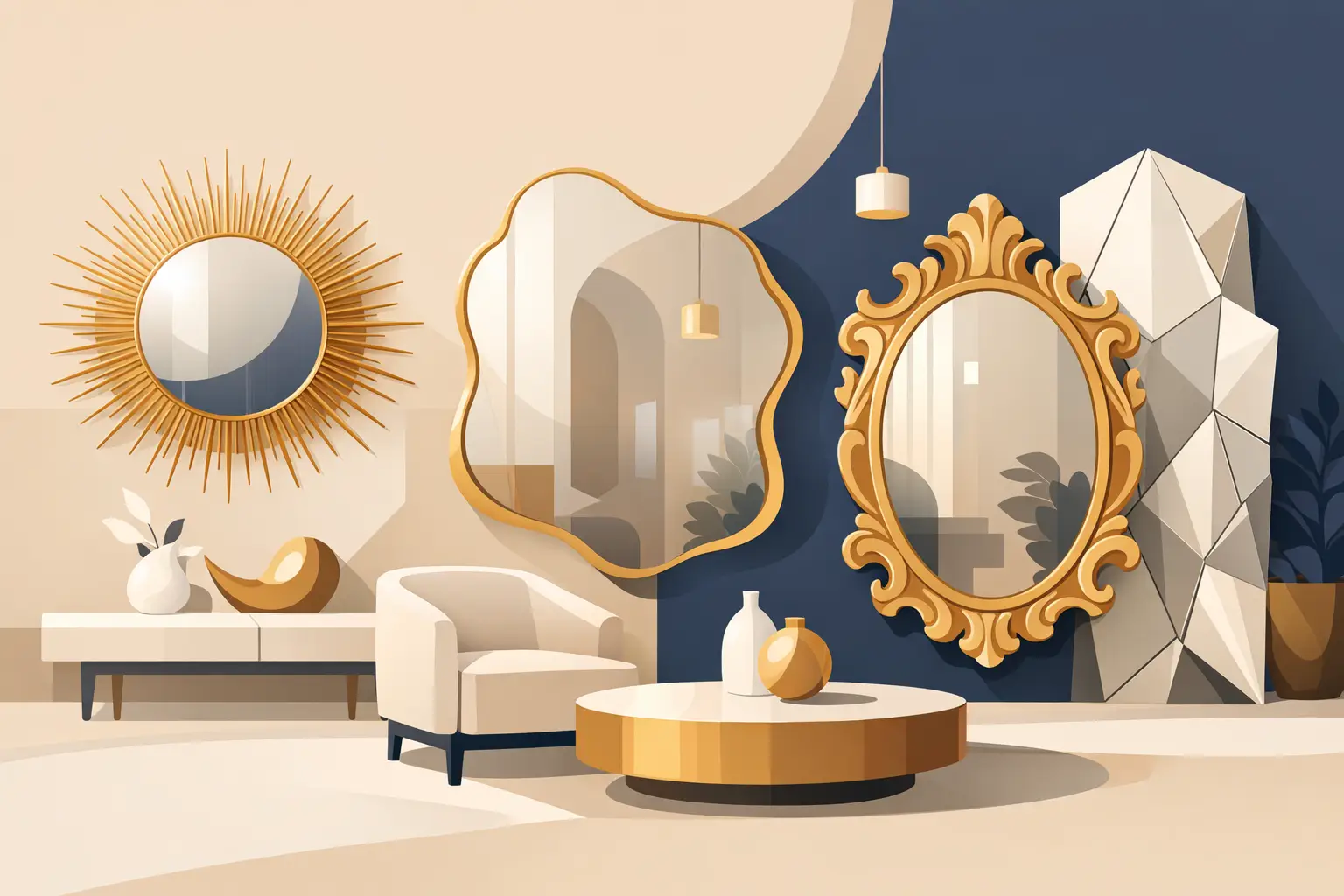
Sculptural organic forms
Mirrors with softly asymmetric outlines, rippled edges or pebble-like forms bring a welcome fluidity to rooms defined by strong architectural lines. They are particularly effective above a stone fireplace, behind a curved sofa or in a bedroom where the scheme calls for calm rather than formality.
Choose a finish with restraint. Warm bronze, aged brass, pale timber or textured plaster gives an organic silhouette substance without making it feel novelty-led. This approach works beautifully in contemporary country houses and sophisticated city residences alike, especially when balanced with crisp upholstery and tailored joinery.
Sunburst and radiating designs
A sunburst mirror remains compelling when the quality of its construction is evident. Fine metal rays, hand-carved timber or subtly varied leafing can create an architectural halo over a mantelpiece or console. It is a naturally glamorous choice for a dining room, reception hall or dressing room, where the room benefits from a touch of ceremony.
The trade-off is visual energy. A dramatic radiating design needs breathing room. Avoid placing it against a densely patterned wallcovering or directly alongside elaborate picture lights unless the intention is deliberately maximal. Against linen-textured paper, painted panelling or a broad expanse of quiet plaster, it can feel timeless rather than decorative.
Antiqued and foxed glass
Antiqued mirror glass brings mood, softness and a sense of history that clear contemporary glass cannot replicate. Its gentle mottling diffuses reflections and gives a room a more layered, collected appearance. It is especially persuasive in formal dining rooms, intimate libraries and entrance halls where atmosphere matters as much as brightness.
This is not always the most practical choice for a mirror used for grooming. The patina that makes it so beautiful also reduces clarity. Reserve richly foxed glass for decorative placement, and use a clearer mirror at a dressing table, within a wardrobe or in a principal bathroom.
Architectural black and bronze frames
For interiors with contemporary restraint, a large mirror with a slender blackened metal, bronze or dark timber frame can create an emphatic line without competing with the rest of the scheme. Grid designs and arched forms are particularly useful for introducing rhythm to a long wall or giving a new-build room greater architectural gravity.
A floor-standing version can be transformative in a bedroom or sitting room, provided it is scaled generously. Leaning a mirror is visually relaxed, but it must still be professionally secured. In a family home or high-traffic setting, a properly fixed installation is the elegant and sensible choice.
Gilt, carved and heritage-inspired frames
A gilded mirror has the power to connect a contemporary interior with the richness of the past. The finest examples avoid a flat, uniform gold finish. Their appeal lies in variation: rubbed edges, burnished areas, delicate carving and a warmth that shifts under candlelight.
In a Georgian townhouse or period country house, a traditional gilt frame can honour existing architecture. In a more modern setting, it becomes a deliberate contrast, pairing particularly well with sculptural plaster walls, mohair upholstery and clean-lined furniture. The key is to avoid matching every metallic finish in the room. Aged gilt, antique brass and bronze can coexist when their tones are thoughtfully layered.
Rattan, wrapped and tactile frames
Natural materials make a statement through texture rather than shine. Raffia-wrapped, woven rattan, rope and leather-edged mirrors lend depth to coastal homes, relaxed retreat-style bedrooms and spaces with a more global, collected character. They sit comfortably alongside linen, oak, ceramic lamps and handwoven rugs.
These frames require a little care in placement. Strong sunlight can fade natural fibres, and humid bathrooms may not be appropriate unless the construction is specified for the environment. Their strength is warmth and tactility, not formality, so let the surrounding scheme support that relaxed sophistication.
Scale and Placement: Where the Design Becomes Convincing
The most accomplished mirror can look underwhelming if it is too small for its wall. Above a console or mantelpiece, aim for a mirror that relates clearly to the width beneath it. It need not span the entire piece of furniture, but it should feel substantial enough to anchor it. A narrow frame may allow a larger proportion of glass, while a richly carved surround needs more visual allowance.
In an entrance hall, height is often more powerful than width. A tall mirror elongates the space and reflects the arrival experience, particularly when positioned to catch a pendant or table lamp. In a dining room, a wide horizontal mirror can broaden the room and multiply the glow of evening lighting, but be mindful of what it reflects when guests are seated.
Over a fireplace, the gap between mantel and frame matters. Leaving some breathing space prevents the composition from feeling cramped, while hanging too high breaks the connection between the two. As a useful visual rule, the mirror and mantel should read as one composition rather than two unrelated features.
Pairing Mirrors with Lighting and Wall Finishes
Mirrors are at their most persuasive when lighting has been planned around them. A pair of wall lights placed to either side creates symmetry and enhances the frame, while a chandelier reflected in the glass lends depth and quiet drama. Side lighting is usually kinder and more dimensional than a single harsh downlight directly above.
Wall finish changes the reading of the mirror. On veined stone, timber panelling or richly patterned wallcovering, a simpler frame may be enough. On limewash, lacquer or plain painted walls, the mirror can take on greater sculptural weight. Consider contrast in both material and temperature: cool silvered glass against warm walnut, aged brass against blue-grey paint, or a dark frame against softly coloured silk wallcovering.
At Tobias Oliver Interiors, the most enduring schemes are rarely built from one dramatic gesture alone. A statement mirror gains significance through its relationship with the objects around it: the console beneath, the lamp beside it, the rug that grounds the setting and the textiles that soften the architecture.
Choosing for Longevity Rather Than a Passing Look
Trend-led mirrors often rely on a recognisable outline or a finish that dates quickly. That does not mean a contemporary piece is a risky choice. It means the design should have enough material depth and proportion to remain interesting after the novelty has passed.
Ask whether the mirror belongs to the character of the home as well as the current scheme. An artisanal bronze frame may move effortlessly from one room to another over time. A finely made antique-style gilt mirror can be reinterpreted with contemporary furniture. Bespoke scale may be worth considering for an unusually high chimney breast, a wide entrance wall or a hospitality project where standard dimensions would feel compromised.
The right mirror should not simply fill a gap. It should make the room feel more generous, more luminous and more personal. Choose the one that reflects the life of the home at its best – the glow of evening light, the texture of considered materials and the story you want the space to tell.

24th July, 2026

23rd July, 2026