A penthouse is rarely experienced from one viewpoint. It is seen on arrival, across an open-plan reception room, from a dining table after sunset and, often, against a dramatic city horizon. Designer lamps for penthouses must therefore do more than illuminate a surface. They establish intimacy within generous volumes, bring architectural materials to life and give a home its evening character.
The finest schemes do not treat lighting as a final decorative layer. A sculptural table lamp, a considered floor lamp or a pair of quietly elegant wall lights can alter the perceived proportions of a room. They draw the eye towards art, texture and furniture, while allowing the architecture to recede into a more liveable, human scale.
Why designer lamps for penthouses demand a different approach
High ceilings, expansive glazing and open sightlines are among a penthouse’s greatest pleasures, but they also present a challenge. During daylight hours, natural light often does the visual work. When evening arrives, a single central fitting can make a large room feel flat, exposed and strangely impersonal.
Layered lamp light creates the contrast that these interiors need. It pools warmly around a reading chair, adds depth to a console beneath a favourite artwork and softens the transition between a formal dining area and a more relaxed sitting space. The result should feel composed rather than over-lit: an interior with areas of brilliance, shadow and calm.
Scale is particularly significant. A petite lamp can disappear beside a generously proportioned sofa or a monumental stone side table. Yet an oversized piece selected only for impact may compete with the view or interrupt the room’s rhythm. The most successful choice balances visual presence with the surrounding architecture, considering not simply height and width but the lamp’s silhouette, shade spread and the distance from which it will be seen.
Begin with the atmosphere, not the fitting
Before selecting finishes or forms, consider how each area should feel after dark. A penthouse living room may be used for quiet family evenings, cocktails with guests and formal entertaining within the same week. These moments call for flexibility, not one fixed level of illumination.
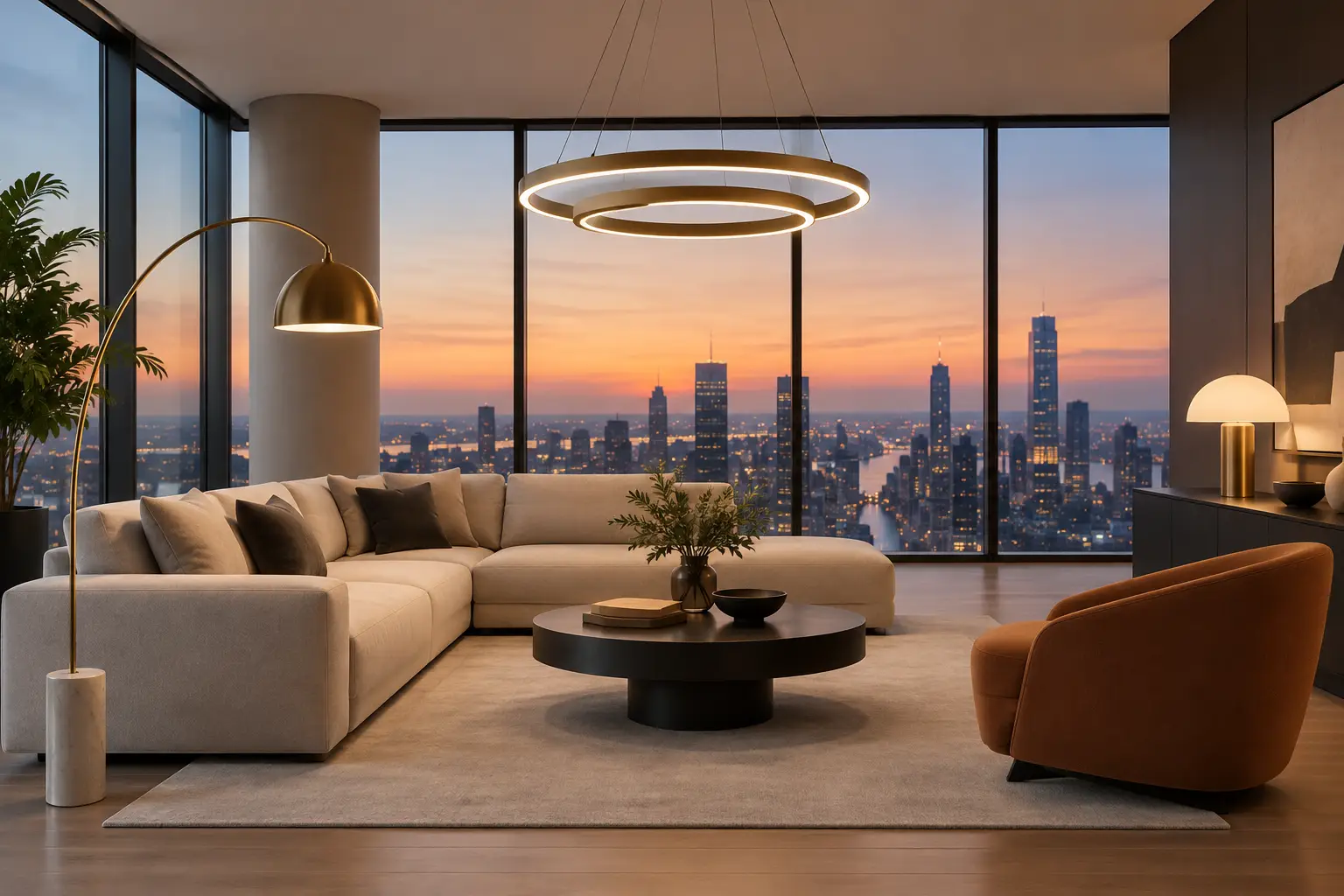
Table lamps offer a particular kind of refinement because they bring light below eye level. Placed at either end of a long sofa, on a console or beside occasional chairs, they create a sense of welcome that recessed ceiling lights alone cannot provide. In rooms with panoramic glazing, this lower, warmer illumination also protects the drama of the night view rather than reflecting harshly in the glass.
Floor lamps are equally valuable where there is little wall space or where furniture arrangements may evolve. An articulated reading light beside a chaise is practical, while a tall, sculptural floor lamp can form a deliberate vertical counterpoint to a low-profile sectional sofa. The distinction matters: one answers a task, the other shapes the room’s visual story. The best schemes allow both roles to coexist.
Consider the view as part of the composition
After dusk, glazing becomes reflective. A lamp that looks beautiful in isolation may be doubled in the window, becoming more prominent than intended. This is not always a disadvantage. A distinctive ceramic or alabaster base can create an evocative reflection that enriches the room. It does, however, mean that a lamp’s rear profile, cabling and shade construction deserve as much scrutiny as its front elevation.
Where the skyline is the principal feature, choose silhouettes with restraint: linen, silk or finely textured shades; bases in softly patinated metal, hand-finished plaster, glass or natural stone; and forms that possess character without visual noise. In a more enclosed penthouse with richly layered finishes, a bolder lamp can act as a focal object in its own right.
Select materials that reward close attention
Luxury is often sensed in the details seen at close range. The glow through a finely woven shade, the irregularity of hand-applied glaze, the depth of aged brass and the veining within alabaster all give designer lighting its emotional pull. These qualities are especially compelling in penthouses, where architectural finishes may lean towards polished stone, smoked glass, timber veneer and metal.
There is no universal formula for mixing them. A cool, contemporary interior with pale oak and travertine may benefit from the softness of hand-finished ceramic or parchment-toned linen. In contrast, a room with dark lacquer, walnut and bronze can carry the richness of sculpted metal, deep-coloured glass or a dramatic mineral base.
The trade-off is maintenance and longevity. Natural stone and alabaster reward careful handling and should be considered in relation to direct sunlight and daily use. Fabric shades diffuse light beautifully but may require more attentive care in homes where windows are frequently open. Polished finishes bring clarity, while patinated metals offer a more forgiving, lived-in quality over time. These are not merely practical distinctions; they influence how an interior will age.
Let each lamp perform a clear role
A successful lighting plan is less about accumulating decorative pieces than assigning every lamp a purpose. In a principal reception room, a pair of table lamps might establish symmetry around a fireplace or artwork, while a floor lamp marks a quieter conversation corner. A smaller accent lamp on a bar, bookcase or occasional table can add a gentle point of illumination and make a large room feel inhabited.
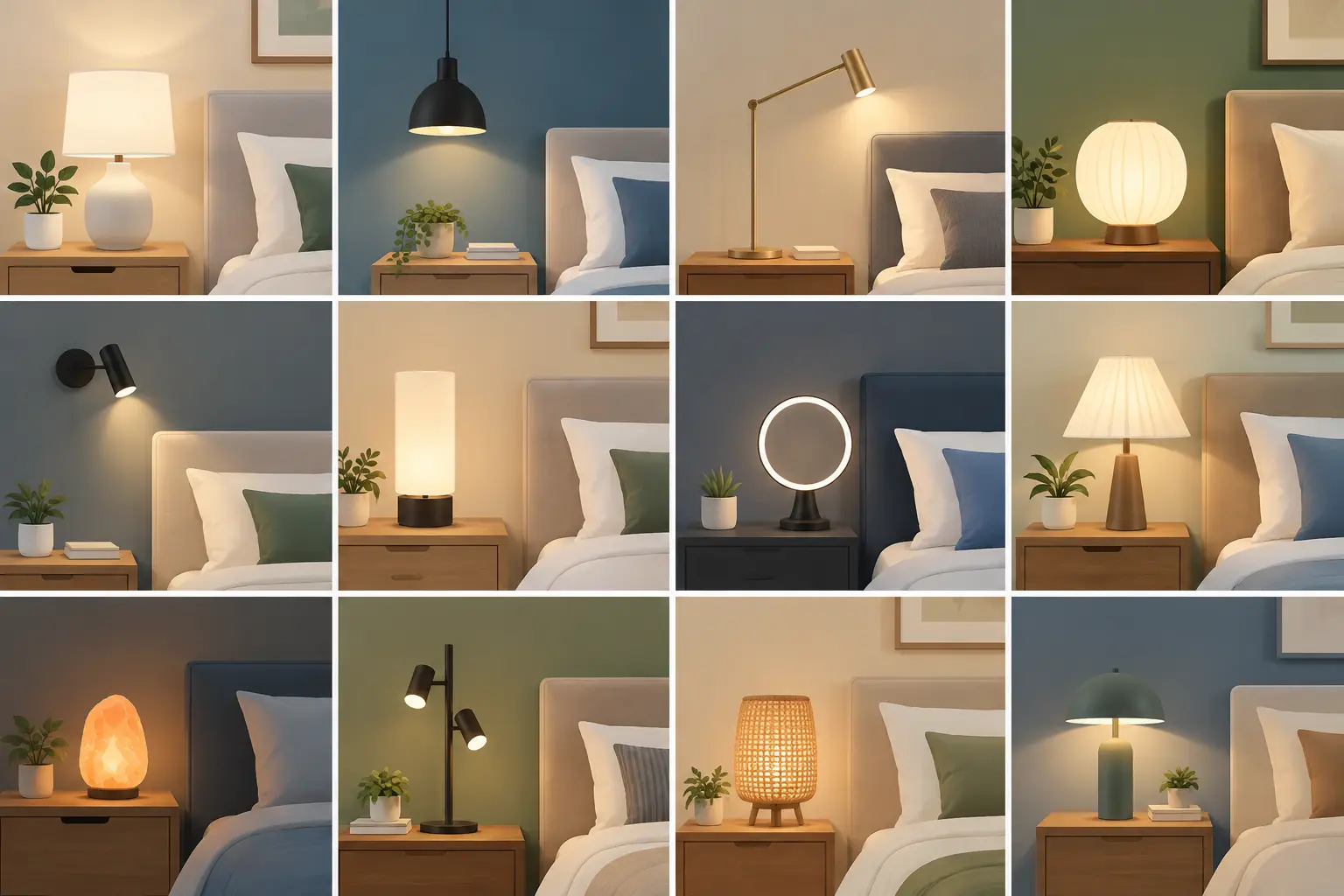
Bedside lamps deserve the same attention. A penthouse bedroom benefits from a calmer, more enveloping mood than its public rooms. Consider the bed’s scale, the height of the bedside tables and whether the occupants read in bed. A lamp with an opaque shade directs a comforting pool of light, whereas a translucent shade introduces a more ambient glow. If bedside space is limited, elegant wall lights can preserve the surface for books, flowers and personal objects.
In dining spaces, lamps are often overlooked in favour of the principal pendant. Yet a low lamp on a sideboard or console can make the room feel settled before guests arrive. It gives texture to the edges of the room and ensures the dining table is not isolated beneath a single source of light.
Shade proportion and bulb temperature are decisive
A beautiful base can be diminished by the wrong shade. The shade determines the lamp’s final height, breadth and quality of illumination, so it should be selected in relation to both the base and the furniture beside it. A shade that is too narrow feels top-heavy; one that is too broad can overwhelm a small side table or obstruct a sightline across the room.
Bulb temperature deserves equal care. For most residential penthouse settings, warm light gives upholstery, timber and artwork a more flattering presence. Very cool light can make luxurious materials appear clinical, particularly when paired with stone or glass. Dimming is invaluable, but it must be specified thoughtfully: the lamp, bulb and control system should work together without flickering or audible disturbance.
Build a collection, not a showroom
Perfect matching can make a penthouse feel overly staged. Instead, aim for a family resemblance. Repeated tones of antique brass, aged bronze, ivory linen or dark timber can connect lamps across several rooms, while varying their forms prevents monotony.
This is where a globally curated approach proves its value. A sculptural lamp with a hand-finished base may sit comfortably beside a tailored metal floor lamp when the proportions and materials are in dialogue. Collections from houses such as Porta Romana, AERIN and Visual Comfort offer distinct design languages, yet can be layered with confidence when the scheme is guided by a clear architectural narrative.
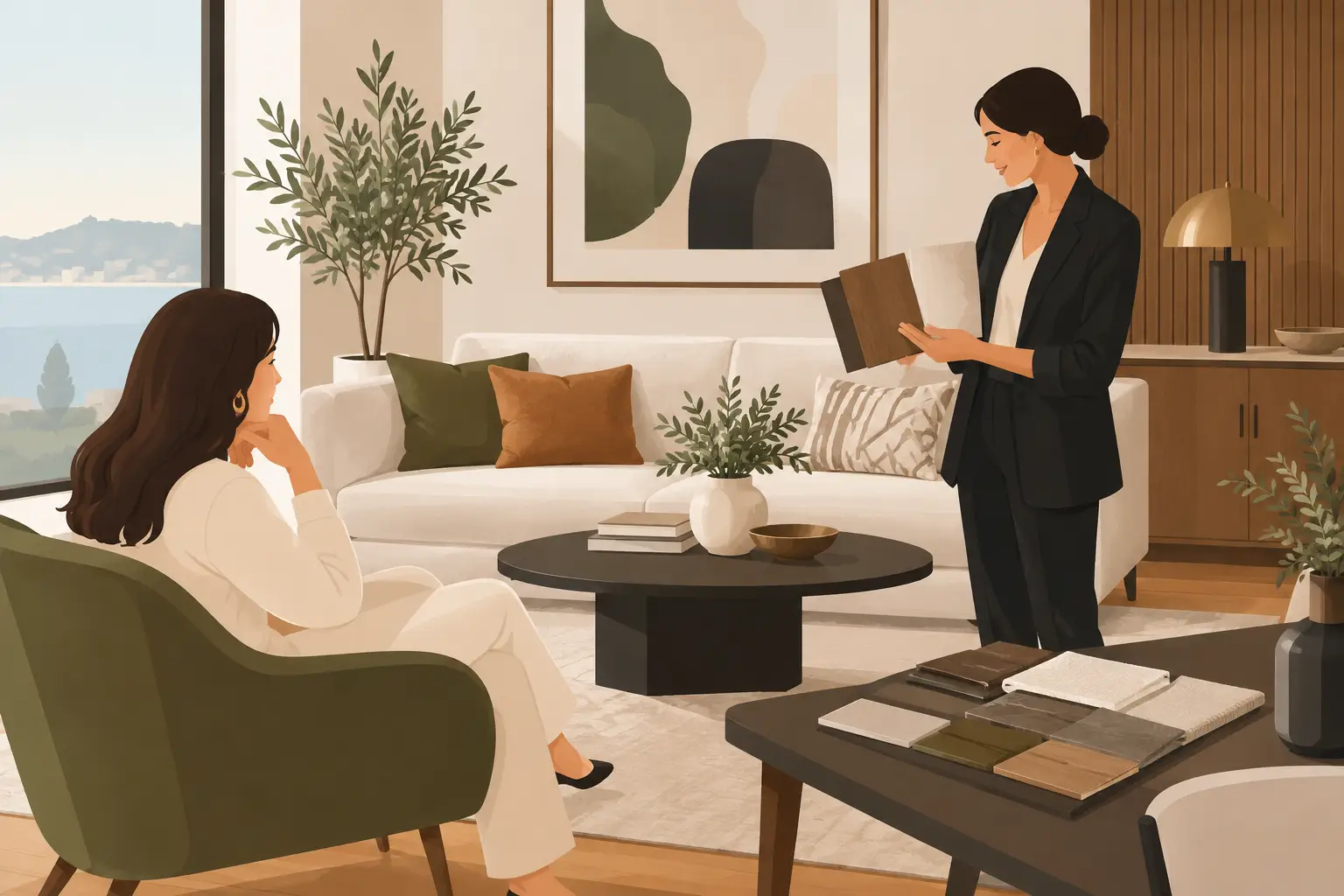
At Tobias Oliver Interiors, this process begins with the room as a whole: its daylight, furniture plan, art, textiles and how the owners want to live there. A lamp is never only a lamp. It may be the first warm note seen from the entrance, the quiet companion beside a favourite chair or the detail that makes a far-reaching space feel unmistakably personal.
A considered final edit
Once the lamps are in place, view the rooms at night from every threshold. Sit in each chair, look across the glazing and notice where the eye naturally rests. If a corner disappears, introduce a restrained point of light. If a sculptural lamp competes with the view, lower its intensity or move it to a more intimate setting.
The aim is not to light every inch of a penthouse. It is to create a sequence of inviting moments, each shaped by craftsmanship, proportion and a feeling of ease. When chosen with that sensitivity, designer lamps become the elements that allow a remarkable home to feel truly lived in.

26th November, 2026

24th November, 2026