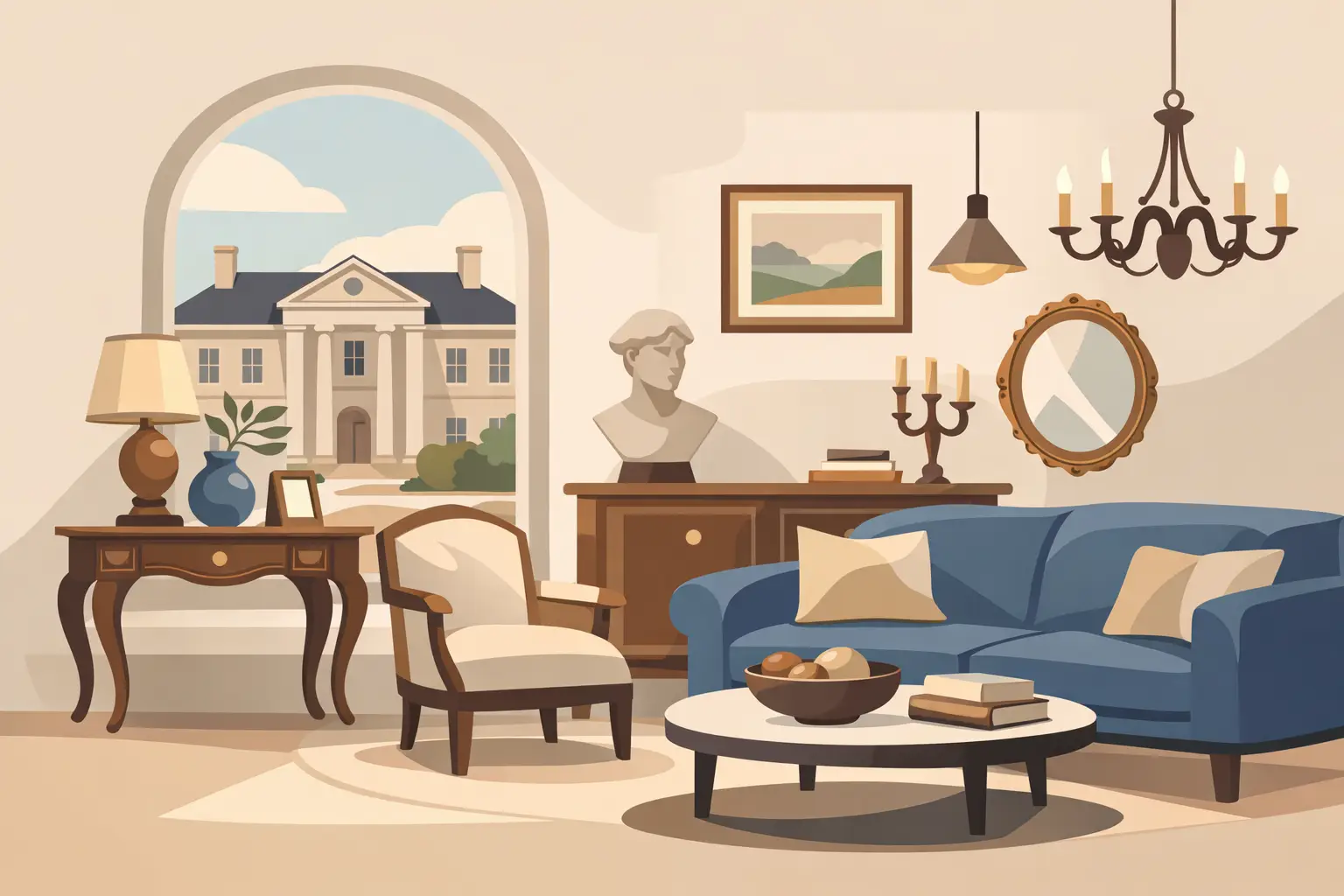
A Georgian drawing room with generous cornices can make a low, boxy sofa feel strangely apologetic. A country house bedroom with irregular walls can be flattened by matching furniture sets. Learning how to furnish a heritage property begins with this simple recognition: the building already has a powerful point of view. The aim is not to recreate a period room, nor to impose a wholly contemporary scheme, but to compose an interior that respects its inherited character while serving the life lived there now.
Heritage homes reward discernment. Their patina, proportions and architectural idiosyncrasies offer a richness that cannot be manufactured, yet they also ask more of every decision. Scale matters. Light matters. The hand of a fabric, the silhouette of a chair and the warmth of a lampshade all shape whether a room feels quietly assured or overly themed.
Begin with the architecture, not the shopping list
Before selecting furniture, study the room as though it were a portrait. Notice the ceiling height, the depth of window reveals, original fireplaces, panelling, floorboards and the routes people take through the space. A heritage property rarely benefits from a standard formula because no two rooms carry the same proportions or history.
Establish what should remain visually dominant. In a room with ornate plasterwork and a carved chimneypiece, the architecture may need only a disciplined backdrop and a few confident pieces. In a simpler Victorian villa or converted mill, furniture, lighting and textiles can take a more expressive role. This hierarchy prevents the familiar mistake of treating every surface as an opportunity for decoration.
It is equally useful to distinguish between elements that are genuinely original and those that are later additions. Retaining a worn limestone hearth may strengthen a scheme; retaining an insensitive 1980s light fitting merely because it is old may not. Where a building is listed or lies within a conservation area, seek the appropriate professional advice before altering fixed features. Furnishing is often the most effective way to transform a room without disturbing its fabric.
How to furnish a heritage property without creating a period set
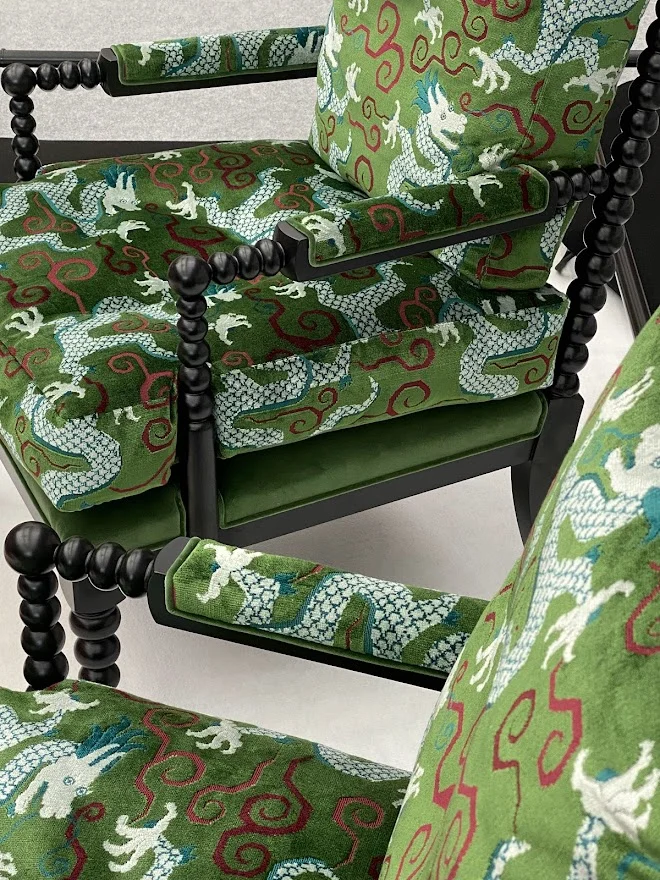
The most compelling heritage interiors have a sense of time layered rather than frozen. A finely proportioned antique chest may sit beside a sculptural contemporary table lamp; a clean-lined sofa can be given gravitas with a textile of depth and history. The contrast brings each piece into focus.
This does not mean that every room needs a conspicuous clash of centuries. The connection may be quieter: a modern armchair with a curved profile that echoes an arched doorway, or a hand-finished bronze wall light that picks up the mellow tones of aged timber. Look for affinities in material, line and craftsmanship rather than matching dates.
Avoid buying every piece from the same historical language. A room filled exclusively with mahogany, buttoned upholstery and gilt frames can become heavy, particularly when the house already has strong architectural detail. Conversely, an interior made entirely of minimal contemporary forms can feel detached from its setting. One or two antique or vintage pieces, chosen for their scale and character, are often more persuasive than a wholesale revival.
Use scale to give historic rooms their authority
Grand rooms can absorb larger furniture than expected. A small chandelier in a high-ceilinged hall, or a pair of narrow occasional chairs flanking a substantial fireplace, can make an otherwise handsome room feel underfurnished. Measure carefully, but do not let measurements alone dictate the result. Sightlines, negative space and the visual weight of materials are just as important.
In a formal sitting room, begin with the principal seating arrangement and rug. A rug that is too small is particularly disruptive in period architecture, where it can leave a group of furniture appearing to hover in the middle of a generous floor. Ideally, the front legs of the main seating should sit on the rug, allowing it to anchor the conversation area and lend the room a deliberate centre.
Smaller heritage rooms require a different discipline. Deep sofas, oversized coffee tables and broad-armed chairs can obstruct circulation around chimneys and bay windows. Choose pieces with elegant legs, lifted profiles or slimmer frames, then create generosity through texture, layered lighting and substantial curtains rather than sheer physical bulk.
Let lighting reveal, rather than compete with, detail
Historic homes are frequently at their most beautiful after dusk, when lamplight catches the grain of timber, the unevenness of plaster and the glow of old paint. A single central pendant rarely provides enough nuance. Consider lighting in layers: ambient light for the room as a whole, task light for reading and working, and accent light to bring architecture or art into view.
A decorative chandelier or pendant can establish the centre of a dining room, entrance hall or bedroom, but it should be proportioned to the volume rather than selected in isolation. Wall lights are especially valuable in properties with fireplaces, alcoves or panelling, where they add rhythm without consuming floor space. Table lamps, meanwhile, introduce intimacy and allow pools of light to gather around sofas, desks and bedside tables.
Material choice can bridge eras beautifully. Patinated metal, alabaster, hand-applied finishes, pleated shades and mouth-blown glass tend to sit comfortably against older architecture. For a cleaner contrast, a contemporary ceramic or sculptural lamp can introduce freshness while retaining a tactile, collected quality. Always consider the colour temperature of bulbs: harsh, cool light can drain the warmth from period paint colours and natural materials.
Build colour and pattern with restraint
Heritage interiors do not demand dark walls or historical reproductions, although both can be successful. Their best colour schemes respond to natural light, architectural detail and the atmosphere a client wishes to create. Muted stone, chalk, tobacco, moss and mineral blue have an enduring affinity with older buildings, but a lacquered red dining room or an unexpected ochre library can be equally convincing when the architecture supports it.
Use paint to clarify rather than disguise. Picking out skirting, doors and mouldings in a related but distinct shade can make details legible, while a deep ceiling colour can create an enveloping effect in a study or bedroom. In rooms with limited daylight, pale is not automatically the answer. A rich, absorptive colour may make the space feel intentional and cocooning rather than simply dim.
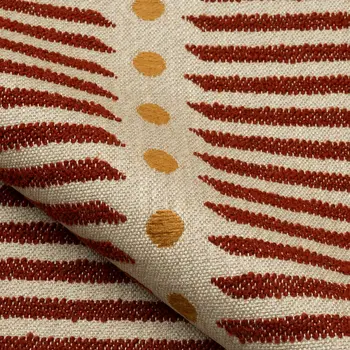
Pattern works best when its scale is considered. A large botanical print can hold its own against tall ceilings and broad walls; a small repeating motif brings tactility to a compact bedroom or hallway. Rather than distributing pattern everywhere, give it a clear role through curtains, upholstered chairs, wallcovering or a statement rug. Then introduce quieter plains, textural weaves and considered trimmings to provide relief.
Choose materials that improve with use
A heritage house needs furnishings that can live alongside its existing patina. Linen, wool, silk, velvet, leather, timber, stone and hand-finished metal all develop character with age, making them natural companions to original joinery and old floors. The point is not to make every item look aged from the outset, but to select materials that will acquire a believable history.
For family homes, practicality deserves equal status. Reserve the most delicate silk or pale bouclé for rooms used occasionally, and specify durable wool, washable linen blends or performance fabrics where children, pets and regular entertaining are part of daily life. A refined home should not require its occupants to live cautiously within it.
Detail carries particular weight in a heritage setting. A contrast welt, bullion fringe, tailored skirt or hand-applied trim can lend a contemporary sofa the presence needed for a formal room. Equally, a plain upholstered headboard can be elevated by a beautifully scaled bedside lamp and a generous throw in cashmere or brushed wool. These quieter gestures often feel more luxurious than overt ornament.
Give each room a present-day purpose
The finest schemes acknowledge that historic layouts do not always align with modern habits. A former dining room may be better used as a library, a music room or a place for intimate evening gatherings. A large landing can become a reading corner rather than a corridor furnished only out of obligation. Let the way the household entertains, works and rests guide the plan.
This is where bespoke pieces earn their place. An awkward recess may call for a made-to-measure banquette, a carefully designed bookcase or a console scaled precisely to a narrow hall. Bespoke should not be used to fill every inch, however. Breathing room is a luxury, particularly in properties whose architecture already offers so much visual interest.
Art and decorative objects should arrive late in the process, once the room’s proportions, palette and lighting are settled. A small collection of meaningful ceramics, books, framed works or sculptural objects will tell a more convincing story than shelves crowded with ornament. Allow each object enough space to be seen and enjoyed.
A heritage property is not a museum exhibit, nor a blank canvas. Furnish it with enough confidence to let its past remain visible, enough comfort to make it deeply liveable, and enough individuality that the next chapter feels unmistakably its own.

11th September, 2026

10th September, 2026