A room can be impeccably planned yet feel oddly unfinished until the textiles arrive. The fall of a curtain, the dry hand of linen, the depth of a silk velvet or the subtle irregularity of a handwoven rug determines how a space is experienced, not simply how it is seen. Luxury textile trends 2026 place that sensory dimension at the heart of the scheme, favouring materials with presence, provenance and a considered relationship to architecture.
For discerning homeowners and design professionals, this is not a season for decorative excess. The most compelling interiors are becoming warmer, more layered and more individual, using cloth to soften clean-lined furniture, temper stone and timber, and bring a sense of lived-in refinement to contemporary rooms. Craft matters, but so does performance. The most successful textile choices will be those that look exceptional at first glance and continue to earn their place through years of daily use.
Luxury textile trends 2026: a return to the hand
The appetite for surfaces that reveal the maker’s hand is intensifying. Fine slubs, irregular weaves, subtle abrash and gently distressed finishes give a room a quality that cannot be replicated by perfectly uniform cloth. They offer visual repose while rewarding closer attention – an especially valuable counterpoint to highly polished plaster, lacquered joinery and expansive glazing.
Linen remains central, though it is being used with greater confidence and weight. Washed linens in oyster, tobacco, flax and softened mineral tones bring ease to tailored curtains, relaxed upholstery and generously scaled cushions. Their appeal lies in their honesty: they crease, soften and develop character. In a formal drawing room, that informality needs balancing with sharper elements such as passementerie, a tailored leading edge or a more structured wool on adjacent seating.
Handloomed wool, bouclé, raffia-inspired weaves and subtly brushed cottons carry the same appeal. These textiles do not need to announce themselves with overt pattern; their texture creates movement as light changes across the day. A quiet, textural fabric from houses such as de Le Cuona or Dedar can give even a restrained tonal scheme genuine depth.
The new neutral is richly dimensional
Neutral interiors are not disappearing. Rather, the flat beige of past seasons is giving way to nuanced, layered palettes that feel drawn from earth, clay, lichen, chalk and weathered bark. Think warm ivory beside mushroom, putty against olive-grey, or tobacco tempered with a pale mineral blue. The distinction is less about colour alone than the dialogue between different fibres and finishes.
In 2026, a successful neutral room may combine a chalky wool bouclé sofa, flax linen curtains, a silk-wool rug and cushions in brushed velvet or finely woven tape. The palette remains calm, but every surface catches light differently. This approach is particularly effective in large open-plan residences, where textile variation can create intimacy without interrupting architectural flow.
There is a practical advantage, too. A layered neutral scheme permits seasonal changes without requiring a complete redesign. A pair of mohair cushions, a new trimming or a deeper-toned throw can shift the room towards winter, while linen and cotton accessories restore a lighter mood in spring. The underlying fabrics remain enduring rather than trend-dependent.
Brown, oxblood and softened spice
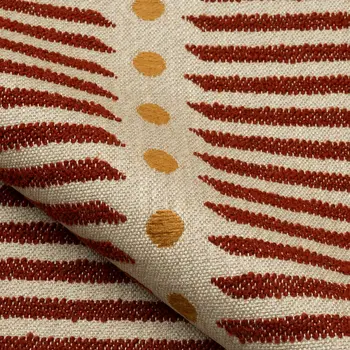
Alongside mineral neutrals, the year brings a more assured use of deep, warming colour. Tobacco, cognac, clove, oxblood, burnt sienna and muted saffron are appearing in velvets, jacquards and wool-rich upholstery. These shades have a grounded sophistication, particularly when placed against travertine, dark oak, aged brass or plaster walls.
The key is restraint. A full suite in a saturated velvet can be magnificent in the right setting, but it asks much of the room’s light and proportions. For many homes, a single accent chair in tobacco mohair, an oxblood silk lampshade or piping in a spice-toned linen offers enough tension. Deep colours feel most luxurious when they are allowed breathing space.
Pattern becomes more personal
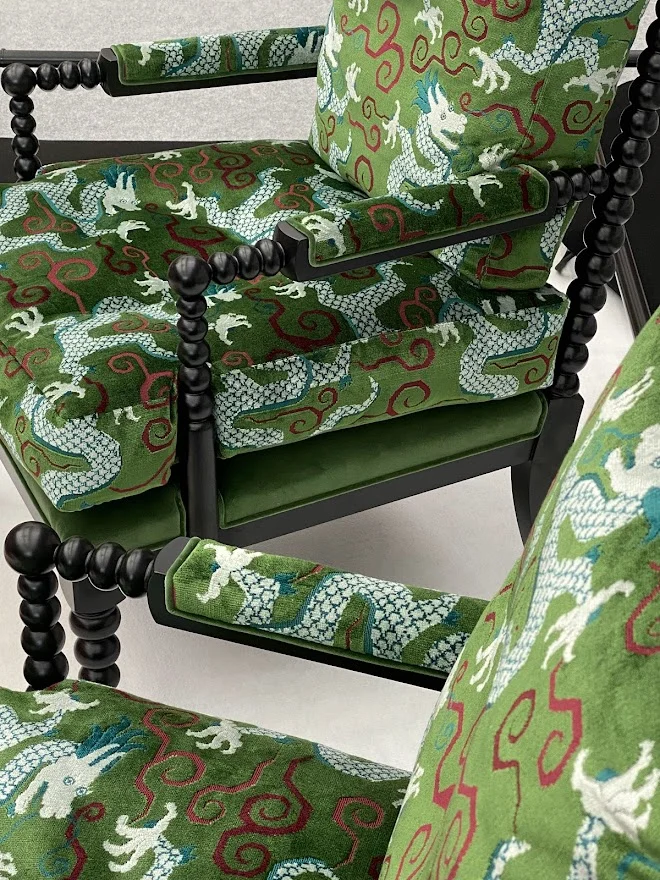
Pattern is returning with intent, moving away from formulaic feature walls and towards compositions that tell a more individual story. Archive-inspired botanicals, painterly florals, embroidered trails and expressive geometrics all have a place, but the strongest schemes avoid making every textile compete.
A large-scale floral from Pierre Frey or GP & J Baker can anchor a bedroom or sitting room when used on curtains, a screen or a pair of occasional chairs. It then benefits from quieter supporting fabrics – perhaps a plain wool upholstery, a narrow striped cushion and a small-scale woven trim. This balance allows the pattern to feel collected rather than themed.
There is also renewed interest in graphic forms influenced by twentieth-century art, folk textiles and global craft traditions. These motifs work beautifully in contemporary settings because they bring cultural texture to otherwise minimal architecture. Scale is decisive: bold repeat patterns need sufficient wall, window or upholstery area to read with confidence. On a small scatter cushion, they can appear fussy; on a broad Roman blind or headboard, they become architectural.
Tailored performance without compromise
Luxury is increasingly measured by how well an interior supports real life. Families, pet owners, second-home residents and hospitality teams need fabrics that are resilient as well as beautiful. This demand is pushing performance textiles into more elevated territory, with sophisticated boucle effects, tactile chenilles, elegant velvets and outdoor-quality weaves that no longer look technical.
For a busy family room, a high-rub-count upholstery with a forgiving mid-tone weave may be a wiser investment than a delicate pale linen, however beautiful the latter feels in a sample book. In a formal reception room used occasionally, the decision may be reversed. There is no universal hierarchy of materials; the right specification depends on light, use, maintenance expectations and the client’s appetite for patina.
Outdoor living continues to influence interiors, too. Solution-dyed fabrics, refined striped awnings and weather-resistant textures are moving between terraces, pool houses and interior spaces with far greater visual coherence. In warm climates, this continuity can make a home feel expansive and composed. In the UK, it can give a conservatory, garden room or covered terrace a more considered, year-round identity.
Trimmings make the finish feel bespoke
One of the most expressive luxury textile trends for 2026 is the return of the detail that might once have been dismissed as decorative. Contrast piping, bullion fringe, hand-applied borders, cords and tapes are being used with a more edited eye. They provide punctuation, defining an edge, framing a panel or giving a simple fabric a bespoke silhouette.
A narrow contrast welt can transform a plain chair; an intricate leading edge can give linen curtains a sense of occasion. On cushions, trimmings allow a designer to introduce colour or pattern in a controlled measure. The most elegant applications are proportionate to the furniture and architecture. A grand fringe has its place, but not on every piece.
This is where craftsmanship becomes visible. The quality of the sewing, the placement of a border at a curtain return, and the decision to align a pattern across a headboard all shape the final impression. Fine textiles deserve that level of attention. A remarkable fabric can lose its authority through generic making, while a relatively quiet cloth can become extraordinary when expertly tailored.
How to build a textile scheme with longevity
The strongest schemes begin with a hierarchy, rather than a collection of beautiful samples. Start with the fabric that must work hardest – usually the principal upholstery or the curtains – and assess it in the room at different times of day. Then build contrast through scale, sheen and handle. If the sofa is nubby and matte, introduce a smoother velvet or silk blend. If the curtains have a bold pattern, allow the upholstery to be quieter and more tactile.
Consider what will be touched as carefully as what will be viewed. A cushion may be the smallest component in a room, but its hand feel can shape the entire sense of comfort. Likewise, a rug should relate to bare feet, chair legs and acoustics, not only the photograph. This human response is what turns a polished interior into a home that can genuinely be lived in.
At Tobias Oliver Interiors, textile selection is approached as an act of composition: one that considers light, proportion, craftsmanship and the life a room will hold. The aim is not to chase novelty, but to choose fabrics that evoke emotion now and acquire greater meaning over time.
The most enduring direction for 2026 is therefore wonderfully simple: choose fewer textiles, choose them with greater discernment, and give each one a purposeful role. When cloth is allowed to bring warmth, memory and tactility to a room, it does far more than complete the decoration. It shapes the experience of home.

10th September, 2026

7th September, 2026