A beautiful room can be impeccably furnished and still feel unresolved at dusk. The difference is often light: not simply its level, but its direction, texture and ability to alter the character of every surface around it. The most compelling luxury lighting trends 2027 are therefore less concerned with novelty for its own sake and more with creating rooms that feel considered, intimate and deeply personal.
For discerning homeowners and designers, lighting is moving decisively beyond the role of finishing touch. It is becoming an architectural material in its own right, used to frame a plastered wall, draw the eye through a hallway, soften the formality of a dining room or give a private bedroom a more restorative quality. The enduring schemes will be those that balance visual drama with a gentle, liveable glow.
Luxury lighting trends 2027: a more composed language
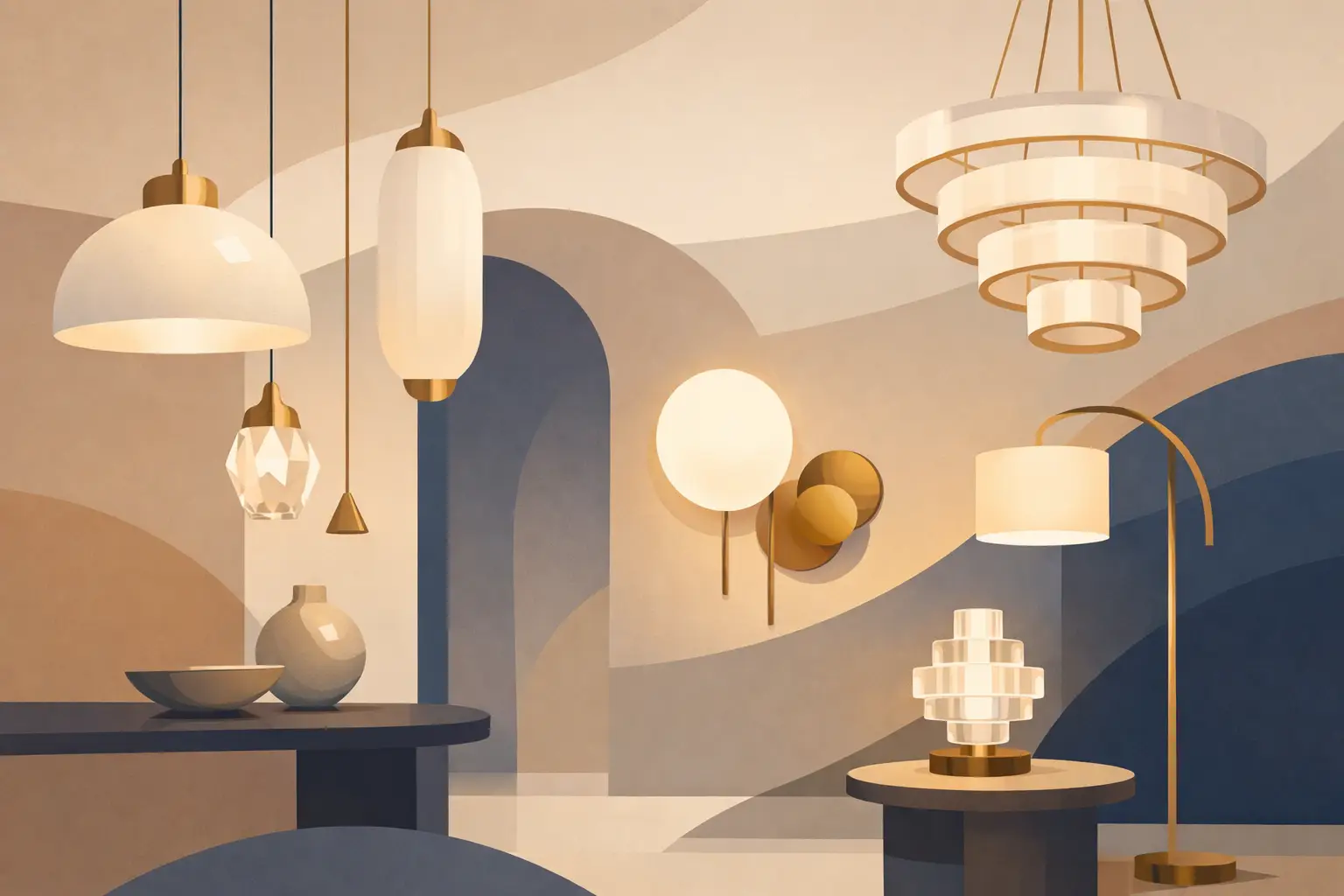
The defining mood for 2027 is one of confident restraint. Decorative lighting is becoming more expressive, yet its presence is increasingly grounded in material honesty and proportion. A hand-finished ceramic table lamp, a patinated brass wall light or a finely veined alabaster pendant offers far more than illumination. Each brings depth, shadow and a sense of permanence to an interior.
This is not a return to minimalism in its most austere form. Rather, it is a move away from conspicuous complexity towards pieces with a clear point of view. The most successful designs may appear simple from a distance, but reveal meticulous detailing on closer inspection: an irregular glaze, hand-applied leafing, a stitched leather trim or the warm variation of cast bronze.
For a residence with strong architecture, this approach is particularly powerful. Lighting should not compete with original cornicing, stone fireplaces or carefully selected art. It should give those elements greater presence, allowing the room to reveal itself gradually from morning through to evening.
Light is becoming part of the architecture
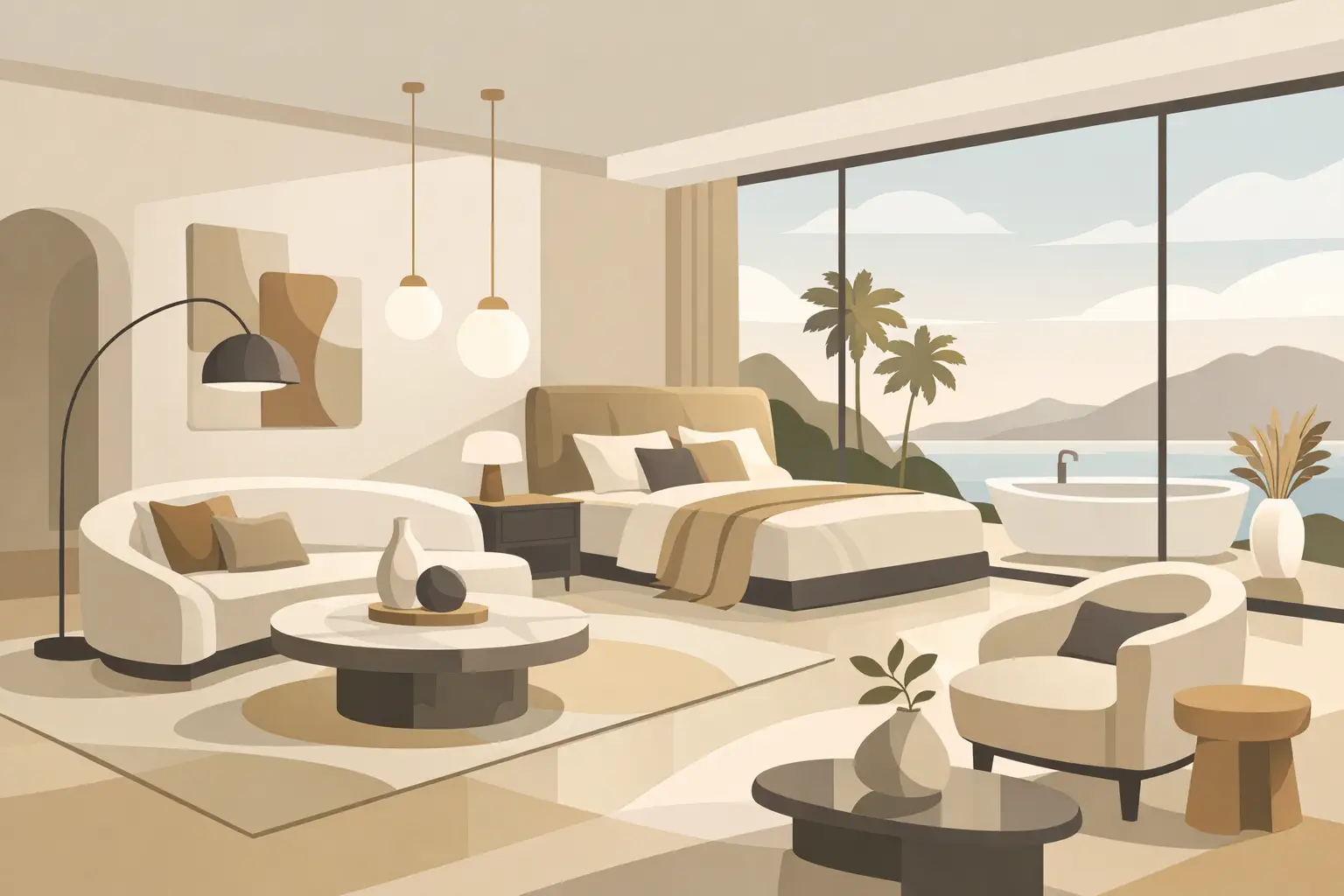
The best luxury interiors no longer rely on a single central fitting to carry a room after dark. Instead, lighting is planned as a sequence of visual experiences. Pools of illumination mark places to pause, while darker passages give the eye somewhere to rest. This contrast is where atmosphere begins.
In open-plan homes, particularly, an intelligent lighting scheme can distinguish a dining area from a sitting space without introducing physical divisions. A low-slung chandelier can establish intimacy above a dining table, while a pair of sculptural floor lamps creates a softer, more conversational zone nearby. Discreet wall lights, meanwhile, can articulate a long corridor or lend rhythm to a staircase.
Layering with intention
Ambient, task and accent lighting remain the essential framework, but 2027 will favour a less formulaic interpretation of it. The aim is not to fill every corner with light. It is to give each source a purpose and to ensure that the combined effect feels effortless.
Ambient lighting establishes the overall mood, often through concealed architectural sources, shaded ceiling fittings or beautifully diffused pendants. Task lighting must be precise enough to support reading, cooking or dressing, but it need not feel utilitarian. A refined swing-arm wall light beside a bed or a tailored desk lamp can deliver function without disturbing the decorative narrative. Accent lighting is where a room becomes memorable: a picture light, an illuminated niche or a small lamp placed on a console can turn an overlooked detail into a focal point.
The trade-off is clear. More fittings do not automatically create more luxury. Over-lighting can flatten the room, making sumptuous materials appear ordinary. A lighting plan needs areas of softness and shadow as much as it needs illumination.
The return of luminous natural materials
Materials that respond beautifully to light will sit at the heart of the 2027 direction. Alabaster is especially compelling for its ability to glow from within, revealing delicate variations in its veining. It brings a quiet grandeur to entrance halls, bathrooms and dining spaces, whether used in a lantern, a pair of wall lights or a statement pendant.
Stone, parchment, linen, ceramic, rattan and hand-blown glass will also hold lasting appeal. These materials temper the precision of contemporary architecture and introduce an essential human quality. A linen shade casts a gentler, more forgiving light than exposed glass; a ceramic base gives a side table visual weight during the day, even when the lamp is not in use.
Metals are similarly evolving. Bright, mirror-like finishes are giving way to aged brass, bronze, burnished nickel and nuanced painted finishes that acquire character over time. Their value lies in their complexity. In a layered scheme, a softly patinated metal can relate beautifully to antique frames, timber joinery and the subtle glint of a decorative accessory without appearing overly coordinated.
Sculptural forms with a sense of ease
Statement lighting remains important, although the most elegant pieces will be sculptural rather than showy. Expect organic silhouettes, asymmetric compositions and forms inspired by leaves, branches, pebbles and celestial movement. These designs bring a sense of artistry overhead, especially in rooms where the furniture is deliberately restrained.
Scale will be central to getting this right. A generous pendant above a dining table can anchor the room, but it must leave enough visual breathing space around it. In a double-height entrance, a cascade of hand-blown glass can feel extraordinary, provided the composition is visible from the key arrival points and does not obscure architectural sightlines.
There is also a renewed appreciation for the decorative intimacy of smaller lamps. A pair of exceptional table lamps can lend a sitting room the warmth of a well-appointed private members’ club, while a single lamp on a bathroom vanity or kitchen dresser makes a functional space feel more residential. These quieter gestures often shape the emotional quality of a home more effectively than one dramatic fitting alone.
Warmer colour temperatures, better control
Technology will continue to improve, but its presence should remain almost invisible. The most sophisticated schemes will favour warm, high-quality light that renders skin tones, artwork, fabrics and finishes truthfully. In residential settings, cooler white light can quickly make a space feel clinical, particularly against natural stone, timber or richly coloured wallcoverings.
Dimming is no longer a luxury extra. It is fundamental to how a room functions across the day. A breakfast room may need clarity in the morning, enough focus for work in the afternoon and a flattering, candlelit atmosphere by evening. This calls for carefully specified fittings and controls that allow each layer to be adjusted independently.
Smart systems can be valuable, particularly in larger homes and hospitality-led residences, but only when they simplify daily life. A beautifully designed control system should support a room’s rituals rather than demand attention. For some projects, discreet scene-setting is ideal; for others, a well-positioned dimmer and considered lamp placement will feel more intuitive and enduring.
Decorative shades and the new intimacy
Shades are taking on greater importance as clients seek rooms that feel softer and more individual. Pleated silk, fine linen, stitched parchment and tailored fabric shades introduce colour, pattern and tactility at eye level. They can connect a lighting scheme to curtains, upholstery or wallcoverings without creating an overly matched result.
This is an opportunity for bespoke expression. A shade trimmed with contrasting braid, edged with a subtle fringe or lined in a warm metallic finish can transform an otherwise understated lamp. In a country house, this may bring welcome informality to an antique or traditional base. In a contemporary penthouse, it can offset sleek architectural surfaces with a more collected, residential character.
The key is to judge each shade both in daylight and after dark. A fabric that looks exquisite in the showroom may cast an unexpectedly dense shadow in situ. Proportion, lining and the choice of bulb all influence the final effect.
Choosing lighting that will outlast the trend cycle
The most worthwhile investment is not necessarily the largest chandelier or the newest technical system. It is a scheme that understands how you live. Consider the moments that matter: arriving home in the evening, gathering around a table, reading before bed, welcoming guests, or moving through the house when everyone else is asleep. These are the experiences lighting should shape.
Begin with the architectural plan, then introduce decorative pieces with enough individuality to tell a story. Invest in beautiful materials where the hand and eye meet them most often, and reserve stronger statements for locations that can support them. Above all, resist the urge to make every fitting a feature.
The finest lighting has a quiet confidence. It reveals the craftsmanship in a room, evokes emotion without spectacle and makes a home feel not merely illuminated, but unmistakably lived in.

4th August, 2026

3rd August, 2026