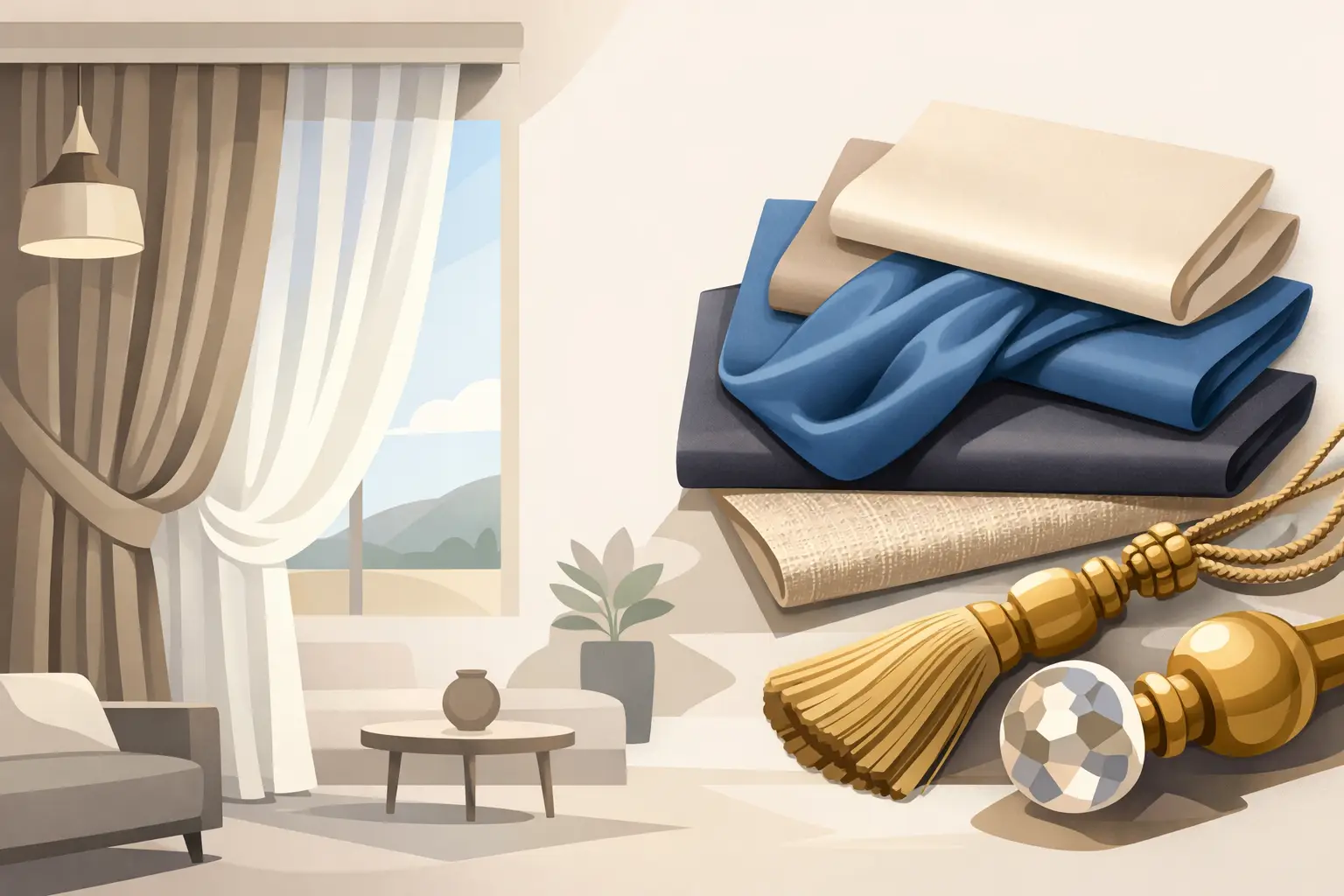
Curtains are often the largest uninterrupted surface in a room, yet their impact is frequently underestimated. The best fabrics for luxury curtains do far more than frame a view: they temper daylight, soften acoustics and bring a sense of proportion to architecture. Chosen well, they make a room feel composed before a single lamp is switched on.
The right choice is rarely about following a single rule. A silk that is exquisite in a formal drawing room may be impractical on a sun-facing elevation; a beautifully weighty linen can lend quiet confidence to a coastal house but may need careful consideration in a sharply tailored city interior. The most successful schemes begin with the atmosphere you wish to create, then balance beauty with light, movement, privacy and longevity.
What Makes a Curtain Fabric Feel Luxurious?
Luxury lies in the way a fabric behaves as much as the way it looks on a hanger. It should fall with intention, gathering into generous folds rather than sitting stiffly at the window. Its surface should hold interest in changing light, whether through a soft lustre, a dry natural texture or the depth of a woven pattern.
Scale matters, too. Fine fabrics can feel insubstantial when used across a wide run of glazing, while an overly heavy cloth can overwhelm a small bedroom. Consider the ceiling height, the width of the window and how far the curtains will stack back when open. In formal rooms, fuller headings and a more substantial cloth can be wonderfully architectural. In relaxed spaces, a lighter fabric with a softer break can create an ease that still feels impeccably considered.
A curtain is also a construction, not simply a length of fabric. Lining, interlining, heading style and the quality of the track or pole all affect its final presence. An exceptional cloth can lose its elegance if it is under-lined, poorly made or hung without sufficient fullness.
Best Fabrics for Luxury Curtains: The Designer’s Edit
Silk for luminosity and occasion
Silk remains one of the most expressive choices for luxury curtains. Its natural sheen catches light in a way no synthetic fibre can quite replicate, giving rooms a gentle radiance and a sense of ceremony. Slubbed silks, taffetas and silk blends each offer a distinct character, from beautifully irregular and artisanal to crisp and quietly formal.
Pure silk requires care. It can fade in direct sunlight and is best protected with an appropriate lining, particularly in south-facing rooms. For this reason, a silk-linen or silk-wool blend is often the more intelligent choice for everyday living. It retains much of silk’s nuanced lustre while bringing greater resilience and a less precious manner.
Velvet for depth, warmth and drama
Velvet has an unrivalled ability to make a room feel enveloping. Its dense pile absorbs and reflects light at once, creating rich tonal variation across the folds. In a library, cinema room, formal dining room or bedroom, it brings warmth, acoustic softness and a distinctly tactile quality.
Cotton velvet offers a matte, relaxed depth, while mohair velvet is prized for its exceptional lustre, durability and upright pile. Silk velvet has a more fluid, luminous finish, though it is generally better suited to lower-traffic decorative settings. The key is to allow enough fullness: velvet needs generous fabric allowance to form the deep, sculptural folds that justify its presence.
Linen for relaxed refinement
Linen curtains have an honesty that feels especially relevant in contemporary country houses, coastal homes and pared-back urban interiors. Their subtle irregularity prevents a scheme from becoming overly polished, while their movement brings a softness to stone, timber and clean-lined furniture.
A pure linen may crease and have a relatively open weave, which is part of its appeal but may not suit every brief. Linen blends, especially with wool, viscose or a small proportion of synthetic fibre, can improve drape and recovery while retaining that desirable natural character. A lined linen curtain offers privacy and weight; an unlined version can be beautiful where the aim is filtered light rather than complete seclusion.
Wool for tailored comfort
Wool is a quietly luxurious option that deserves more attention. It drapes with gravitas, insulates well and naturally helps to soften sound, making it particularly effective in period homes, mountain properties and rooms with hard architectural finishes. Fine wool flannels and wool-linen blends create an elegant, tailored look without the sheen of silk or velvet.
Its palette tends to be sophisticated rather than showy: chalk, tobacco, moss, charcoal and soft mineral tones all gain depth from wool’s slightly heathered surface. For bedrooms and living spaces where warmth is a priority, wool can be one of the most enduring investments.
Cotton and cotton blends for versatile elegance
High-quality cotton is an excellent foundation for luxury curtains, particularly when it is beautifully woven, printed or embroidered. It has a familiar softness and can range from crisp sateen to brushed, almost velvety finishes. Cotton also takes colour exceptionally well, allowing richly saturated plains and detailed decorative motifs to retain clarity.
For family homes or hospitality settings, cotton blends often provide the right balance of appearance and performance. They are generally easier to maintain than more delicate fibres, and can be selected in weights that suit both informal Roman blinds and full-length, lined drapery. The distinction lies in quality: a considered weave, refined finish and excellent making will always read differently from a standard furnishing cotton.
Sheers and voiles for softened daylight
Sheer curtains are not an afterthought. They are the layer that changes a room throughout the day, diffusing bright sunshine, preserving a degree of privacy and giving glazing a gentle, atmospheric softness. Linen gauzes, wool voiles and fine synthetic sheers each have their place, depending on the required transparency and texture.
In a principal bedroom or reception room, sheers paired with heavier curtains offer the most flexible arrangement. During the day, the outer curtains can remain open while the sheer layer preserves intimacy. In the evening, the lined curtains close to create warmth and enclosure. This pairing also gives a window greater visual depth, particularly in rooms with tall ceilings or expansive glass.
Patterned Weaves and Decorative Fabrics
Not all luxury curtain fabrics are defined by fibre alone. A jacquard, damask, brocade or embroidered cloth can introduce pattern with a level of texture and permanence that printed fabric may not achieve. These textiles are particularly compelling in rooms that need an element of narrative: a dining room with antique pieces, a historic townhouse or a contemporary interior seeking a more collected sensibility.
The pattern must be considered at the scale of the window. A large repeat can be spectacular across generous French doors but may feel fragmented on narrow windows. Ask how the design will be centred, whether pattern matching is required and how much additional fabric the repeat demands. These details affect both the visual result and the final quantity of cloth needed.
Light, Lining and Longevity
The fabric seen from the room is only one part of the decision. A quality lining improves drape, protects the face fabric from ultraviolet exposure and gives curtains a more finished appearance from outside. Blackout lining is valuable in bedrooms, but it need not make the scheme feel utilitarian. It can sit beneath a decorative lining or be combined with interlining for a fuller, more insulating result.
Interlining is especially effective with silk, linen and lighter wools. Placed between the face fabric and lining, it gives the curtain body, helps it hold a refined shape and improves thermal comfort. In older houses with draughty sash windows, this is an aesthetic choice with practical rewards.
Sun exposure should be assessed honestly. Delicate natural fibres and deeply saturated colours can change over time in strong light, even with lining. If a room receives intense sun for much of the day, consider a more stable blend, a lighter colourway, an additional sheer layer or discreet window shading. Luxury is not about avoiding natural ageing altogether; it is about choosing materials whose evolution remains graceful.
Choosing Fabric for the Way You Live
A formal reception room can support a more expressive fabric, perhaps a mohair velvet, silk damask or intricate jacquard. A family sitting room may call for a wool-linen blend or durable cotton velvet that welcomes daily use. For a bedroom, softness, privacy and the ability to control early morning light often matter more than a dramatic surface alone.
It is equally worth considering the sound of a room. Minimal interiors with stone floors, expansive glazing and plaster walls can feel acoustically sharp. Full curtains in wool, velvet or a lined linen add more than visual warmth: they make conversation quieter and evenings more comfortable. This is where considered textiles shape experiences rather than simply decorate them.
Before making a final selection, view a large sample in the intended room at several times of day. Hold it against wall finishes, timber tones and upholstery, then observe how it responds to daylight and artificial light. The fabric that feels most beautiful under showroom lighting is not always the one that will tell the right story in your home.
A curtain fabric earns its place when it feels inevitable: generous in the hand, harmonious with the architecture and suited to the life unfolding around it. Allow the material, the making and the room itself to guide the decision, and the result will retain its quiet authority for years to come.

4th August, 2026

2nd August, 2026