A room can feel technically perfect and still leave nothing behind. Then a Rubelli velvet catches the light, or a woven textile introduces a quiet depth, and suddenly the space acquires presence. That is the enduring appeal of Rubelli fabrics – they do more than dress a scheme; they shape atmosphere, soften architecture and give an interior its emotional register.
For clients investing in a considered home, fabric is never a finishing touch in the casual sense. It is one of the clearest ways to express mood, restraint and character. Rubelli sits in that rare category of textile houses that understand both decoration and architecture, offering fabrics with historical intelligence, contemporary relevance and the kind of material integrity that reads immediately in refined interiors.
Why Rubelli fabrics continue to matter
Rubelli is often associated with Venetian heritage, and rightly so. There is a richness in the house language that feels informed by art, travel and centuries of decorative culture. Yet what keeps the collection relevant is not nostalgia. The strength of Rubelli lies in its ability to reinterpret opulence through a modern lens, producing textiles that feel polished rather than theatrical.
That distinction matters. In a Mayfair flat, a coastal villa or a quietly grand country house, few clients want interiors that feel overworked. They want beauty, but they also want clarity. Rubelli fabrics answer that brief well because many of the designs have complexity in construction without visual noise. A weave may carry subtle movement, an embroidery may have depth without heaviness, and a velvet may offer colour in a way that feels saturated yet controlled.
For interior designers and private clients alike, this creates freedom. A Rubelli textile can hold its own in a formal drawing room, but it can also support a cleaner architectural scheme where materiality does most of the talking. That versatility is part of its luxury.
What defines the Rubelli aesthetic
Rubelli is not a one-note fabric house. The collection moves between velvets, jacquards, textured weaves, sheers and decorative constructions with confidence, which makes it useful across different styles of project. What connects the range is a sense of refinement in surface and colour.
There is often a distinctly cultivated quality to the palette. Rather than relying on obvious statements, Rubelli tends to excel in nuanced tones – mineral, botanical, jewel-like or softly architectural shades that layer beautifully into sophisticated interiors. These are colours designed to live well with stone, timber, lacquer, bronze and plaster, not compete with them.
Texture is equally important. Some fabrics offer a dry, tailored hand suited to contemporary upholstery. Others have luminosity and softness that lend themselves to drapery and formal rooms. The most successful schemes usually rely on this balance: one textile provides structure, another brings movement, and a third adds depth. Rubelli understands that interiors are experienced through contrast as much as harmony.
Using Rubelli fabrics in modern schemes
The assumption with heritage textile houses is that they belong mainly in traditional settings. In practice, Rubelli works exceptionally well in contemporary interiors when specified with discipline. A sculptural sofa upholstered in a restrained woven, for example, can feel far more interesting than a plain commercial fabric, while still preserving the clean lines of the piece.
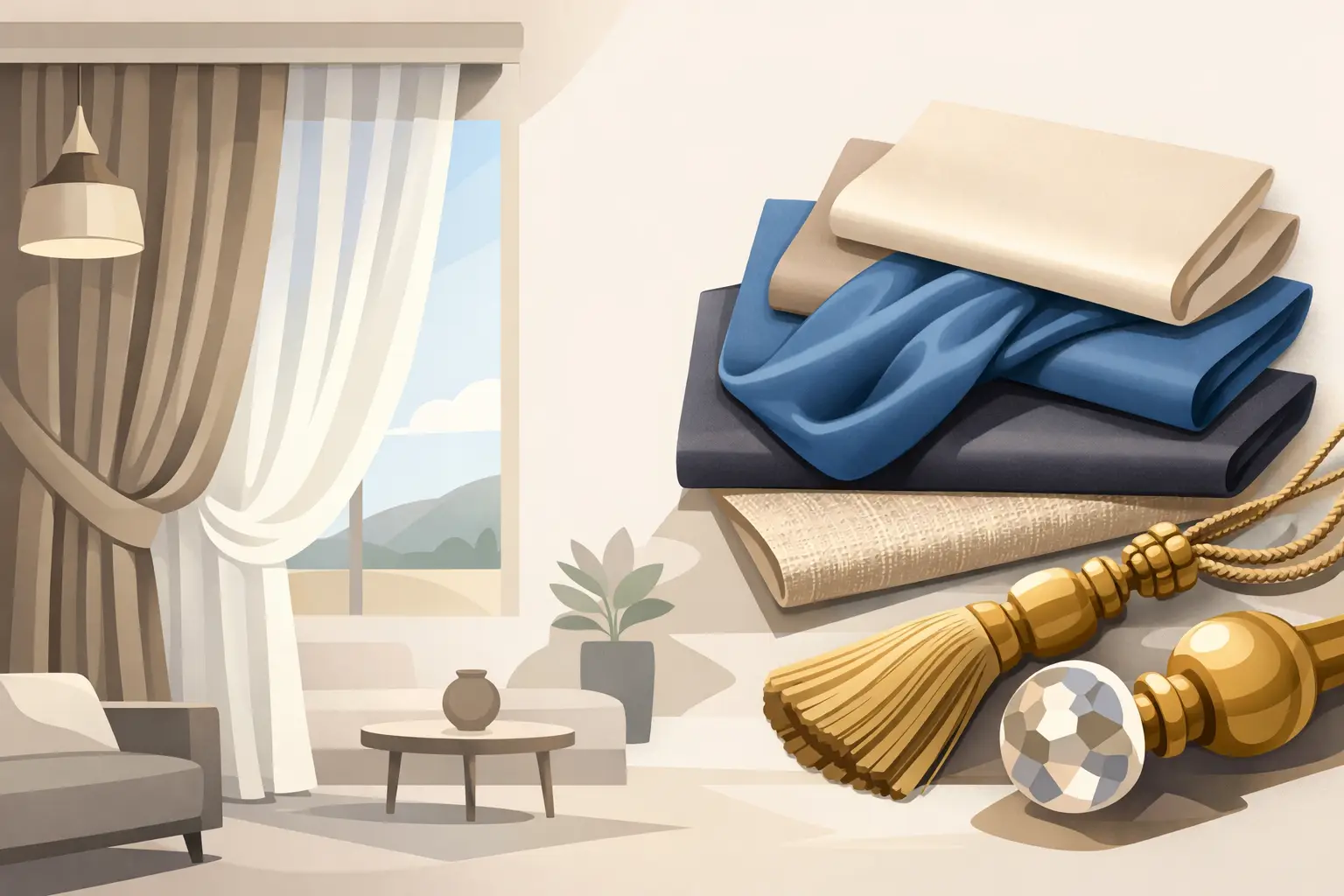
Drapery is another area where Rubelli can transform a room. In tall architectural spaces, the right fabric does more than frame a window. It modulates light, improves acoustics and introduces softness to hard finishes. A finely judged sheer or textured drape can make a pared-back interior feel complete rather than austere.
This is where the quality of the textile becomes visible. Better fabrics tend to hang better, hold colour more elegantly and interact with changing light in a more flattering way. In luxury interiors, these subtleties are not minor. They are often the difference between a scheme that looks expensive and one that feels deeply resolved.
Upholstery, drapery and statement accents
Rubelli fabrics are especially effective when used with a clear hierarchy. Not every textile needs to command attention. In fact, the most sophisticated rooms often reserve the most expressive fabric for one or two focal applications.
For upholstery, this might mean using a richly woven Rubelli fabric on a principal sofa or a pair of occasional chairs, while keeping surrounding seating quieter. The result is layered rather than busy. In bedrooms, a Rubelli textile on a headboard or bed valance can introduce softness and character without overwhelming the calmness the room requires.
For drapery, scale matters. Some patterns and textures need generous drops to read properly, while others are more successful in smaller, more tailored applications such as Roman blinds. A large salon may accommodate theatrical volume; a city bedroom may ask for something more distilled. The fabric itself may be exquisite, but proportion still governs the success of the room.
Accent use can be particularly striking. A single bench, a set of dining chair backs or decorative cushions in a distinctive Rubelli weave can punctuate an otherwise restrained scheme beautifully. This is often the wiser route when a client loves pattern or colour but wants the overall atmosphere to remain composed.
How to choose Rubelli fabrics well
The right fabric is never selected in isolation. It has to answer the architecture, the furnishings, the light and the pace of life in the home. A formal reception room used occasionally can accommodate a more delicate or decorative approach than a family sitting room with daily wear.
This is where trade-offs come in. A sumptuous velvet may deliver incomparable depth and comfort, but it may not be ideal for every high-traffic seat. A complex weave may look extraordinary on a wall of curtains, but feel too visually active if repeated across multiple upholstered pieces. Luxury is not about choosing the most elaborate option. It is about choosing the most fitting one.
Light should also guide the decision. In north-facing rooms, warmer grounds and fabrics with a degree of lustre can prevent a scheme from feeling flat. In strongly sunlit interiors, slightly chalkier tones or more textured surfaces often perform better, especially where glare can exaggerate sheen. The same colour can behave very differently depending on orientation and time of day.
Practicality matters as well, particularly in homes with children, pets or frequent entertaining. That does not mean compromising on beauty. It means understanding where to place more delicate fabrics and where a durable woven or treated textile will support the life of the space more intelligently. The most successful interiors are always as liveable as they are beautiful.
Rubelli fabrics within a broader luxury scheme
One of the reasons Rubelli remains so useful in high-end residential design is that it integrates well with other luxury materials. It sits comfortably alongside veined marble, smoked oak, hand-finished plaster, aged brass and sculptural lighting. That compatibility makes it particularly effective in layered schemes where every surface is expected to contribute to the overall experience.
Rather than treating textiles as secondary to furniture or architecture, the most compelling interiors place them in dialogue. A softly lustrous Rubelli drape may echo the patina of a bronze lamp base. A woven upholstery fabric may temper the coolness of stone flooring. A decorative cushion may pick up the undertone of a wall finish that would otherwise pass unnoticed. These are the quieter gestures that make a room feel composed and personal.
For design-conscious clients, this is often where value becomes most apparent. A well-chosen fabric does not simply occupy space. It elevates every element around it. Within a globally curated interior, where lighting, furniture, trimmings and finishes have all been selected with intent, Rubelli can play a pivotal role in binding the scheme together.
When Rubelli is the right choice – and when restraint is wiser
Rubelli is particularly compelling for clients who appreciate cultural depth, craftsmanship and decorative sophistication without wanting interiors that feel overly ornate. It suits homes where there is an appetite for richness, but also a respect for editing.
That said, not every room benefits from a highly expressive textile story. Some spaces need quietness more than detail. In minimalist architecture, for instance, a heavily decorative fabric can interrupt the purity of the concept if used too broadly. In those settings, Rubelli may work best through texture, subtle pattern or a single accent rather than as the dominant language throughout.
The finest schemes know when to hold back. Restraint is not the opposite of luxury. Quite often, it is luxury at its most assured.
For clients and designers seeking textiles with heritage, sophistication and genuine design intelligence, Rubelli offers far more than surface appeal. The right fabric can alter how a room sounds, how it feels in the evening, how it welcomes guests and how it supports daily life. Choose well, and it will not merely complete the interior – it will give the space its voice.

4th August, 2026

3rd August, 2026