





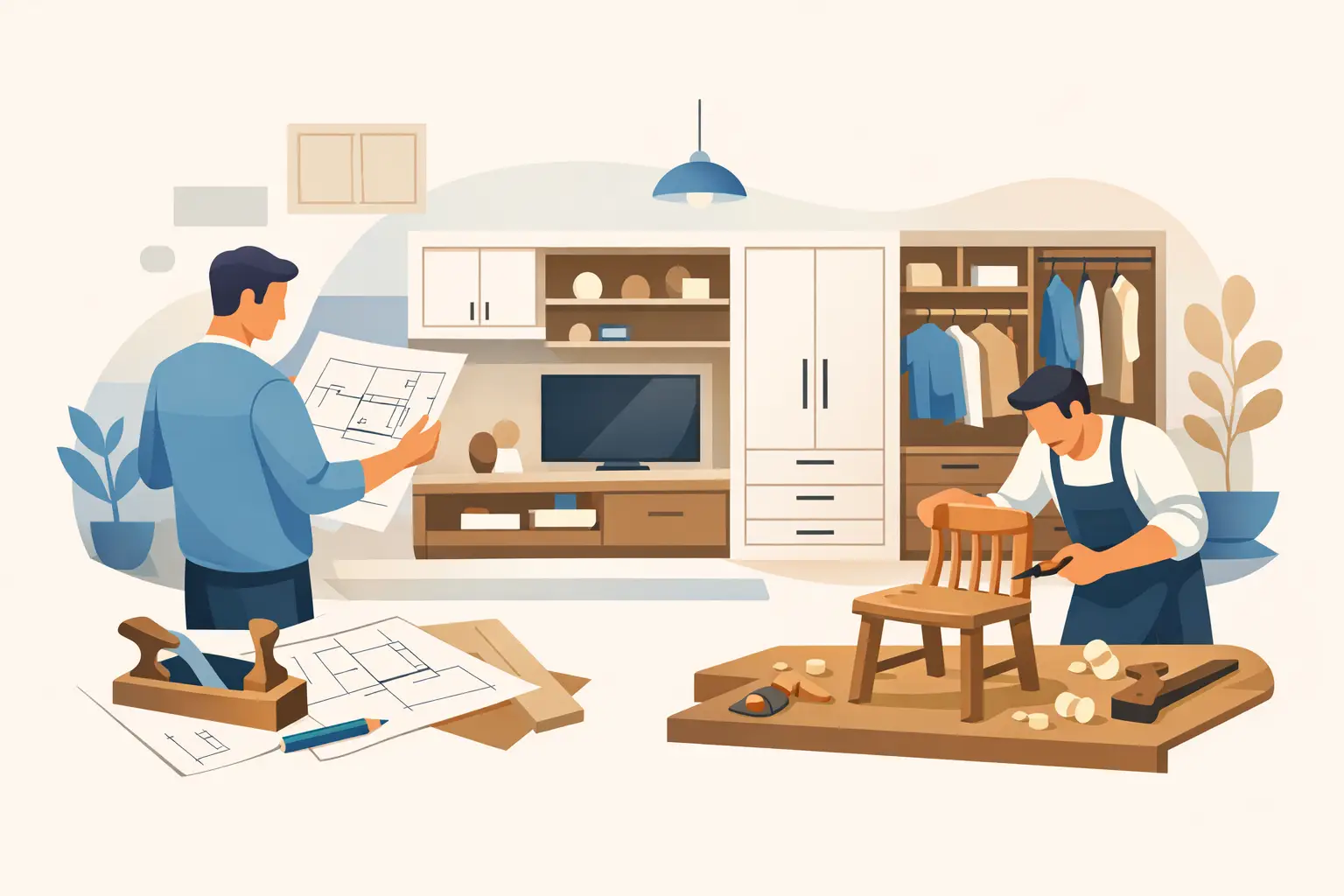
A room can carry every marker of quality – fine stone, exceptional lighting, beautiful fabrics – and still feel unresolved if the furniture sits awkwardly or storage has been treated as an afterthought. This is where bespoke furniture and cabinetry earn their place. They do more than fill space. They bring proportion, purpose and permanence to an interior, allowing a home to feel composed rather than simply furnished.
For discerning homeowners, bespoke design is rarely about excess. It is about calibration. The depth of a library shelf, the reveal around a cabinet door, the exact height of a bedside table beside a tailored headboard – these are small decisions with outsized impact. In well-designed interiors, the eye may not immediately isolate them, but it feels the effect at once.
What bespoke furniture and cabinetry change in a room
The most compelling interiors tell a coherent story. Off-the-shelf pieces can certainly have charm, and many iconic designs deserve their place in a scheme, but they are made to suit a broad market. Bespoke work begins from the opposite premise. It responds to the architecture, the lifestyle of the client and the mood a room is meant to evoke.
That distinction matters most in homes with strong architectural character or complex spatial requirements. A penthouse with panoramic glazing, a period townhouse with uneven walls, or a country house with generous yet awkwardly shaped rooms will each ask different things of furniture and storage. Bespoke cabinetry can settle these tensions elegantly, turning dead corners into useful storage, framing a fireplace with quiet authority, or creating a dressing room that feels as considered as the bedroom beside it.
Furniture follows the same principle. A dining table designed to the right scale can transform entertaining, not only in how many guests it seats but in how comfortably the room breathes around it. A media unit built for a specific wall can conceal technology without sacrificing refinement. A drinks cabinet can become a sculptural focal point rather than a practical compromise.
Bespoke furniture and cabinetry as a marker of true luxury
Luxury in interiors is often misunderstood as decoration alone. In reality, it is more often expressed through fit, finish and restraint. The quiet confidence of a beautifully made cabinet in figured oak, smoked eucalyptus or lacquered linen speaks more eloquently than a room crowded with statement pieces.
Bespoke work also allows materials to be handled with intelligence. Natural stone can be bookmatched across cabinetry fronts. Bronze mesh can be introduced to soften storage. Leather, vellière, parchment, timber veneer and hand-applied finishes can all be selected not in isolation, but in relation to surrounding furniture, lighting and textiles. This creates continuity – a quality that makes an interior feel elevated and complete.
There is also an emotional dimension. Pieces made specifically for a home tend to become part of its identity. They are not chosen from a warehouse shelf and placed where they fit best. They are conceived for a certain room, a certain rhythm of life, a certain way of living and hosting. That is why they often feel more enduring, both aesthetically and practically.
Where bespoke design delivers the greatest value
Some rooms justify bespoke intervention almost immediately. Kitchens and dressing rooms are obvious examples, but they are far from the only ones. Joinery in a study can shape concentration and calm. A considered banquette can make a breakfast area feel architectural rather than improvised. Bedroom cabinetry can restore visual order, particularly where freestanding wardrobes would dominate.
Living rooms also benefit more than many clients initially expect. Integrated shelving, low storage, display cabinets and media walls often define the room’s visual rhythm. If these elements are too heavy, too shallow or out of scale, the entire scheme can feel unsettled. When they are tailored precisely, they become the framework within which lighting, art and decorative objects can speak.
Hospitality-informed residences have pushed this thinking further. Homeowners increasingly want interiors that function with the ease of a private hotel suite while retaining warmth and individuality. Bespoke cabinetry supports that ambition beautifully, concealing practical needs while preserving a sense of effortless order.
The trade-offs worth considering
Bespoke is not automatically the right answer for every piece in every room. A wholly bespoke interior can feel overly controlled if there is no contrast with collected objects, vintage finds or recognised design classics. The strongest schemes usually combine custom work with carefully curated furniture, lighting and accessories, allowing the home to feel layered rather than engineered.
There is also the matter of lead time. Properly designed and executed cabinetry requires technical drawing, material sampling, specialist fabrication and installation. That process takes longer than ordering standard pieces, and rightly so. The reward is a result that fits both physically and aesthetically, but it does require planning.
Budget deserves equal honesty. Bespoke furniture and cabinetry demand investment because they involve design intelligence, craftsmanship and often more exacting materials. Yet the value should be judged over years, not weeks. When made well, bespoke pieces age with dignity, continue to function beautifully and reduce the likelihood of costly replacement. In that sense, they often prove more economical than buying repeatedly to correct compromises.
How the design process should feel
For clients accustomed to high standards, the process matters as much as the result. Bespoke design should not feel opaque or overly technical. It should feel guided, assured and collaborative.
The strongest projects begin with close attention to how a room is used. Not simply whether a client needs storage, but what they need to store, how they entertain, what they want visible, and what they would prefer concealed. A library for a serious collector differs profoundly from shelving intended to balance books with objects and art. A dressing room for daily efficiency is not the same as one designed to create a boutique-like experience.
From there, proportion becomes central. Good designers think about negative space as carefully as storage volume. They consider sightlines on entry, the relationship between cabinetry and architectural details, and how light will strike different finishes throughout the day. In premium interiors, this level of thought is what separates bespoke from merely custom-sized.
Materiality comes next, and here the possibilities are expansive. Timber brings warmth and natural depth. Lacquer can sharpen the mood and introduce a polished contemporary edge. Metal inlays, stone tops, reeded glass and specialist finishes can add texture without visual noise. What matters is not novelty for its own sake, but whether each choice strengthens the atmosphere of the room.
At Tobias Oliver Interiors, this approach sits naturally alongside globally respected furniture, lighting and textile collections, where bespoke pieces can be designed to complement rather than compete. The goal is always a home that feels singular and resolved.
How to recognise quality in bespoke furniture and cabinetry
Not all bespoke work is equal, and refinement often lies in details a client may not initially be shown. The internal organisation of a cabinet matters as much as the exterior. Drawers should glide with quiet weight. Doors should align perfectly. Veneers should be laid with intention, not convenience. The back of a piece, the interior finish and the hardware all reveal whether craftsmanship has been approached with discipline.
It is equally important to ask how a piece will age. Some finishes improve with time, developing softness and character. Others are chosen for crispness and require more careful maintenance. Neither is wrong, but the decision should match the realities of the household. A family home, a city pied-à-terre and a formal entertaining space will each tolerate wear differently.
The best bespoke makers understand this balance between beauty and use. They know that luxury is not fragility. It is confidence in how a piece performs, year after year, while continuing to tell the story of the home around it.
When bespoke furniture and cabinetry are approached with that level of care, they do more than complete a room. They create ease, sharpen identity and give an interior the quiet authority that cannot be bought ready-made.

19th June, 2026

18th June, 2026